Why an Hour Has 60 Minutes
- The Question Behind a Familiar Number
- Base 60 and the Advantage of Many Divisors
- From Sundials to Hours as a Shared Unit
- Minutes and Seconds as “Second Divisions” of the Hour
- Why Not 100 Minutes per Hour
- How the 60-Minute Hour Became a Global Standard
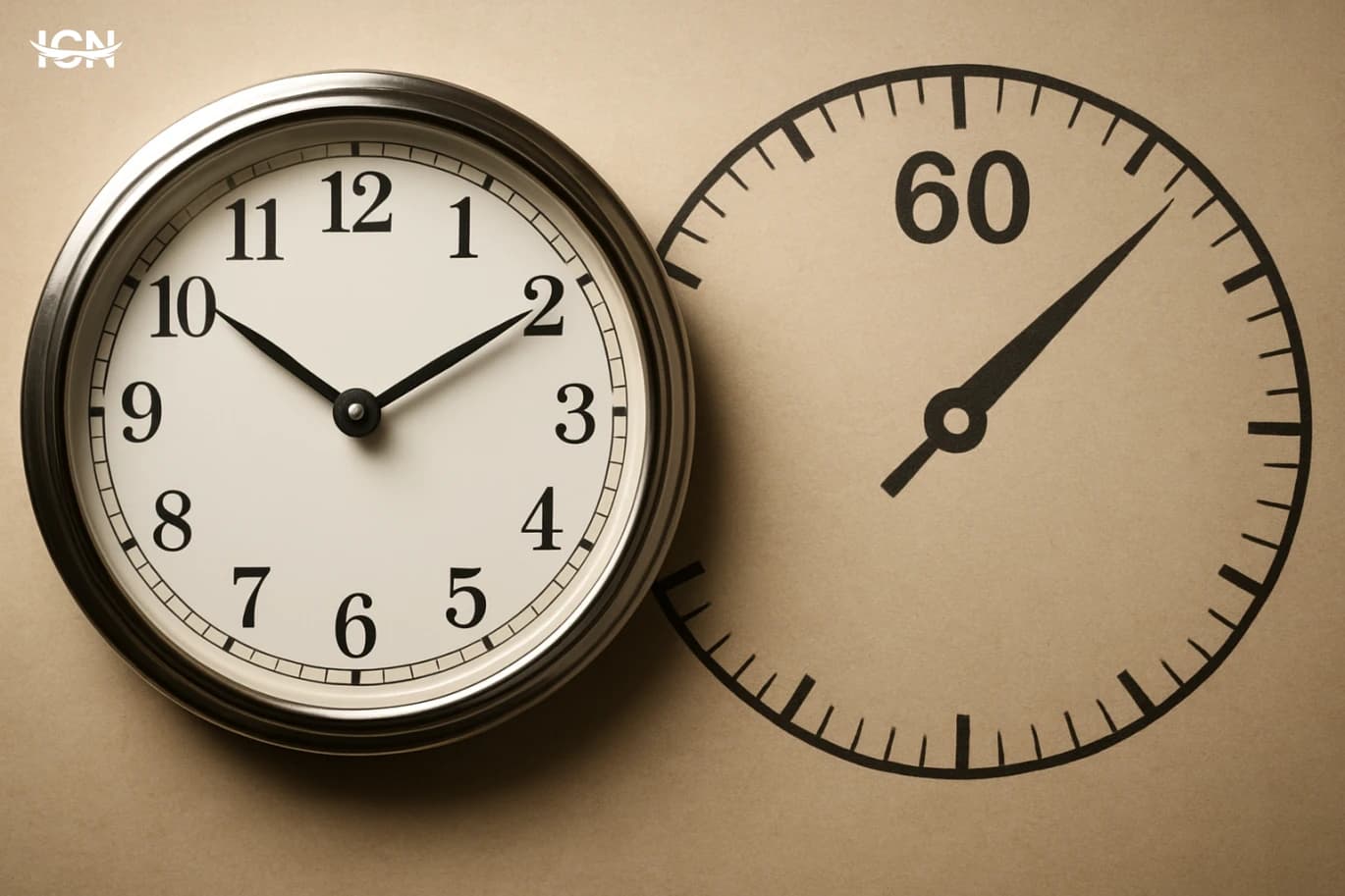
The Question Behind a Familiar Number
Most people learn early that an hour equals 60 minutes, then stop thinking about it. Yet “60” is not an obvious choice like 10 or 100, and it is not dictated by nature in the way a day is tied to Earth’s rotation. The 60-minute hour is a human convention that became global because it was practical, teachable, and compatible with earlier ways of counting and measuring. To understand why 60 survived, it helps to separate three layers: how ancient societies counted, how they divided the day, and how later science and technology locked those divisions into standards. The hour and minute are not random; they are the result of a long chain of decisions that favored easy division, reliable record-keeping, and shared reference points for trade, astronomy, and eventually transportation and telecommunications.
Base 60 and the Advantage of Many Divisors
A major reason 60 appears in timekeeping is the ancient use of a sexagesimal (base-60) number system, most famously associated with Mesopotamia. In a base-60 framework, 60 is a “highly composite” number: it has many divisors (2, 3, 4, 5, 6, 10, 12, 15, 20, 30). That matters because everyday measurement often requires splitting a quantity into equal parts without complicated fractions. If you divide an hour into 2, 3, 4, 5, or 6 equal segments, you get whole numbers of minutes: 30, 20, 15, 12, and 10. The same convenience applies to halves, thirds, quarters, fifths, sixths, and twelfths—common needs in scheduling, commerce, and observation. By contrast, a base-10 division of an hour into 100 parts would be convenient for tenths, but awkward for thirds or quarters unless you accept repeating decimals. This “divisibility” advantage is not just mathematical elegance; it reduces errors. When people calculate time intervals mentally—how long until the next appointment, how to split a work shift, how to allocate irrigation turns—numbers that divide cleanly are easier to handle and less likely to be miscopied. Over centuries, that practical edge helped base-60 conventions persist even as most societies adopted base-10 for general counting.
From Sundials to Hours as a Shared Unit
The idea of dividing the day into “hours” predates mechanical clocks. Early timekeeping relied on the Sun’s position, using sundials and related methods. Many cultures used 12 divisions for daylight and 12 for night, producing 24 “hours” in a full day. These were not always equal in length across seasons when based on daylight, but the structure of 12 and 24 became familiar and administratively useful. Once you have 24 hours in a day, you still need a smaller unit for practical tasks: timing speeches, measuring travel segments, coordinating market openings, or recording astronomical observations. The minute emerged as a subdivision that could be expressed consistently and calculated with the same divisibility benefits. Historically, the word “minute” comes from the idea of a “small part,” and it became a standard way to describe fractions of an hour. The 60-minute hour fits neatly into this framework. It allows a day to be described as 24 × 60 = 1,440 minutes, a number that can be divided in many ways for timetables. That flexibility mattered long before digital displays. It supported calendars of civic life, religious and educational schedules, and the growing need for consistent records in administration and science.
Minutes and Seconds as “Second Divisions” of the Hour
The modern structure—60 minutes per hour and 60 seconds per minute—reflects a layered subdivision approach. Historically, the “minute” was the first small division of the hour, and the “second” was the second division. This naming captures the logic: take an hour, divide it into 60 parts (minutes), then divide each minute into 60 parts (seconds). This scheme became especially valuable when precise measurement became central to astronomy and navigation. Observers needed to record positions and timings with increasing accuracy, and they benefited from a consistent, widely understood notation. The same base-60 logic also appears in angular measurement: 360 degrees in a circle, with degrees divided into 60 arcminutes and 60 arcseconds. Time and angles are linked in astronomy because Earth’s rotation connects the sky’s apparent motion to timekeeping. As instruments improved, the second became a practical unit rather than a theoretical one. Pendulum clocks, and later quartz and atomic standards, made it possible to measure seconds reliably. Once seconds were measurable and comparable across places, the 60-based subdivisions became deeply embedded in scientific practice, engineering, and everyday life.
Why Not 100 Minutes per Hour
The idea of decimal time—such as 100 minutes per hour—has been proposed more than once because it aligns with base-10 arithmetic. In theory, it can simplify some calculations, especially when converting time to fractions of a day for accounting or data analysis. However, changing the hour would require changing everything connected to it: clocks, timetables, education, legal definitions, and international coordination. There is also a usability cost. People frequently divide time into thirds, quarters, and sixths: a 15-minute quarter-hour, a 20-minute third, a 10-minute sixth. With a 100-minute hour, these become 25 minutes for a quarter (fine), but about 33.333 minutes for a third and 16.666 for a sixth, which are awkward for mental math and everyday scheduling. History shows that even when decimal systems succeed in other measurements, time resists change because it is a network standard. The value of a time unit is not only its mathematical neatness but also the fact that everyone shares it. Once railways, telegraphy, and later global aviation and computing depended on synchronized time, the incentive shifted strongly toward stability rather than redesign.
How the 60-Minute Hour Became a Global Standard
Standardization is the final step that turns a convention into a rule of daily life. As mechanical clocks spread in Europe and beyond, clock faces and gear ratios were designed around the familiar divisions of 12, 24, and 60. Once factories produced large numbers of clocks, the cost of changing the system increased. Education reinforced the same structure, and printed timetables made it visible and repeatable. In the modern era, international time coordination strengthened the 60-minute hour. Time zones, broadcast schedules, financial markets, and digital networks all rely on shared definitions. Even when the scientific definition of the second was refined—moving from astronomical observation to atomic transitions—the practical format of hours, minutes, and seconds remained intact. The underlying measurement improved, but the user-facing units stayed stable. Today, the 60-minute hour persists because it balances three needs: divisibility for everyday planning, compatibility with historical instruments and records, and global interoperability. It is a reminder that many “natural” features of modern life are actually long-lived engineering and administrative choices that proved resilient over time.