Geckos and Moths in Urban Nightlife
- Why city nights favor geckos
- How moths navigate and get trapped by light
- The hunting routine on a lit wall
- What this relationship means for homes and pests
- Lighting choices that change the insect-reptile balance
- Living with geckos responsibly
Why city nights favor geckos
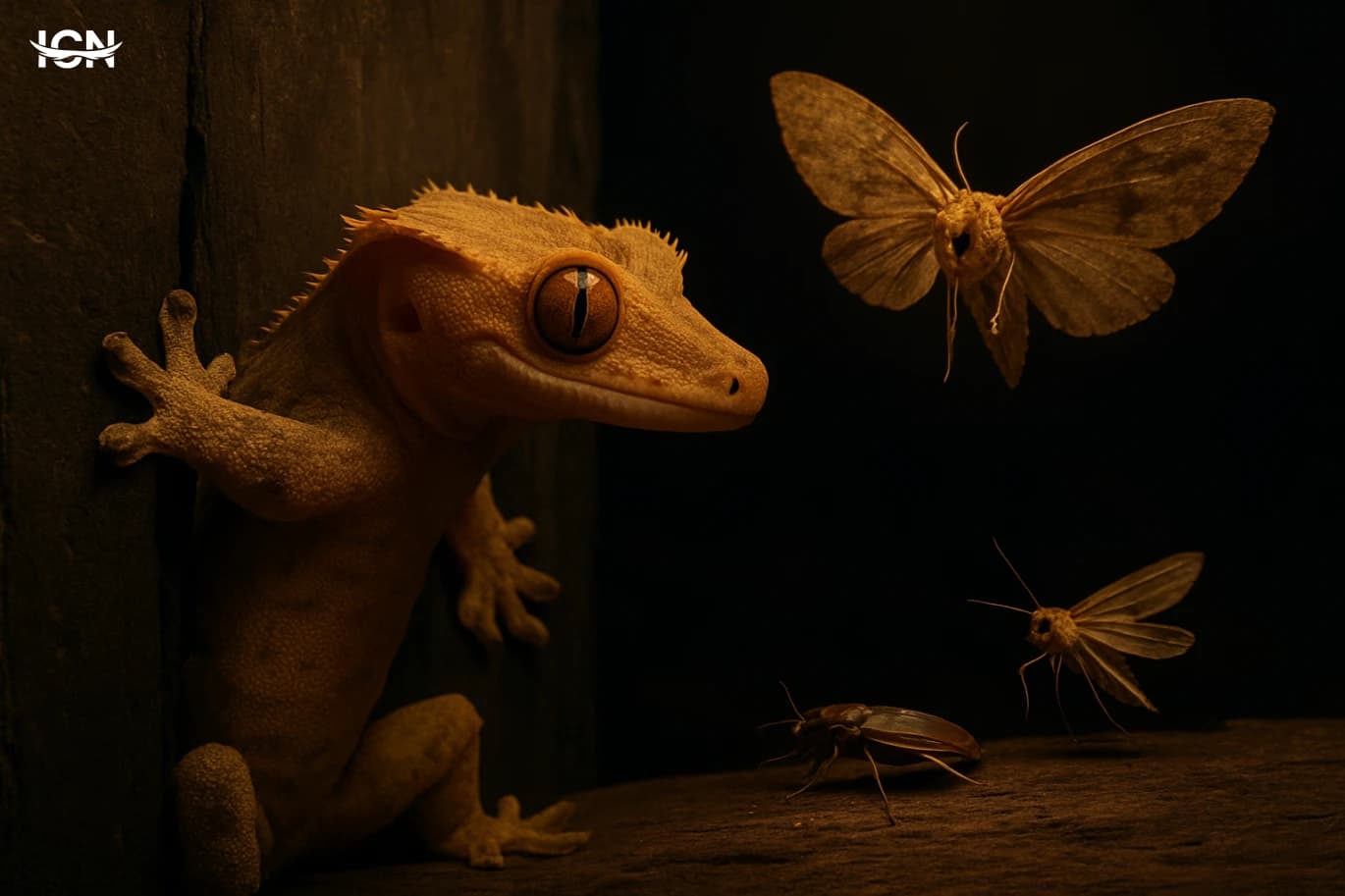
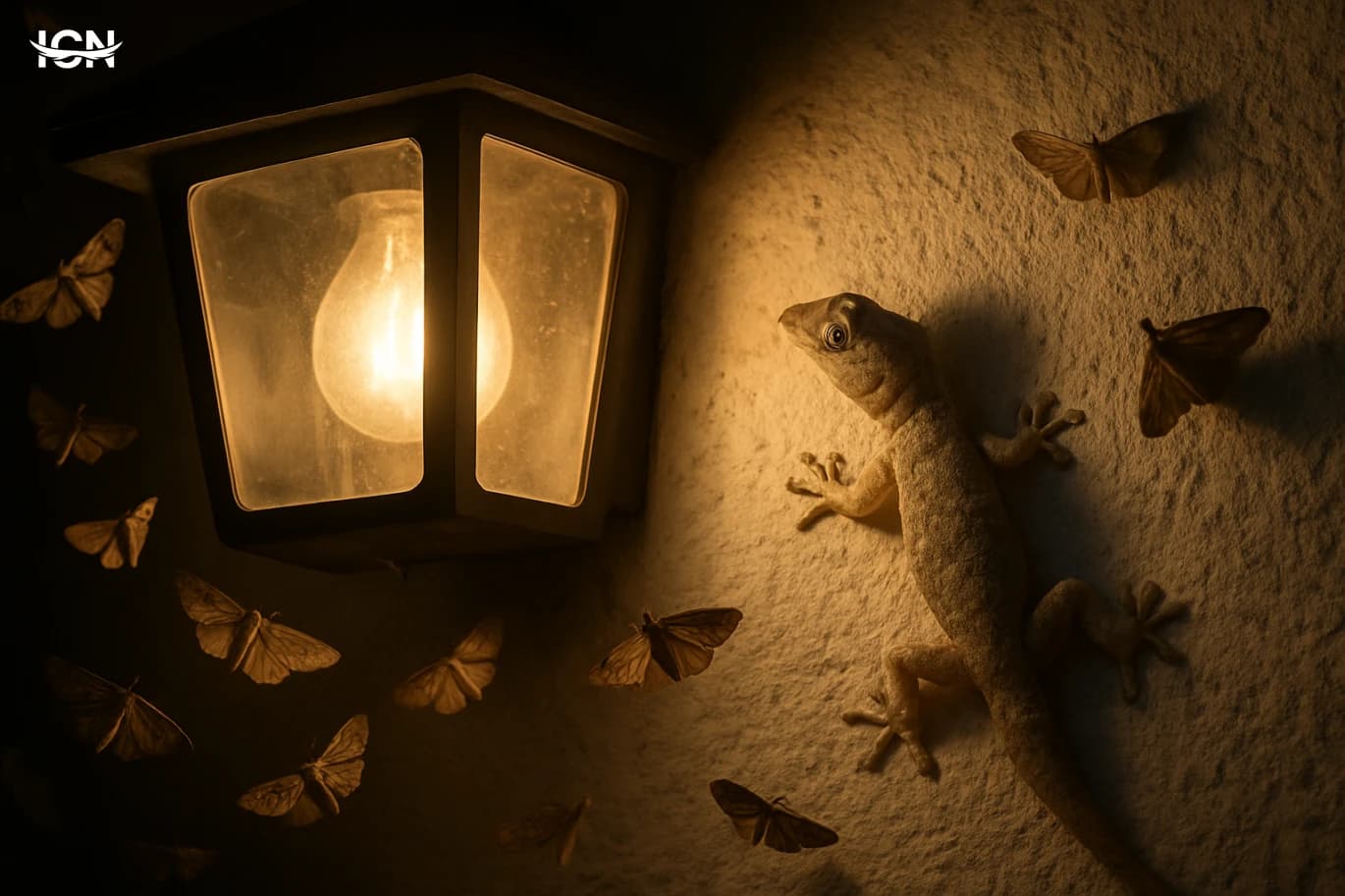
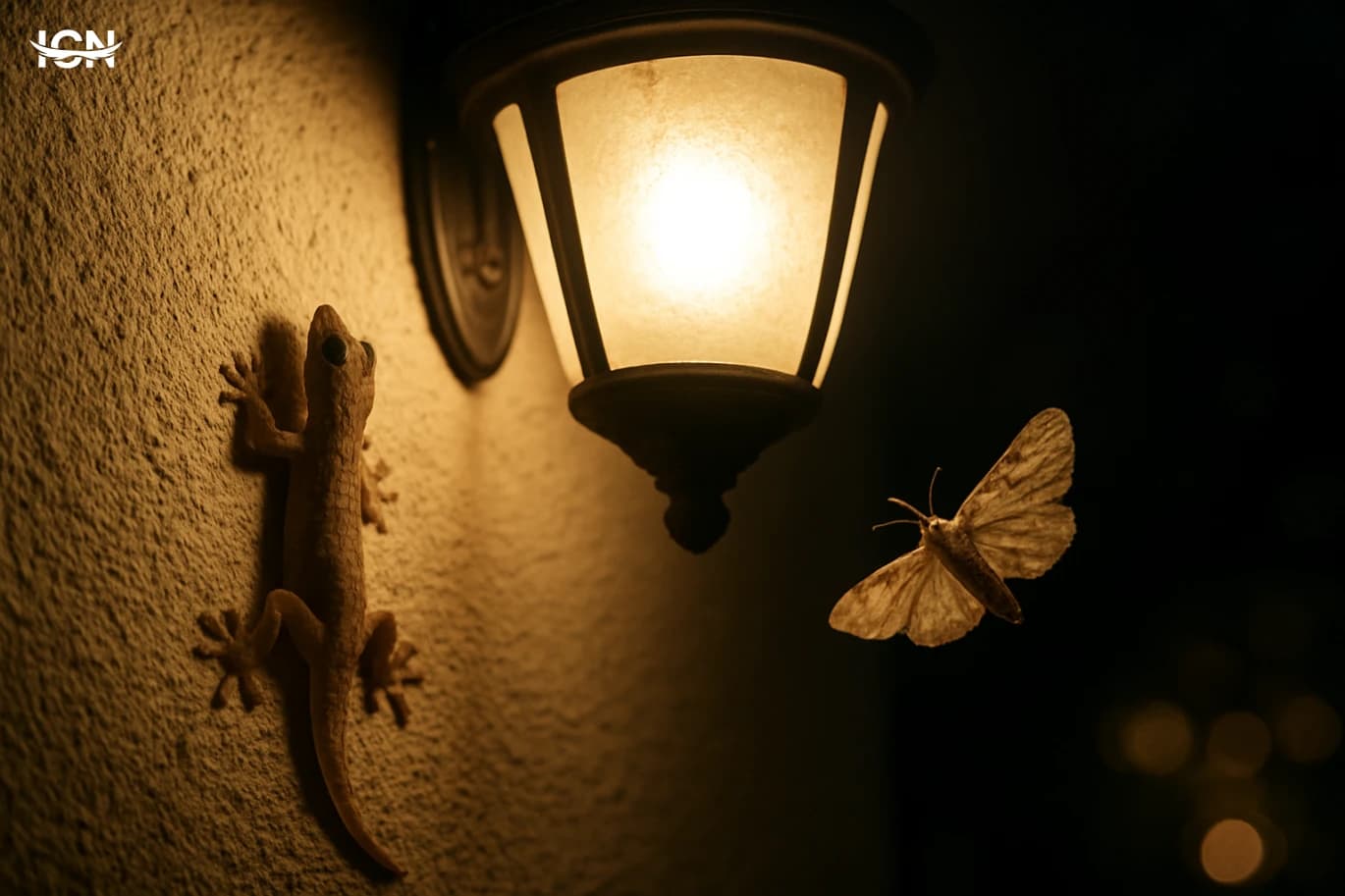
In many warm cities, geckos have become one of the most visible reptiles after dark, especially around apartment corridors, storefronts, and parking lots. The reason is practical: artificial lighting concentrates insects in predictable places, and geckos are efficient sit-and-wait hunters. A single bright wall lamp can draw moths, midges, and small beetles for hours, creating a steady food supply without the gecko needing to roam far. Urban structures also provide the microhabitats geckos need. Cracks in masonry, gaps behind signage, and the sheltered edges of window frames offer daytime hiding spots that stay relatively stable in temperature. Concrete and brick can hold heat into the night, extending the period when geckos can remain active. In neighborhoods with consistent outdoor lighting, geckos often establish small territories around the same fixtures, returning night after night because the hunting conditions are reliable.
How moths navigate and get trapped by light
Moths are not simply “attracted” to light in a single, uniform way. Many species use natural light sources, including the moon and the night sky, as reference points for maintaining a steady flight path. When a bright lamp is close, that navigation strategy breaks down. The insect may keep adjusting its angle relative to the light, producing the familiar spirals and repeated passes that keep it near the fixture. Different bulbs change the outcome. White and blue-rich LEDs tend to draw more flying insects than warmer, amber-toned lights, because many insects are more sensitive to shorter wavelengths. Brightness matters as well: a high-intensity lamp can pull insects from farther away, increasing the number of potential prey items for geckos. Wind, humidity, and seasonal timing also shape the nightly “insect traffic,” with humid evenings often producing heavier activity around lights.
The hunting routine on a lit wall
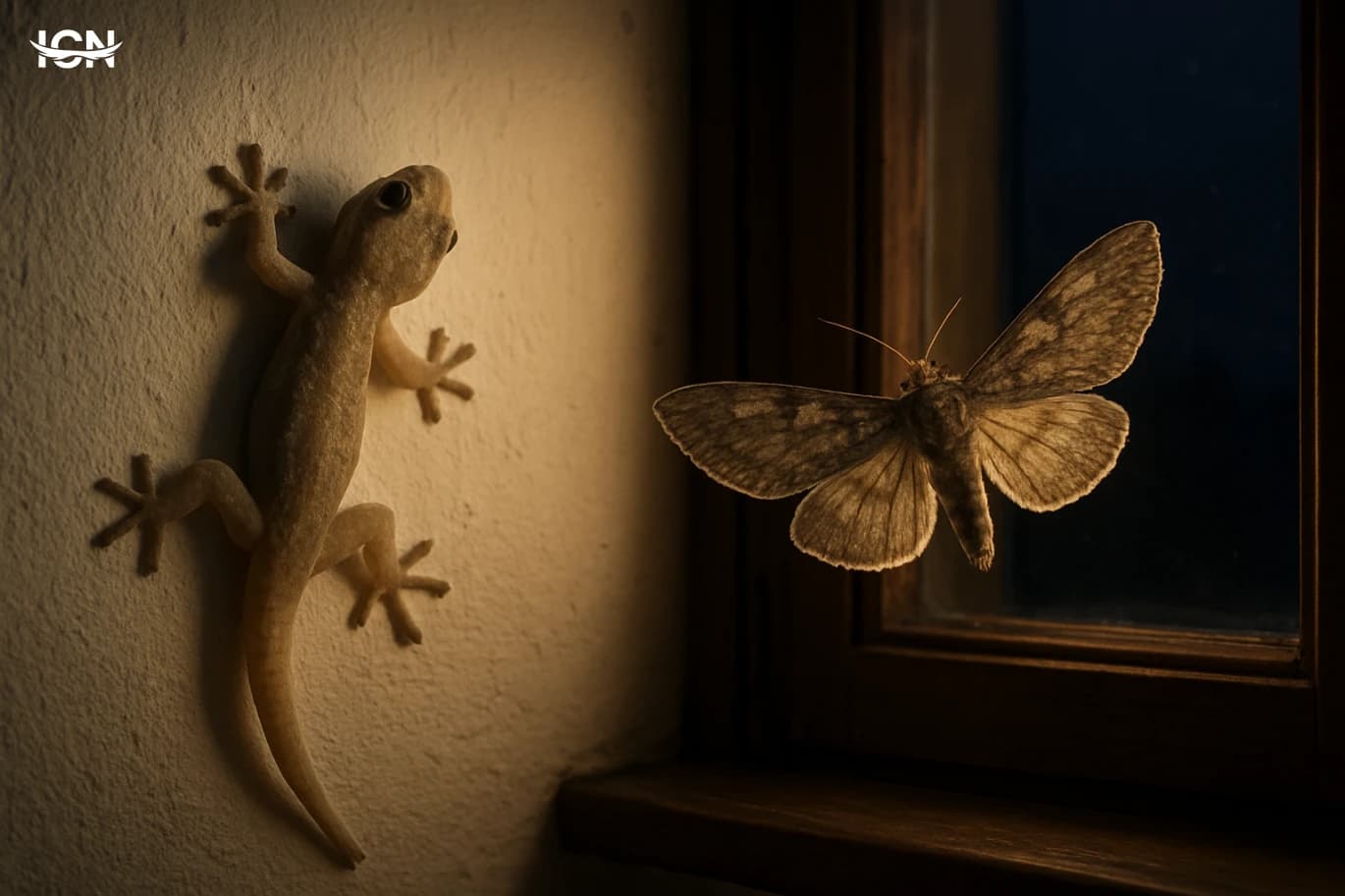
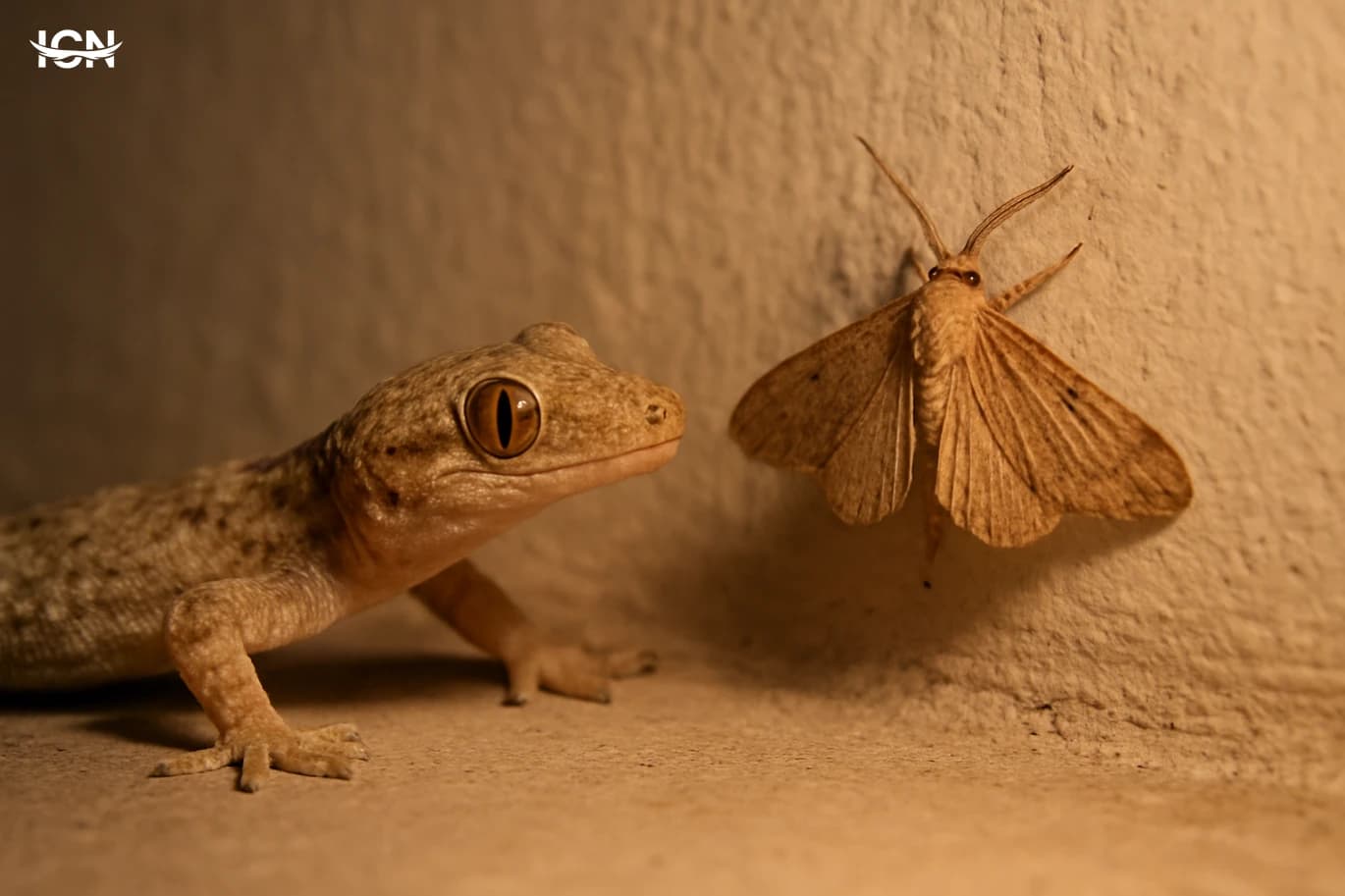
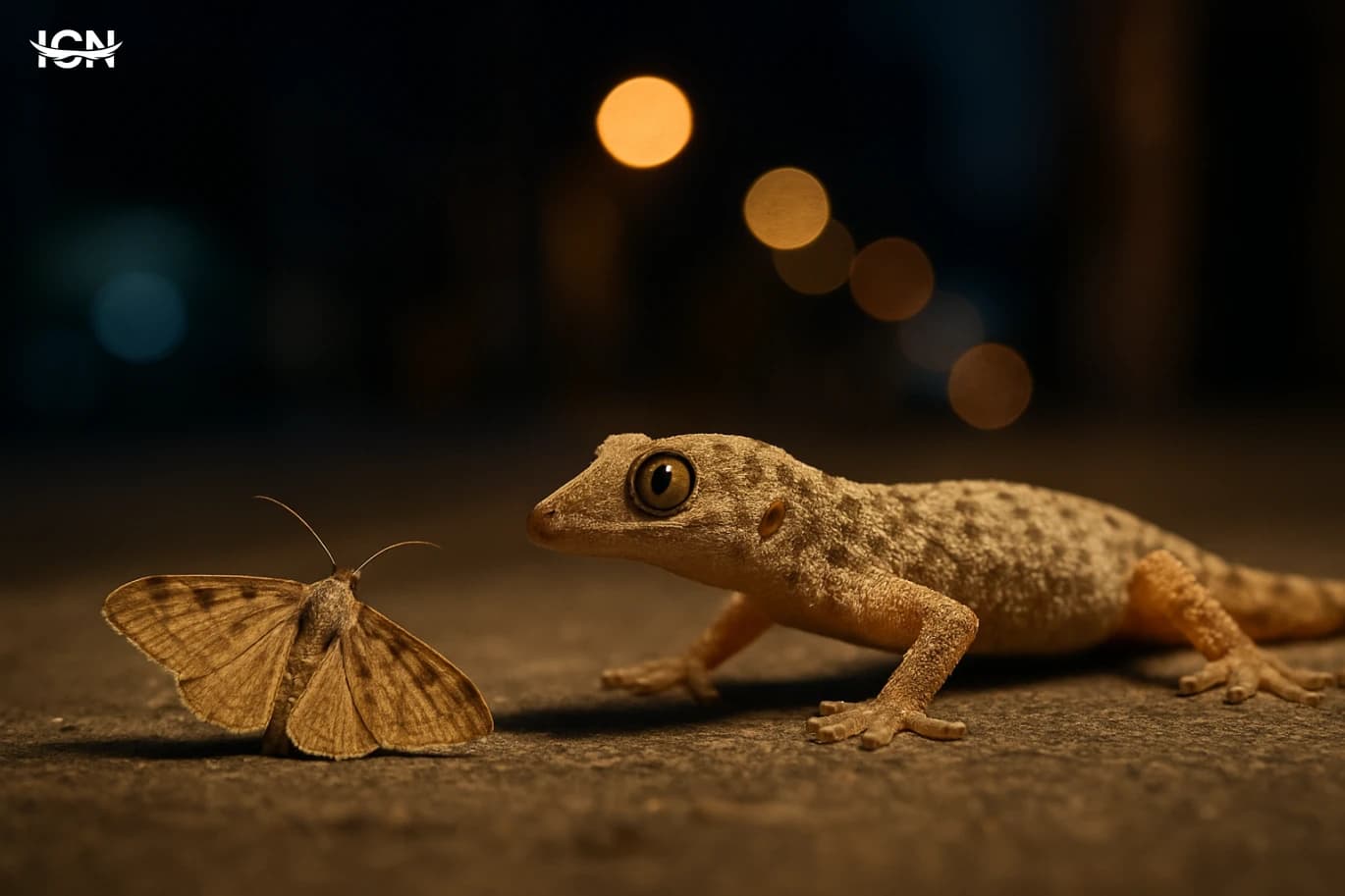
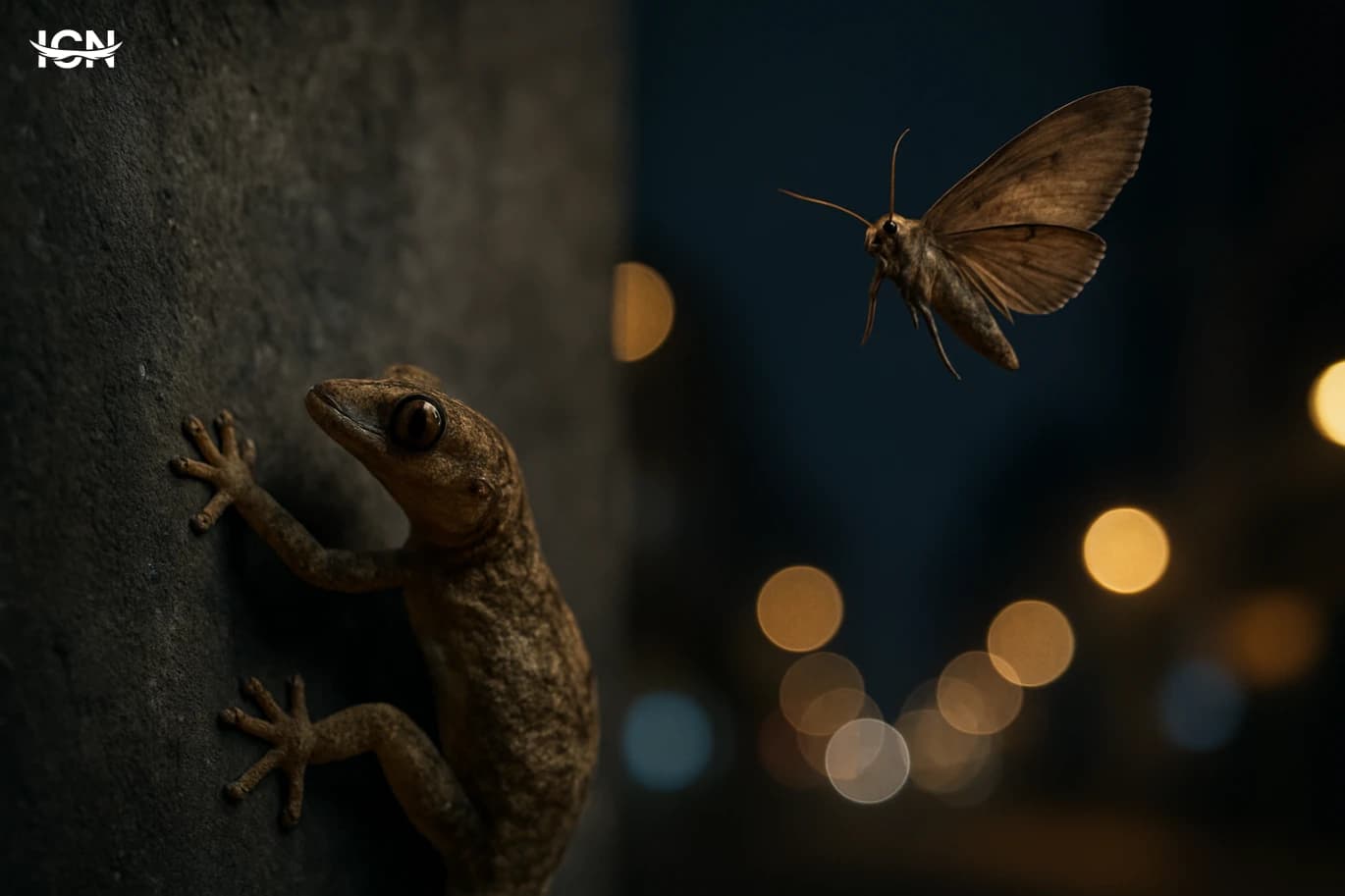
A gecko hunting near a lamp follows a routine that looks casual but is highly efficient. It positions itself where insects are most likely to pass: near the edge of the light cone, beside a crack that offers quick retreat, or above a surface where moths tend to land. The gecko’s toe pads allow it to hold on to smooth walls and ceilings, giving it access to the same vertical space where insects circle. When a moth approaches, the gecko often waits until the insect slows down or lands. The strike is short and precise, and the gecko typically returns to the same spot rather than chasing. This matters in urban settings where energy efficiency is key: a gecko that can feed without exposing itself to cats, birds at dawn, or human disturbance has a better chance of surviving and reproducing. Over time, residents may notice individual geckos with consistent patterns, appearing at the same hour and the same light fixture, especially during warmer months when insect numbers are higher.
What this relationship means for homes and pests
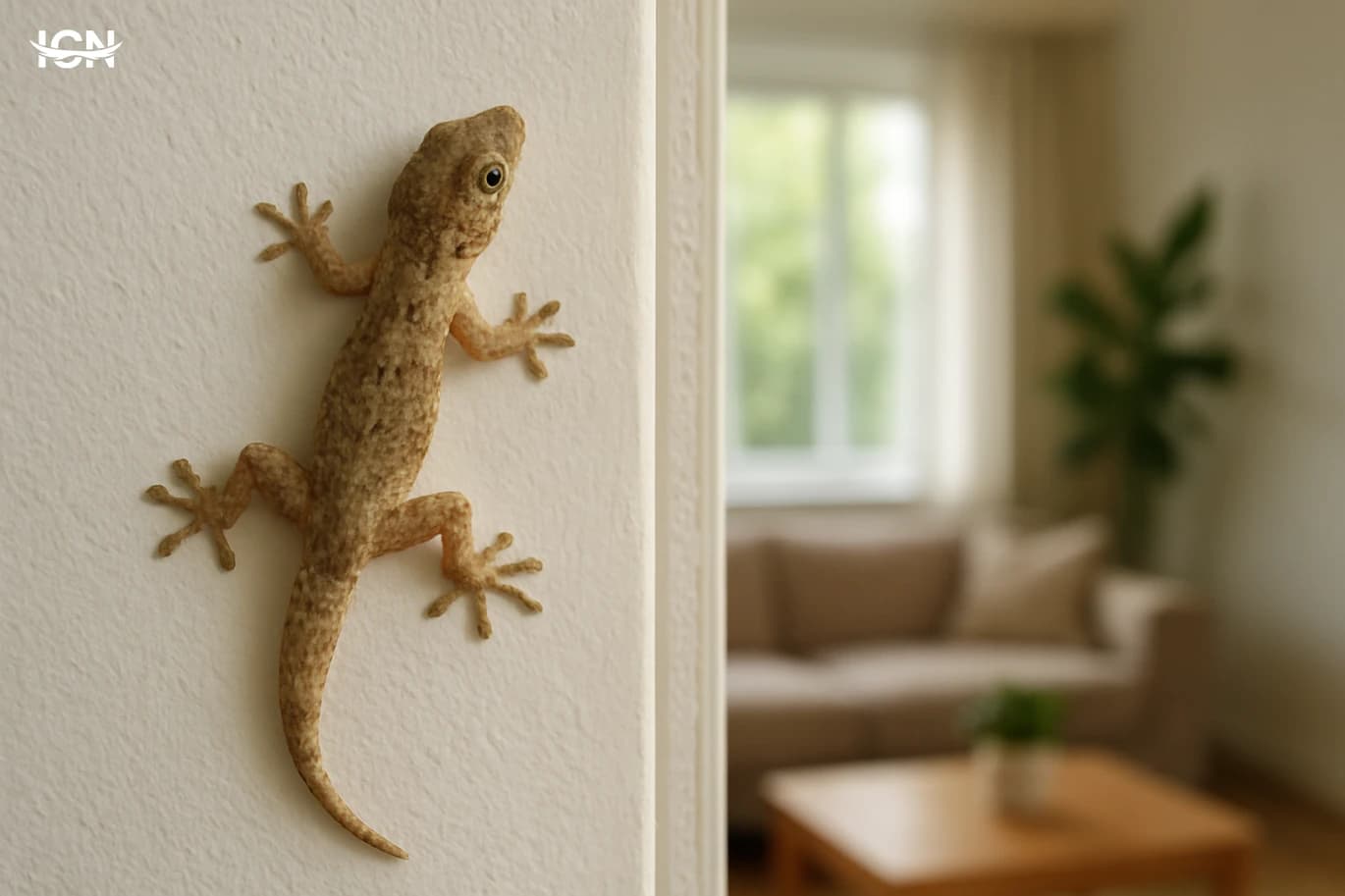
For homeowners and shopkeepers, geckos can function as informal pest control. By feeding on moths and other small insects, they may reduce the number of insects that enter through doors and windows, especially in buildings where lights are placed near entrances. However, the effect is localized. A gecko stationed at one lamp will mostly influence the insect activity in that immediate area, not across an entire property. There are trade-offs. Geckos leave droppings on walls and floors, and their presence can be unwelcome in kitchens or food storage areas. Moths also vary: some moths are harmless visitors, while others are linked to stored-product problems when their larvae infest grains, flour, or animal feed. The adult moths seen at lights are not always the same species responsible for pantry damage, so relying on geckos alone is not a complete strategy. Basic measures like sealing gaps, using screens, and keeping dry goods in sealed containers remain the most reliable way to prevent infestations.
Lighting choices that change the insect-reptile balance
Small changes in lighting can shift how many insects gather, which in turn affects how often geckos appear. Warmer-colored outdoor bulbs, shielded fixtures that direct light downward, and lower overall brightness can reduce the “insect halo” around buildings. Motion-activated lights can also limit the hours when insects accumulate, though they may create short bursts of activity when triggered. These choices matter beyond convenience. Insect-heavy lighting can concentrate prey and benefit geckos, but it can also disrupt local insect behavior and increase the number of insects that end up indoors. For people who prefer fewer insects near doors and balconies, adjusting light color and fixture design is often more effective than spraying chemicals. In areas where geckos are common, reducing insect clustering may lead to fewer geckos on walls, because the hunting payoff declines. The result is a practical, observable chain: lighting influences insects, and insects influence where reptiles choose to hunt.
Living with geckos responsibly
If geckos are common in your area, the most practical approach is management rather than elimination. Keep outdoor lights slightly away from doors when possible, repair window screens, and seal gaps around frames to reduce insect entry and limit where geckos can slip indoors. If droppings are an issue, regular cleaning with standard household disinfectants and attention to food preparation surfaces is usually sufficient. It is also worth avoiding broad insecticide use around lights. Spraying can reduce insects temporarily, but it can also expose geckos to contaminated prey and may not address the underlying attraction created by the light itself. When geckos do get inside, gentle removal using a container and release outdoors is typically safer than handling them directly. In most urban environments, geckos and moths are part of a predictable nighttime system shaped by human lighting, building design, and seasonal insect cycles. Understanding that system helps residents make targeted changes that improve comfort without unnecessary harm to local wildlife.