Weeknight Sheet Pan Chicken and Vegetables
- Why this main dish works
- Ingredients and smart substitutions
- Prep and timing for consistent results
- Flavor variations without extra work
- Serving, storage, and meal prep
Why this main dish works
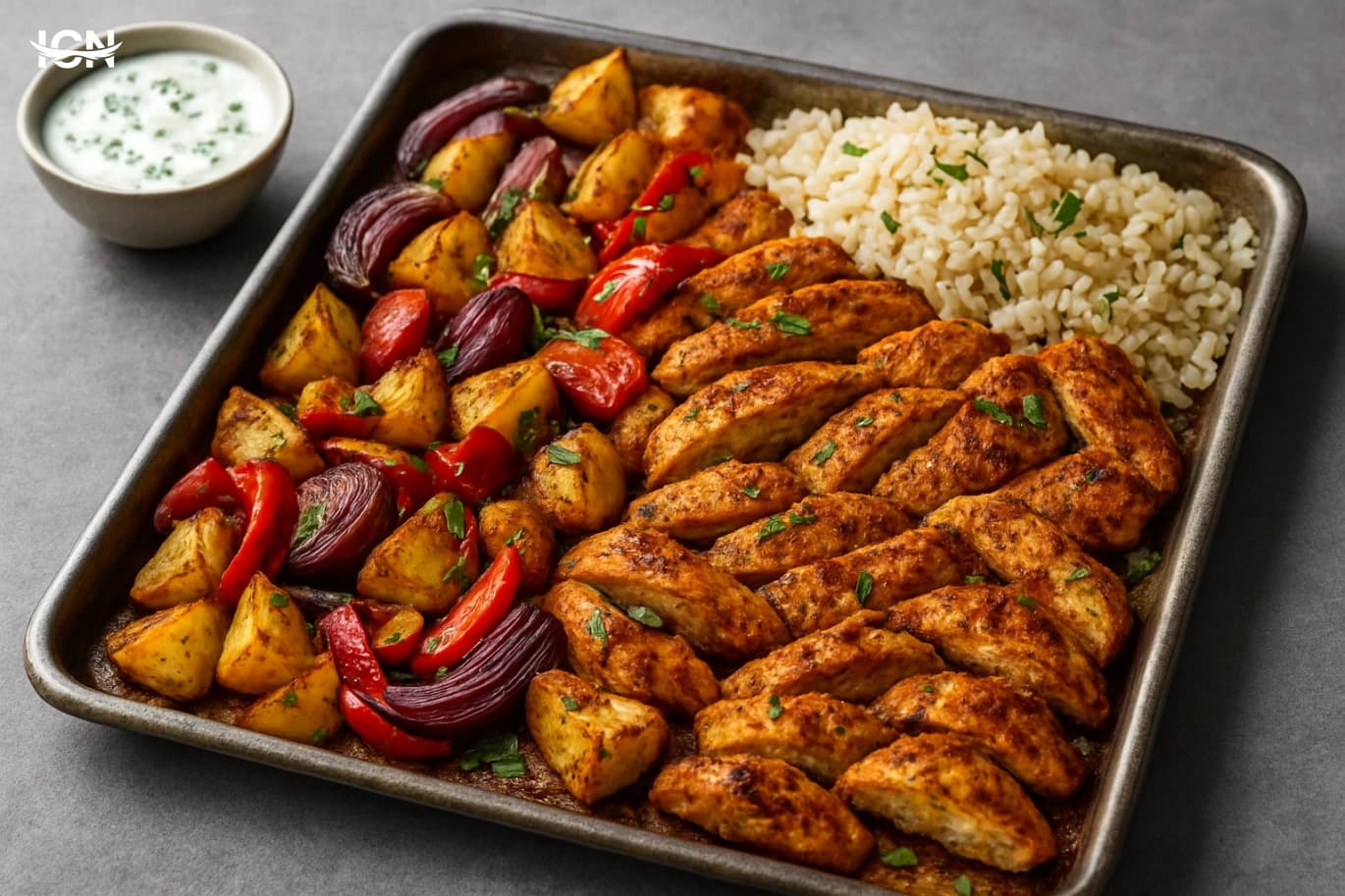
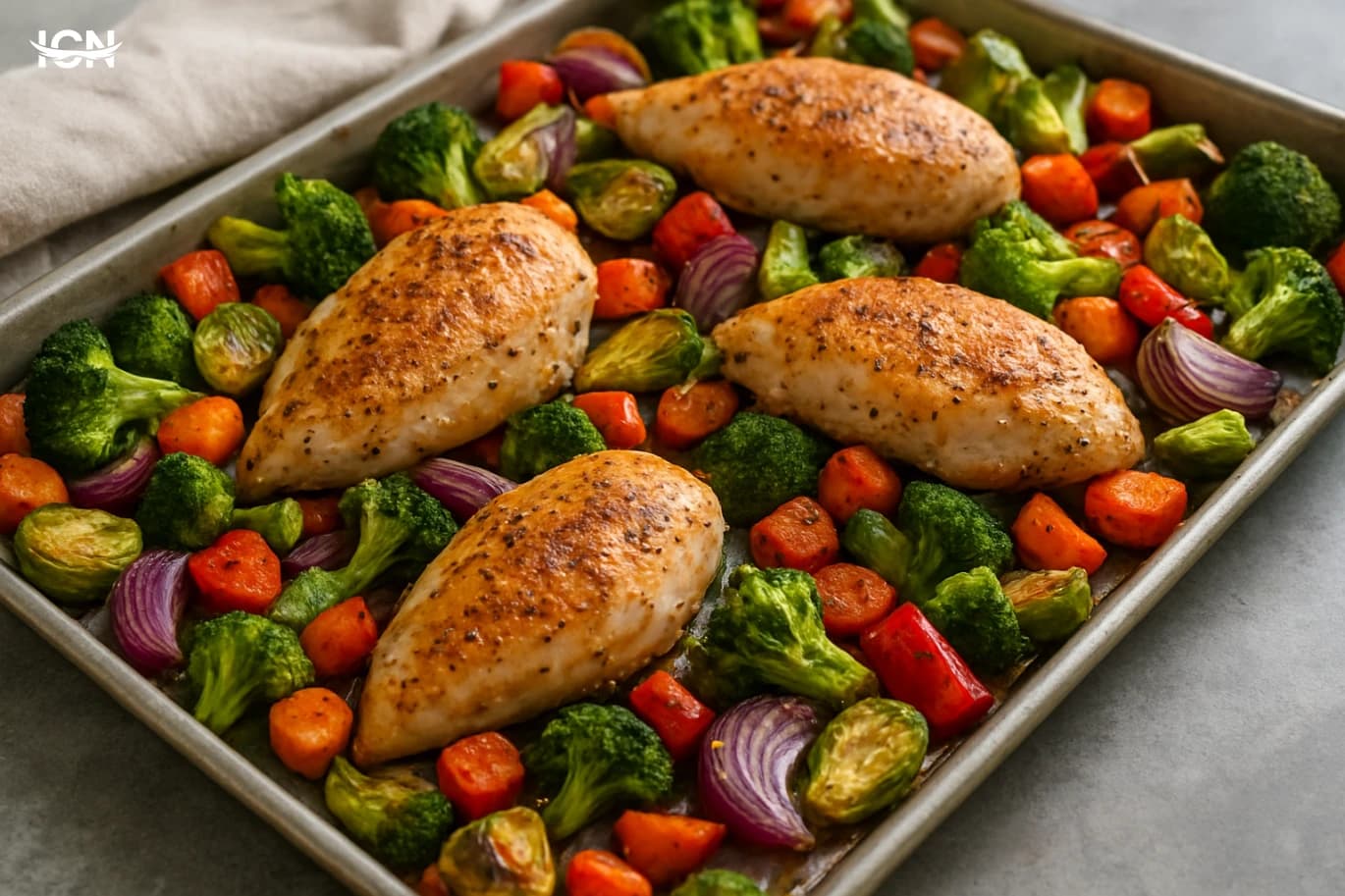
Sheet pan chicken with vegetables is a practical main dish because it delivers protein, vegetables, and a complete flavor profile in one oven cycle. The method relies on predictable heat and timing: chicken pieces roast while sturdy vegetables caramelize, and a simple sauce or spice blend ties everything together. For busy households, it reduces stovetop monitoring and limits dishes to a single pan, a cutting board, and a bowl for seasoning. It also scales well: the same approach can feed two people with a half pan or a family with a full pan, without changing the technique. From a nutrition standpoint, it is easy to balance. You can choose leaner cuts like boneless thighs trimmed of excess fat, or go for bone-in pieces for deeper flavor. Vegetables can be adjusted to increase fiber and micronutrients, and the cooking fat can be controlled by measuring oil rather than pouring freely. The result is a main dish that feels substantial, looks appealing with browned edges and bright herbs, and can be served with rice, flatbread, or a simple salad depending on what you have on hand.
Ingredients and smart substitutions
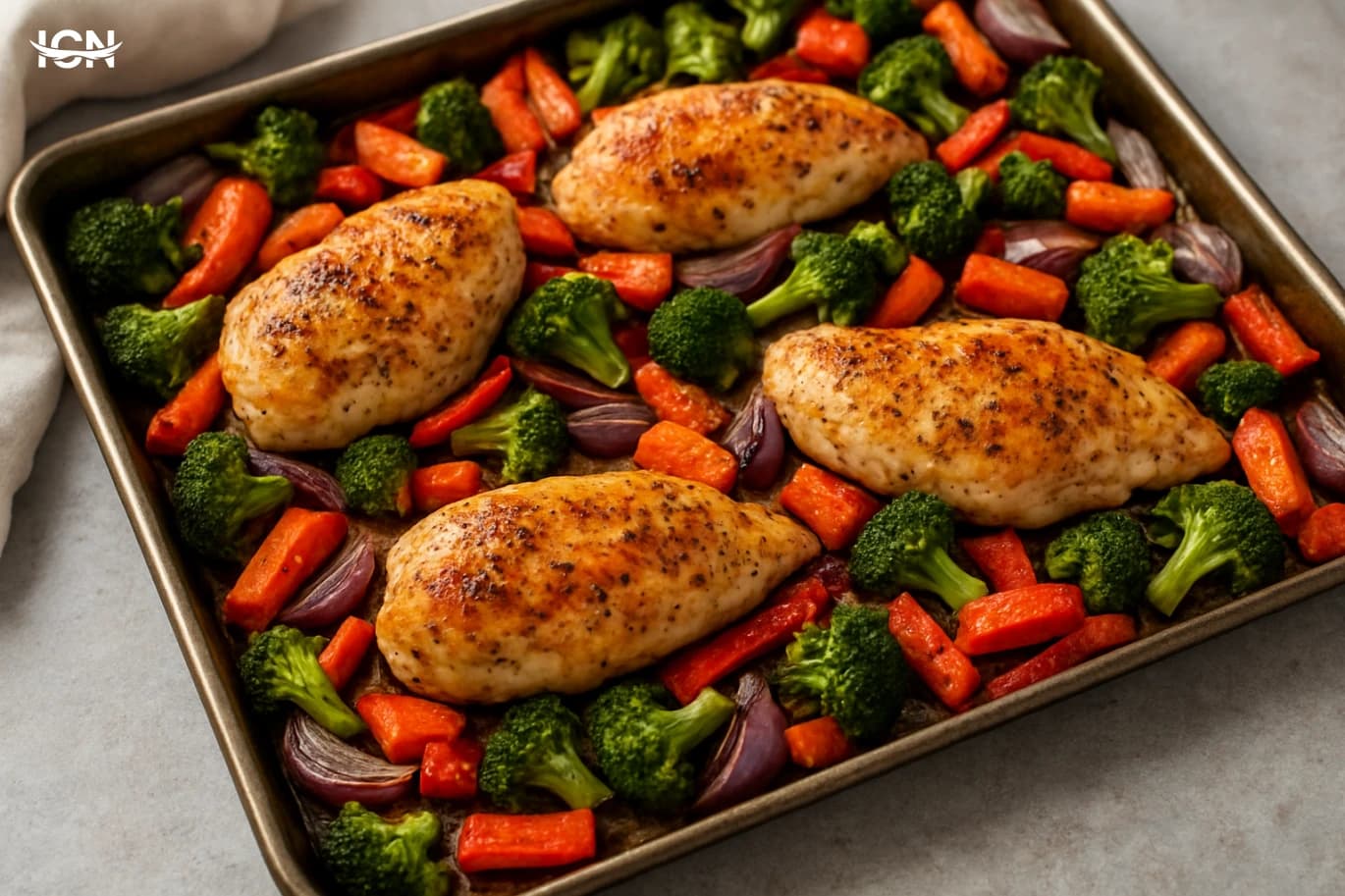
A reliable base starts with chicken thighs or drumsticks, about 1.2 to 1.5 kilograms for four servings. Thighs tolerate high heat and stay juicy, while drumsticks are budget-friendly and roast evenly. For vegetables, choose a mix that cooks at similar speeds: potatoes or sweet potatoes for starch, carrots for sweetness, red onion for aroma, and bell peppers or zucchini for color. If you prefer a lighter pan, swap potatoes for cauliflower florets or chickpeas for a higher-protein option. For seasoning, build a paste with 2 to 3 tablespoons olive oil, 4 minced garlic cloves, 1 tablespoon lemon juice, 1 teaspoon paprika, 1 teaspoon ground cumin, 1 teaspoon dried oregano, and 1 to 1.5 teaspoons salt, plus black pepper. Add a spoon of tomato paste for deeper color, or a teaspoon of honey to help browning. If you need a low-sodium version, reduce salt and increase acidity with extra lemon and a splash of vinegar. Fresh parsley or cilantro added at the end lifts the dish and makes it taste finished. Substitutions should respect cooking time. Broccoli and green beans can work, but add them halfway through so they do not overcook. Mushrooms release water, so use them in smaller amounts or roast them separately if you want crisp edges. If you are using boneless chicken breast, cut it into large pieces and add it later in the roast to avoid dryness.
Prep and timing for consistent results
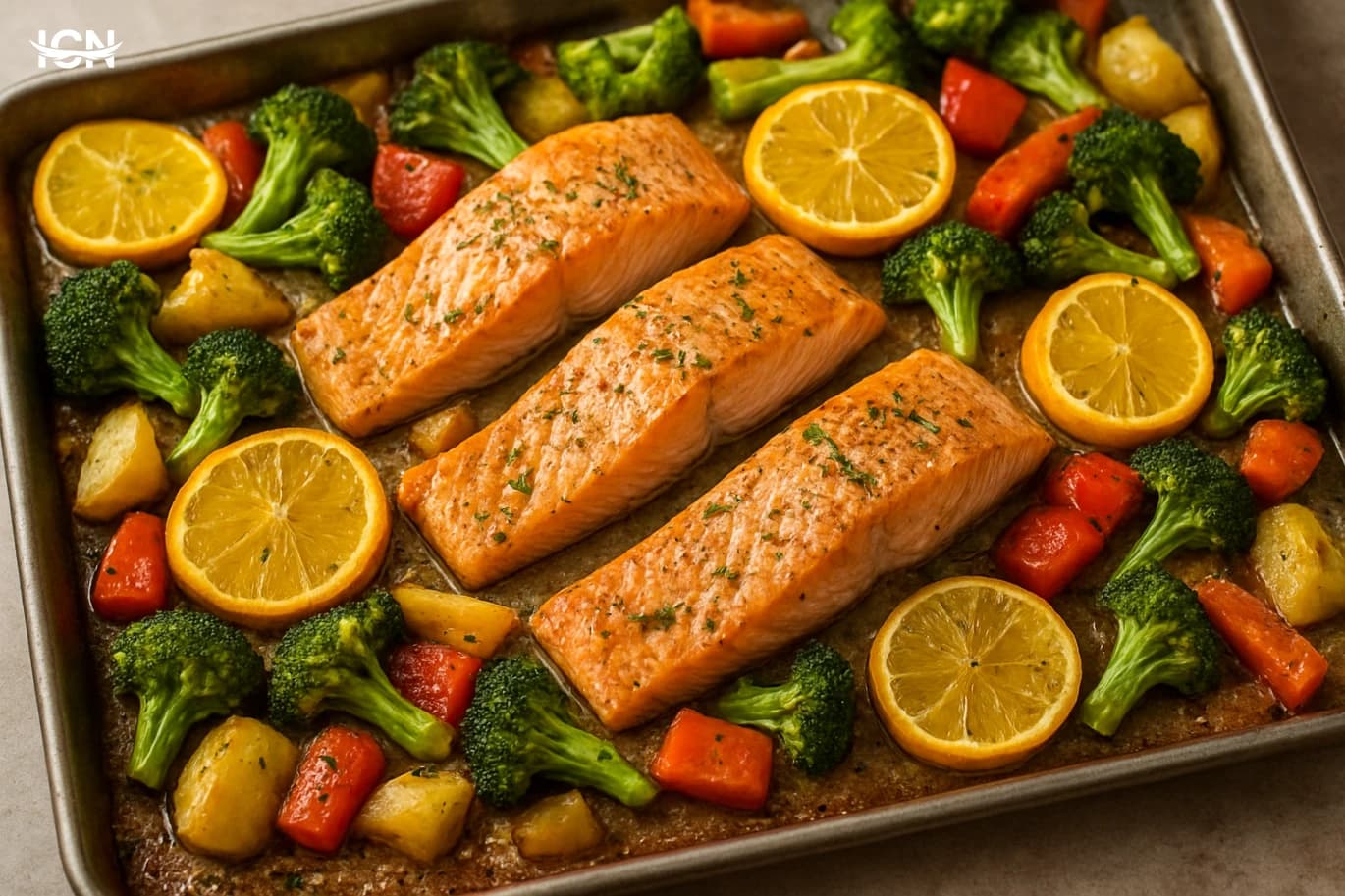
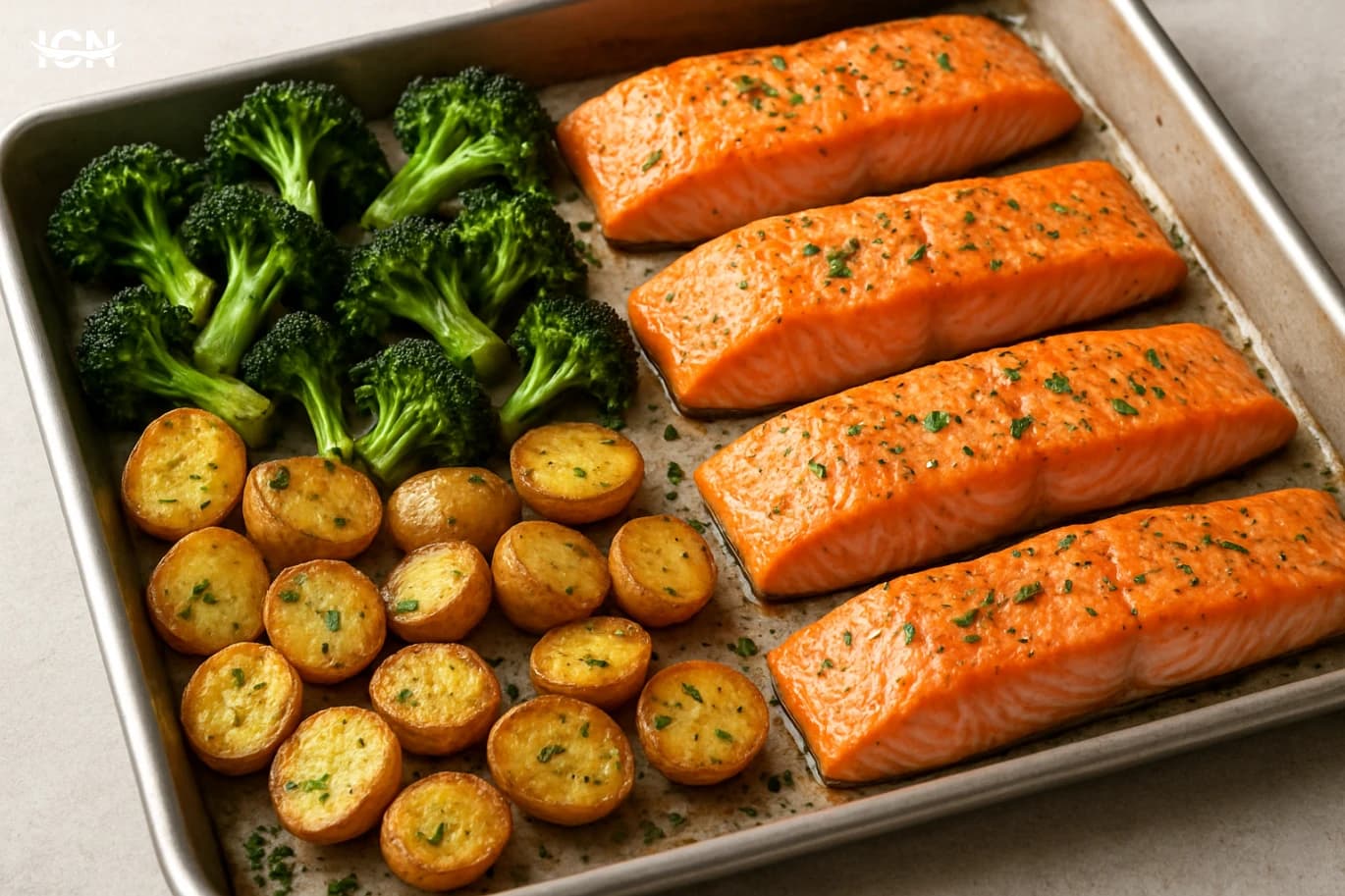
Consistency comes from two steps: drying and spacing. Pat the chicken dry with paper towels so the skin or surface can brown instead of steaming. Cut vegetables into uniform sizes: potatoes into 3-centimeter chunks, carrots into thick batons, onions into wedges. Toss vegetables with a portion of the seasoning paste first, then coat the chicken with the remaining paste. This prevents the pan from becoming overly oily and ensures the chicken gets the strongest flavor. Use a heavy sheet pan or a large roasting tray. Preheat the oven to 220°C. Spread vegetables in a single layer, leaving small gaps for hot air circulation. Place chicken pieces on top or between vegetables, skin side up if using skin-on cuts. Roast for 20 minutes, then rotate the pan and stir vegetables lightly to expose new surfaces. Continue roasting for another 15 to 25 minutes depending on the size of the pieces. The most reliable doneness check is temperature. Chicken should reach 74°C in the thickest part. If you do not have a thermometer, look for clear juices and firm texture, but be aware that visual cues vary by cut. For extra browning, switch to the broiler for 2 to 4 minutes at the end, watching closely. Rest the pan for 5 minutes before serving so juices redistribute and the vegetables settle.
Flavor variations without extra work
The same sheet pan method can produce different main dishes by changing the flavor profile while keeping the process identical. For a Mediterranean version, use lemon zest, oregano, and a handful of olives added in the last 10 minutes. Finish with crumbled feta if you serve it immediately. For a smoky profile, increase paprika, add a pinch of chili flakes, and use red onions and sweet potatoes to complement the heat. For a herb-forward pan, blend parsley stems, cilantro, garlic, and lemon with olive oil into a loose green sauce. Coat the chicken lightly and reserve a spoonful to drizzle after roasting. If you want a tangier result, add a tablespoon of yogurt to the seasoning paste; it helps tenderize and adds a subtle richness, but keep the layer thin to avoid excess moisture. Vegetable choices can also shift the dish. Brussels sprouts and carrots give a stronger roasted flavor, while zucchini and peppers keep it lighter and faster. If you are serving guests, add cherry tomatoes in the last 8 minutes so they blister without collapsing completely. These small adjustments keep the main dish interesting across multiple weeks without requiring new equipment or complicated steps.
Serving, storage, and meal prep
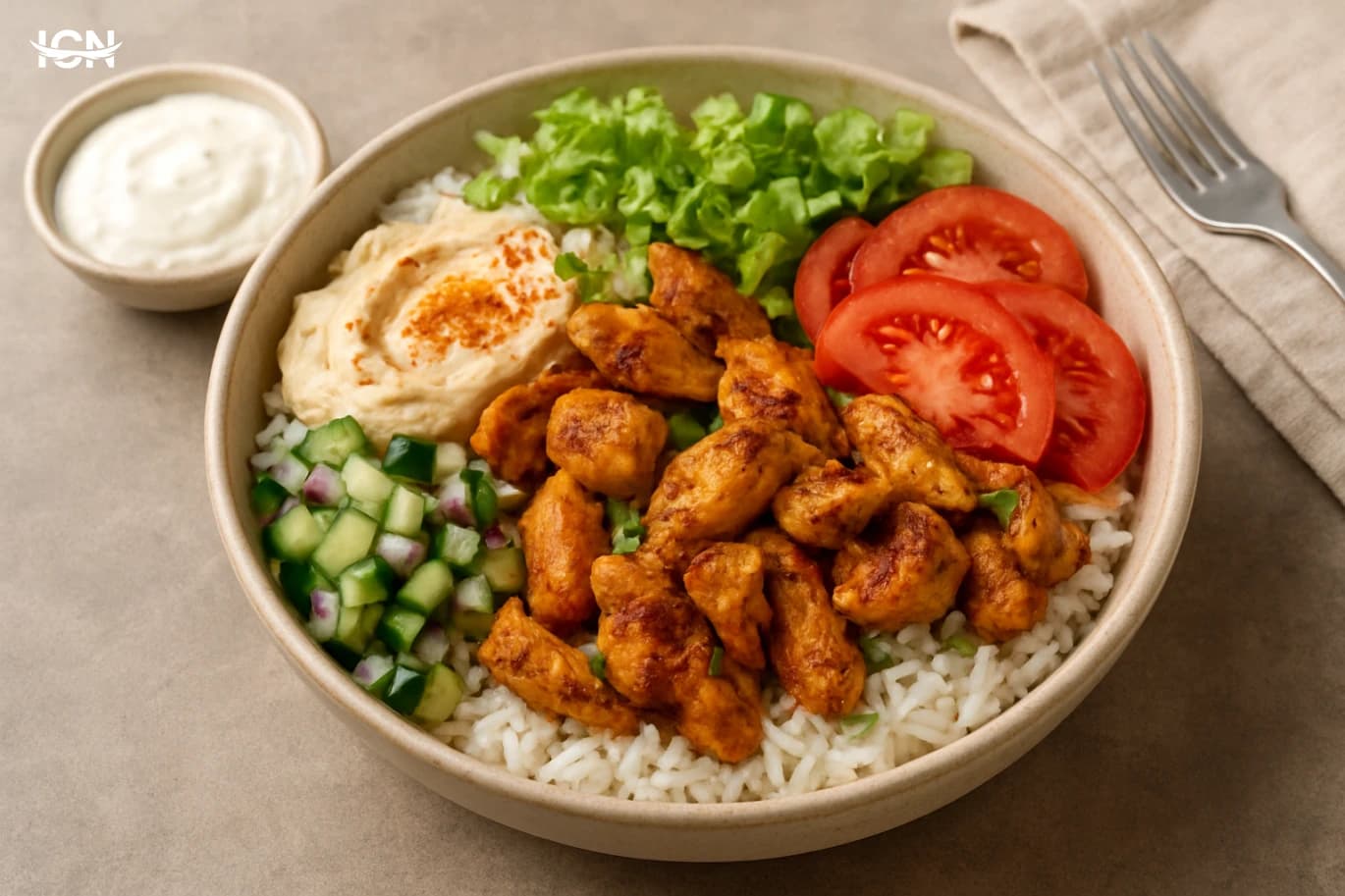
Serve the sheet pan chicken and vegetables straight from the tray for a casual dinner, or plate it with a clear structure: vegetables as the base, chicken on top, and pan juices spooned over. A simple side can make it feel like a complete main dish for different appetites. For example, serve with steamed rice, couscous, or warm flatbread. If you want a lighter plate, pair it with a cucumber and tomato salad dressed with lemon and a measured teaspoon of olive oil. For storage, cool leftovers within a reasonable time, then refrigerate in airtight containers. The dish keeps well for up to three days. Reheat in a 190°C oven for 10 to 15 minutes to restore some crispness, or use a skillet with a small splash of water and a lid to warm it gently. Microwaving works, but it softens the roasted edges. For meal prep, you can chop vegetables and mix the seasoning paste up to a day ahead. Keep chicken separate until cooking time for food safety and better texture. Another efficient approach is to roast extra vegetables on a second tray; they can be used in wraps, grain bowls, or as a side for another main dish later in the week.