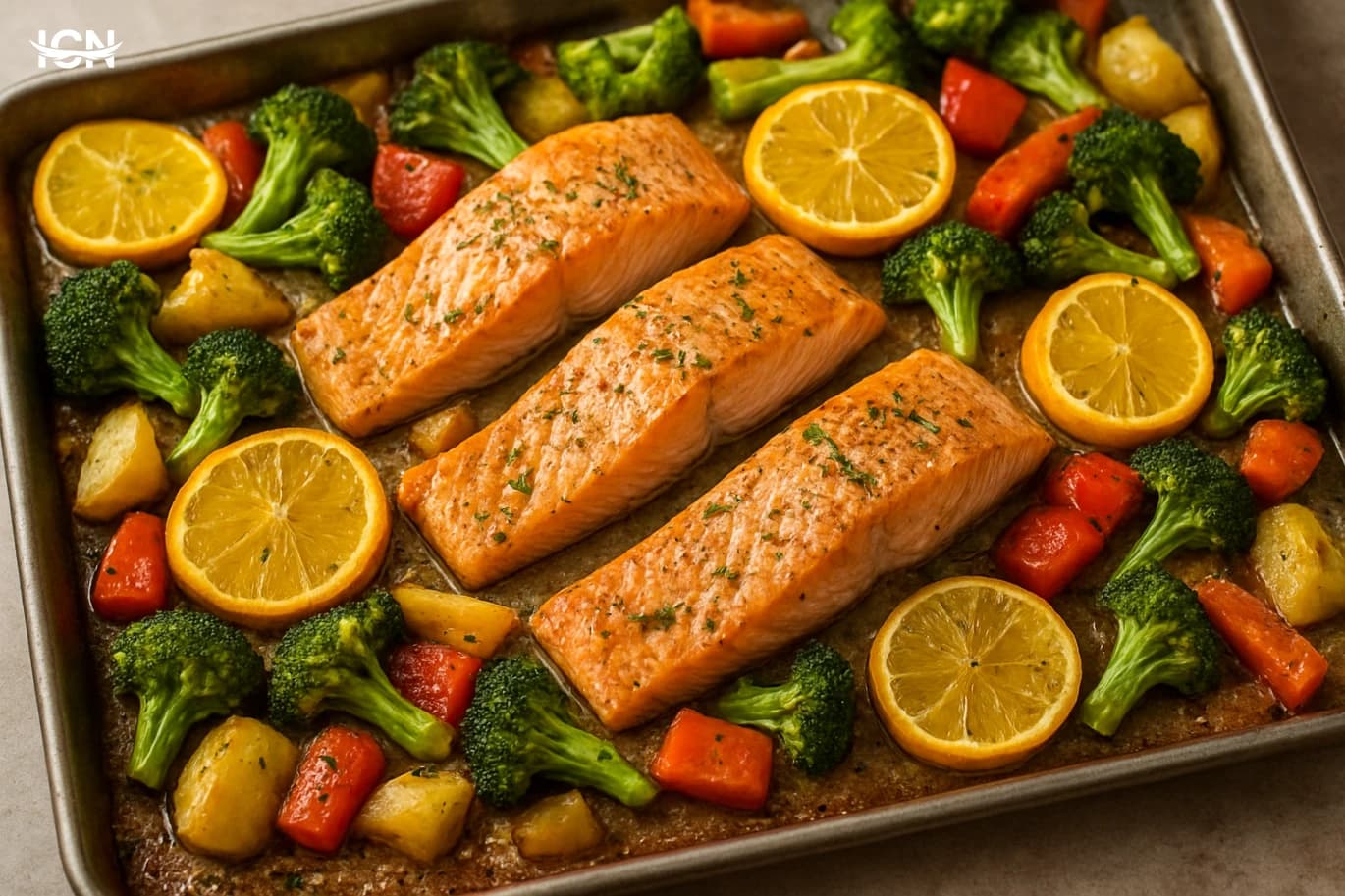
Sheet Pan Citrus Salmon Dinner
- Why this main dish works on busy nights
- Ingredients that make the flavor balanced
- Step-by-step method for even roasting
- Common mistakes and how to avoid them
- Serving ideas and smart leftovers
Why this main dish works on busy nights
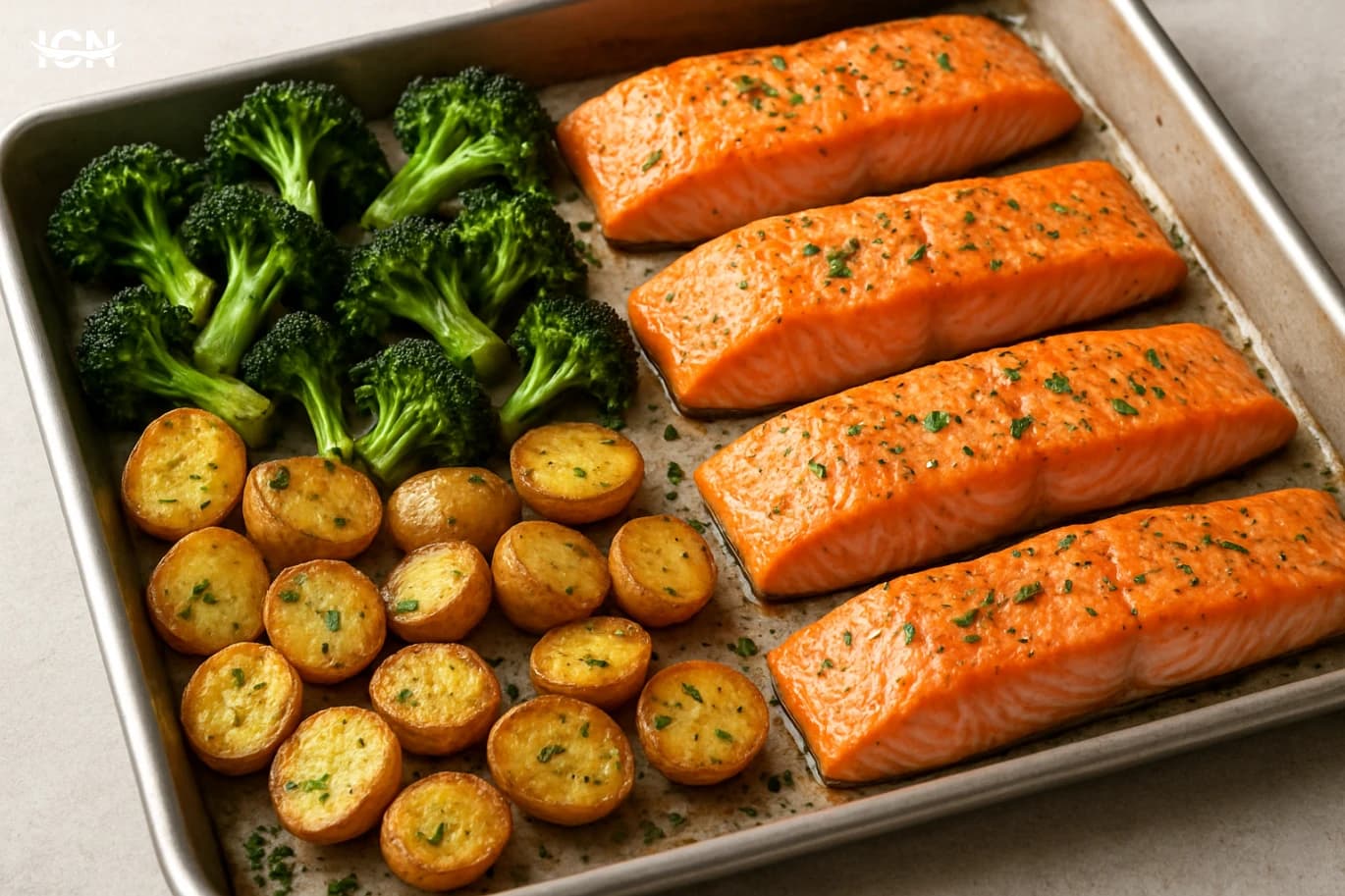
Sheet pan citrus salmon is a practical main dish because it delivers a complete dinner with minimal equipment and predictable timing. You cook the protein and vegetables together on one tray, so the oven does most of the work while you handle small tasks like mixing a quick sauce or setting the table. The flavor profile is clear and consistent: citrus brightens the salmon, a touch of sweetness balances acidity, and herbs add freshness without requiring a long marinade. From a planning perspective, it fits common weeknight constraints. Most home ovens can roast salmon and vegetables in 15–25 minutes depending on thickness and cut size, and cleanup is limited to a cutting board, a bowl, and the pan. It also scales well: you can add extra fillets and increase vegetables without changing the method, which makes it useful for families or meal prep. The result is a main dish that feels intentional and restaurant-like, but remains straightforward enough to repeat regularly.
Ingredients that make the flavor balanced
For the salmon, choose center-cut fillets when possible because they cook more evenly. A typical portion is 150–200 grams per person. For the citrus element, a combination works better than a single fruit: orange for sweetness and aroma, lemon for sharper acidity, and optional lime for a slightly greener note. Use both zest and juice, but keep the zest measured so it stays fragrant rather than bitter. Vegetables should roast at a similar pace. Good pairings include asparagus, green beans, zucchini, bell peppers, cherry tomatoes, or thinly sliced fennel. If you want a starch on the same pan, use baby potatoes cut small or pre-steam larger pieces so they finish on time. The sauce can be as simple as olive oil, citrus juice, a teaspoon of honey or maple syrup, Dijon mustard for structure, minced garlic, and a pinch of salt. Fresh dill, parsley, or chives work well; dried herbs are acceptable but use smaller amounts. This ingredient set is flexible, but the balance matters: acid plus a small sweetener, fat from olive oil, and a savory anchor like mustard or garlic. That combination keeps the salmon tasting clean and the vegetables tasting roasted rather than steamed.
Step-by-step method for even roasting
Start by heating the oven to 200°C (about 400°F). Line a rimmed sheet pan with parchment for easier cleanup, then lightly oil the surface. Prepare vegetables first because they often need a head start. Cut pieces to a consistent size: thin spears, small cubes, or slices no thicker than 1–1.5 cm. Toss them with olive oil, salt, and pepper, and spread them out so they roast rather than steam. If using quick-cooking vegetables like asparagus or green beans, you can add them at the same time as the salmon. For denser vegetables or potatoes, roast them for 10–15 minutes first. While they start, mix the citrus sauce in a small bowl: citrus juice, a little zest, mustard, honey, garlic, and olive oil. Pat the salmon dry with paper towels, season lightly with salt, and place it skin-side down if the skin is on. When the vegetables are partially roasted, push them to the sides and place the salmon in the center. Spoon or brush the sauce over the salmon and lightly over the vegetables. Roast until the salmon flakes easily and looks opaque at the thickest point, typically 10–14 minutes for average fillets. For a more caramelized surface, finish with 1–2 minutes under the broiler, watching closely. Rest the fish for a couple of minutes before serving so juices settle, then add fresh herbs and a final squeeze of citrus for a clean finish.
Common mistakes and how to avoid them
The most common issue is overcooking salmon. Because sheet pans expose food to direct heat, a few extra minutes can dry the fish. Use fillets of similar thickness and remove the pan as soon as the center turns opaque. If you have a thermometer, aim for about 50–54°C (122–129°F) for a moist result, allowing carryover heat to finish it. Another frequent problem is soggy vegetables. This usually comes from crowding the pan or using pieces that are too wet. Dry washed vegetables thoroughly and leave space between pieces. If you are cooking high-moisture vegetables like zucchini or tomatoes, keep them in larger pieces and add them later so they roast without collapsing. Sauce balance matters as well. Too much citrus juice can make the pan watery and dilute browning. Keep the sauce concentrated with a modest amount of juice, enough oil to coat, and a small sweetener to help caramelization. Finally, avoid adding delicate herbs too early; they can darken and taste dull. Add fresh herbs at the end for a cleaner flavor and better appearance.
Serving ideas and smart leftovers
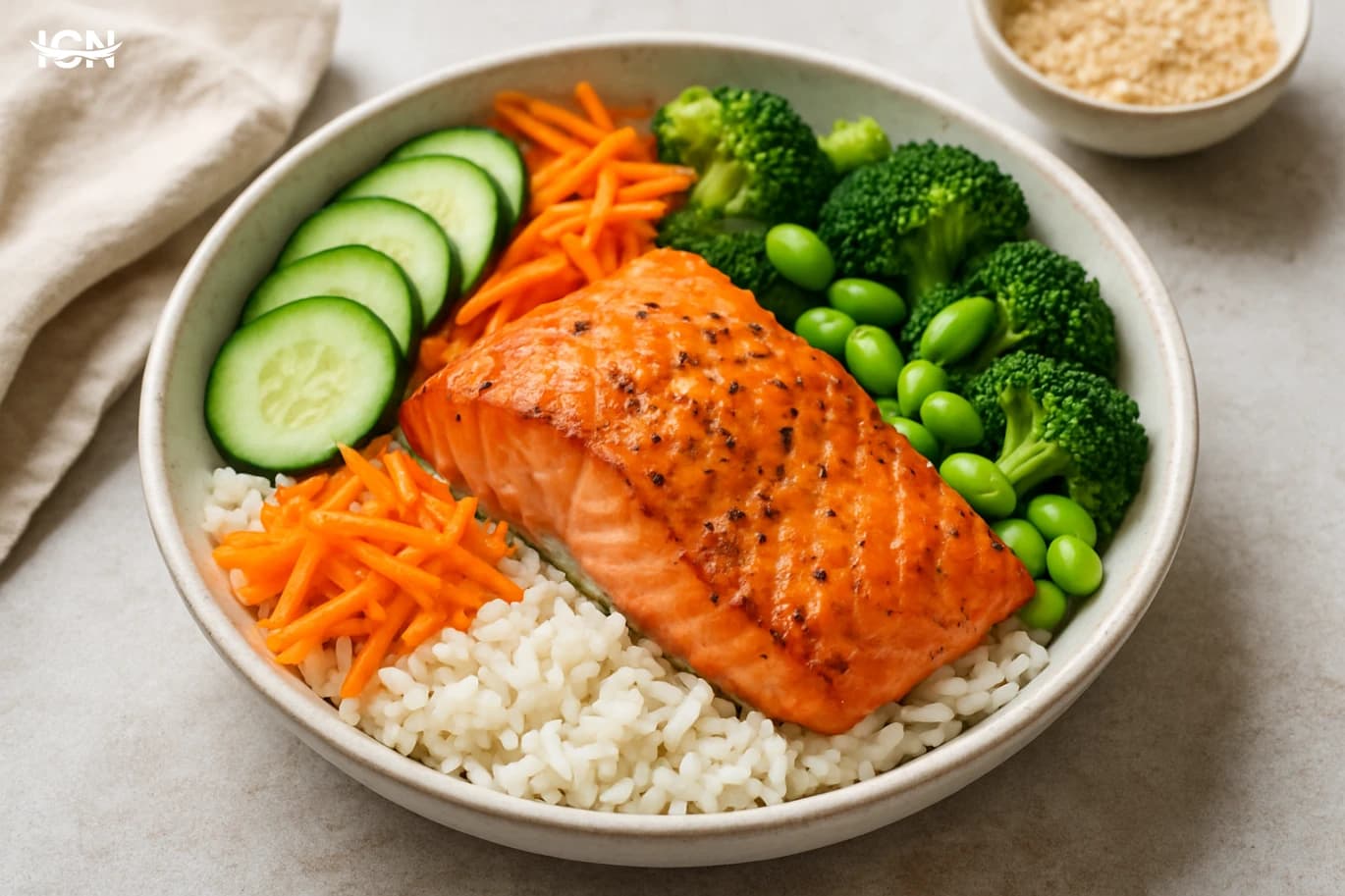
Serve the sheet pan citrus salmon straight from the oven with a simple base that absorbs the sauce. Options include cooked rice, quinoa, couscous, or a warm grain blend. If you prefer a lighter plate, pair it with a crisp salad of cucumbers, arugula, and a mild vinaigrette. For extra texture, add toasted almonds or pumpkin seeds at the table rather than on the pan. Leftovers hold up well if handled carefully. Cool the salmon and vegetables quickly, store them in airtight containers, and refrigerate for up to two days for best quality. Use leftover salmon in a lunch bowl with grains and greens, or flake it into a lemony pasta with olive oil and herbs. Roasted vegetables can be folded into an omelet or blended into a quick soup base with stock. If you plan to meal prep, keep a small portion of sauce separate and add it after reheating. Reheat gently in a low oven or briefly in a covered skillet to avoid drying the fish. This approach keeps the main dish tasting fresh even on the second day.