Your First Personal Budget That Actually Works
- Why most budgets fail in week two
- Start with a 14-day spending snapshot
- Build a simple budget with three layers
- Plan for irregular expenses without stress
- Set guardrails for cards and online spending
- Make it stick with a monthly reset
Why most budgets fail in week two
Many first-time budgets collapse quickly because they are built on guesses, not real spending data. People often start with a strict plan that ignores irregular costs like annual subscriptions, school fees, car maintenance, or gifts. When those expenses appear, the budget feels “broken,” and the person stops tracking altogether. Another common issue is using categories that are too broad, such as “miscellaneous,” which becomes a dumping ground that hides patterns. Budgets also fail when they rely on willpower instead of systems. If every purchase requires a mental debate, fatigue sets in and the plan gets abandoned. A workable budget is less about perfection and more about creating clear limits, simple rules, and a routine that takes minutes, not hours. The goal is to make spending visible and predictable, so you can make choices before the money is gone.
Start with a 14-day spending snapshot
Before you set limits, collect evidence. For 14 days, record every expense in a notes app or spreadsheet, including small items like coffee, delivery fees, and parking. If you use cards, export transactions from your bank app; if you use cash, take a quick photo of receipts. The point is not to judge the spending, but to capture it. At the end of two weeks, group expenses into 8–12 categories that match your life: housing, groceries, transport, utilities, debt payments, health, family, and personal spending. Keep categories practical. If “food” is too big, split it into groceries and eating out. If you have frequent online shopping, create a separate category so it doesn’t disappear inside “personal.” This snapshot becomes your baseline, and it prevents you from building a budget based on optimism.
Build a simple budget with three layers
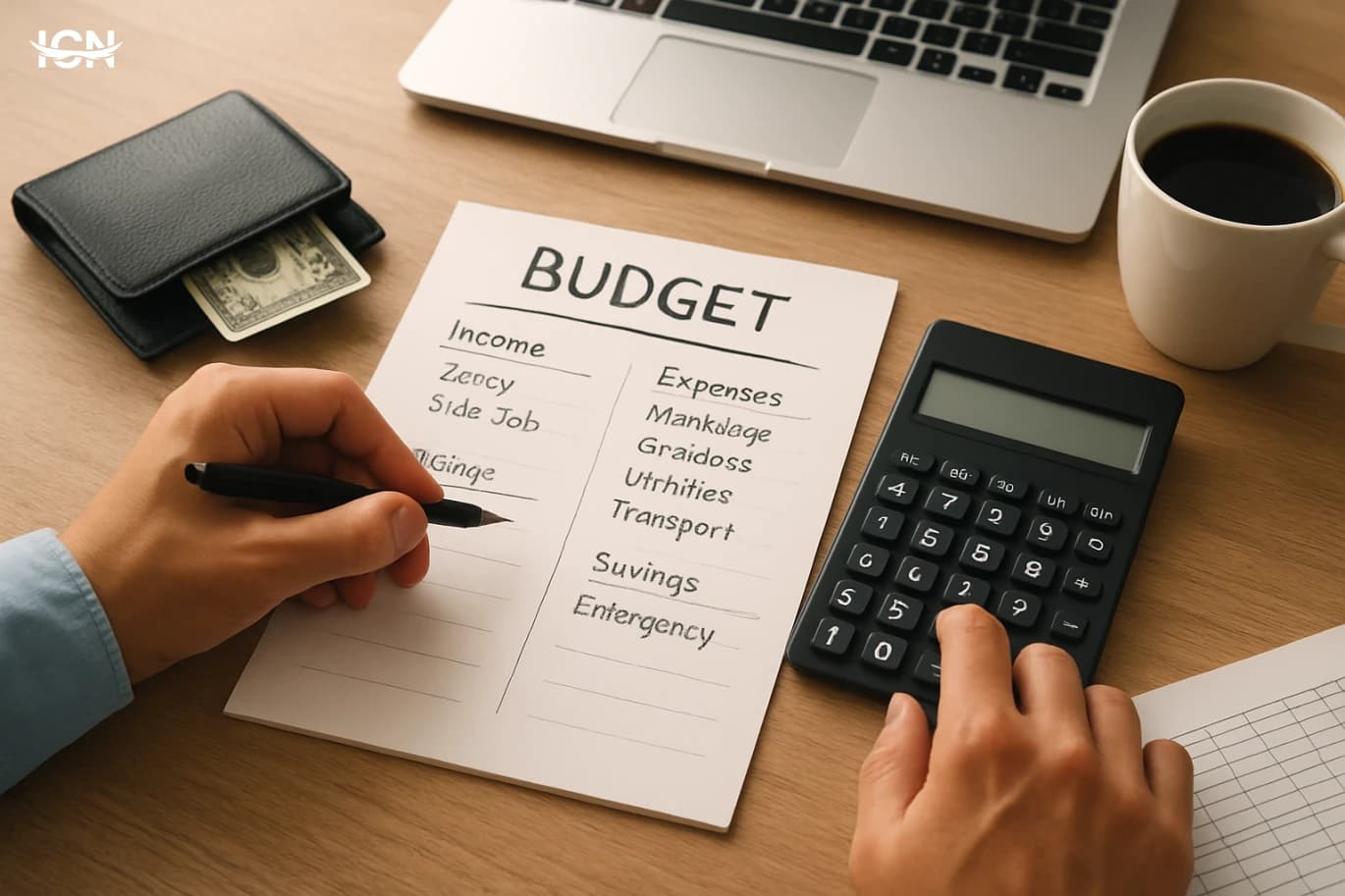
A practical first budget can be built in three layers: fixed essentials, flexible essentials, and choices. Fixed essentials are costs that don’t change much month to month: rent, loan payments, insurance, and minimum debt payments. Flexible essentials are necessary but adjustable: groceries, utilities, transport fuel, and basic phone plans. Choices are everything else: dining out, entertainment, upgrades, and impulse purchases. Start by listing fixed essentials and subtracting them from your monthly income. Then set targets for flexible essentials using your 14-day snapshot, adjusted to a full month. Finally, decide how much you want available for choices. If the numbers don’t fit, adjust in the right order: reduce choices first, then optimize flexible essentials, and only then revisit fixed costs through longer-term actions like refinancing, changing plans, or moving. This structure keeps the budget realistic. It also prevents the common mistake of cutting groceries too aggressively while leaving discretionary spending untouched. Your budget should reflect priorities, not just categories.
Plan for irregular expenses without stress
Irregular expenses are predictable in timing or likelihood, even if they don’t happen monthly. Examples include car servicing, annual memberships, back-to-school costs, medical checkups, and home repairs. The simplest method is to create a “sinking fund” line in your budget: a monthly amount set aside for these future bills. Make a list of the irregular expenses you expect over the next 12 months. Estimate each cost conservatively, add them up, and divide by 12. If the total is $1,200, you set aside $100 per month. Keep this money in a separate savings sub-account if possible, so it doesn’t get mixed with daily spending. When the expense arrives, you pay it from the sinking fund instead of using a credit card or breaking your budget. This approach turns surprises into scheduled events. It also reduces the cycle of “good month, bad month” that makes people feel they are failing financially when the real issue is missing planning.
Set guardrails for cards and online spending
Card payments and one-click checkout make spending feel painless, which is exactly why budgets get derailed. Instead of trying to avoid cards completely, set guardrails. First, assign card spending to specific categories: for example, use one card for groceries and transport only, and another for recurring bills. This makes tracking easier and reduces “category drift.” Second, create a weekly cap for discretionary spending. If your monthly “choices” budget is $240, set a $60 weekly limit. Weekly limits provide faster feedback and prevent end-of-month surprises. Third, add friction to online shopping: remove saved cards from retail apps, turn off one-click purchases, and keep a 24-hour rule for non-essential items above a set amount. Finally, schedule a 10-minute money check-in twice a week. Review transactions, confirm you are within limits, and adjust the next few days if needed. Small, frequent corrections are more effective than a long monthly review after the money is already spent.
Make it stick with a monthly reset
A budget becomes reliable when it is updated, not when it is perfect. At the end of each month, do a reset in three steps. Step one: compare planned vs. actual spending in each category and write one sentence explaining the biggest gap. Step two: adjust next month’s targets based on what you learned, not what you wish had happened. Step three: set one improvement goal only, such as lowering eating out by 10% or adding $50 to your sinking fund. Also, tie the budget to a simple calendar routine: set bill dates, schedule transfers to savings right after payday, and pick a consistent day for the reset. If you share finances with family members, agree on two rules everyone can follow, like a spending threshold that requires a quick discussion. Over time, this process turns budgeting into a management habit. You will know your fixed commitments, anticipate irregular costs, and make discretionary spending a deliberate choice rather than an accident.