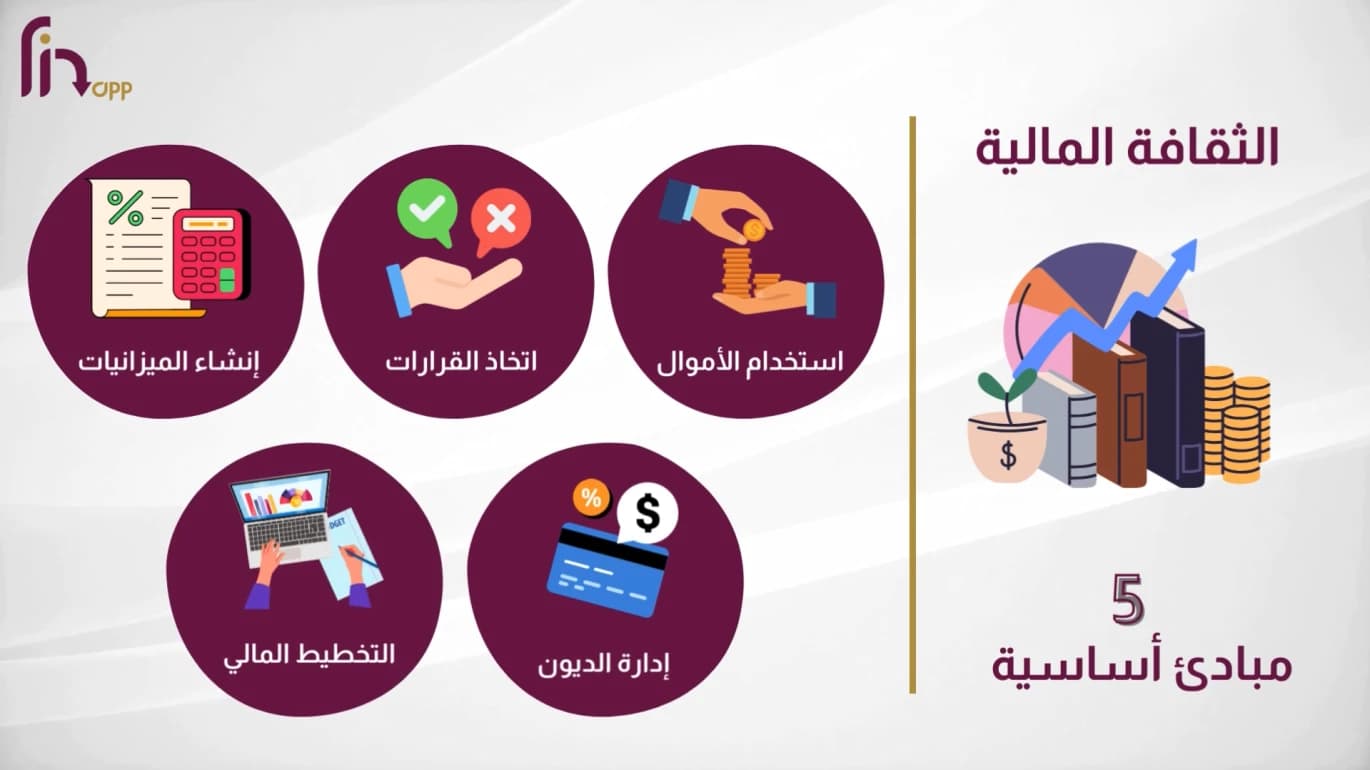
Financial awareness

- Introduction to financial awareness
- Fundamentals of budget management
- Saving and investing
- Debts and how to deal with them
- Financial planning for the future
Introduction to financial awareness
A. The concept of financial awareness and its importance Financial awareness is defined as the ability to understand and manage financial matters in an effective manner. This includes knowing how to save, invest, and manage debt. Financial awareness contributes to better financial decisions, leading to a more stable financial life. for. Benefits of enhancing financial awareness for the individual and society. Enhancing financial awareness benefits individuals as it helps them achieve their financial goals and plan their future lives. The community also benefits through reduced poverty rates and increased economic stability. Education and financial awareness play a vital role in building communities that are more resilient to economic challenges.
Fundamentals of budget management
A. Preparing a personal budget Preparing a personal budget is an essential step towards achieving financial security. Individuals must determine their sources of income and overhead expenses within a consistent time frame. Through this, they are able to determine their financial priorities and allocate resources effectively, which contributes to achieving the set financial goals. for. Monitor Expenses and Income To control finances, it is important to monitor expenses periodically. Apps or spreadsheets can be used to track both income and expenses. This monitoring helps individuals make the necessary decisions to reduce expenses and increase savings, thus improving the overall financial situation.
Saving and investing
A. The importance of saving and ways to apply it Saving is considered one of the vital matters that contribute to building a strong financial base. Individuals should allocate a portion of their income to savings, whether through savings accounts or investments. This habit helps them face financial emergencies and achieve personal goals such as buying a home or financing education. for. Investment basics and types Investments are a way to increase wealth in the long term. Individuals can invest in stocks, bonds, real estate, or even small projects. It is important that they understand the risks and returns associated with each type of investment, and that they distribute their financial portfolios in a balanced way to ensure sustainable profits.
Debts and how to deal with them
A. Types of debts and their impact on the financial situation There are many types of debts, including personal debts, credit debts, and mortgage debts. These debts greatly affect the financial situation of individuals, as they may cause financial burdens and psychological stress when unable to pay them on the specified dates. for. Strategies to Pay Off Debt Effectively To reduce financial stress, individuals should develop an effective repayment plan. This includes prioritizing repayment, reducing unnecessary expenses, and the possibility of negotiating with creditors to obtain better terms. Keeping your budget organized is an essential step in paying off debt effectively.
Financial planning for the future
A. Setting Short- and Long-Term Financial Goals Setting financial goals is an essential step to achieving financial stability. Individuals should set short-term goals such as saving for a trip or paying off debt, and long-term goals such as buying a home or retiring comfortably. for. Insurance and Financial Protection Protecting the financial future through insurance is essential. Life, health, and property insurance should be considered to protect money and resources in an emergency. These steps help build a strong financial base that ensures long-term financial security.