Principles of financial culture
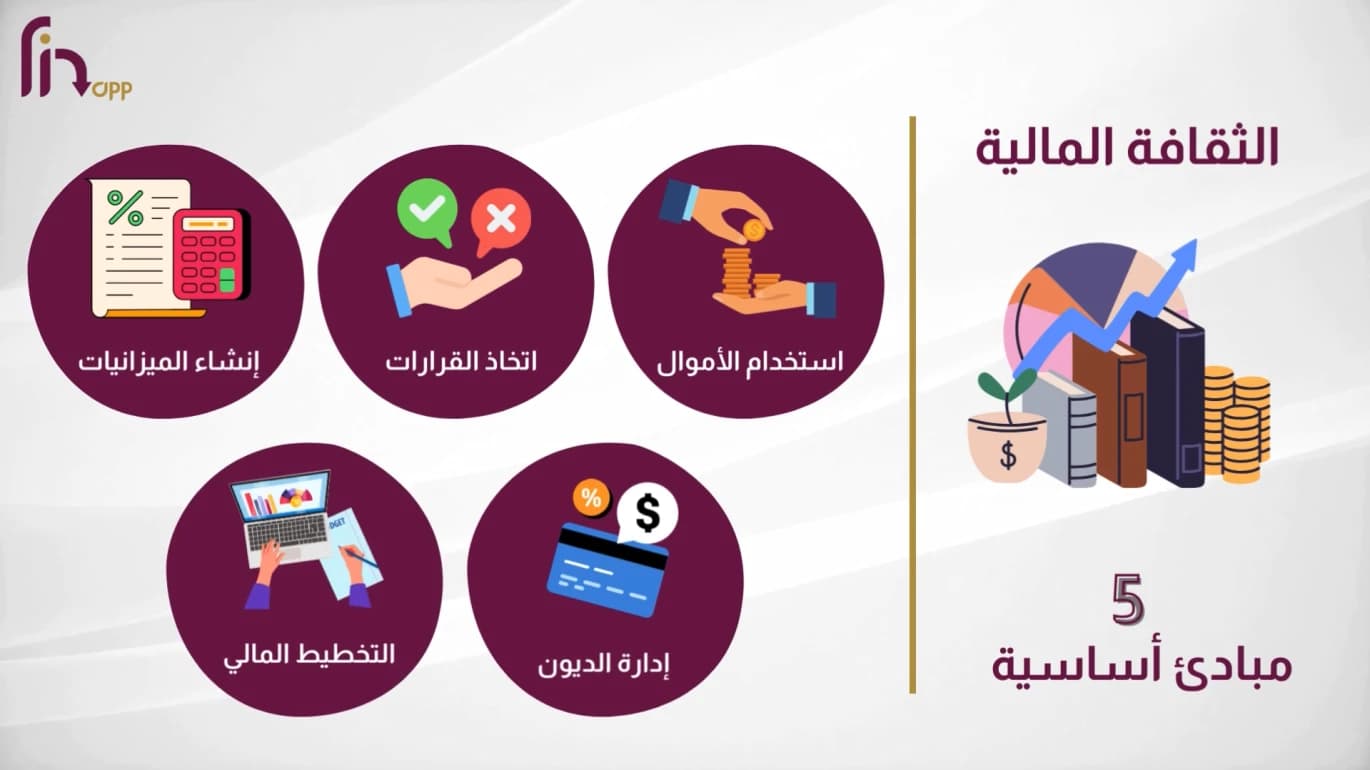
- Introduction to the principles of financial culture
- Saving and expense management
- Understanding financial instruments
- Investment and safe investment
- Credit and debt
Introduction to the principles of financial culture
A. The importance of financial culture in daily life Financial culture is considered one of the necessary foundations that help individuals manage their money better. It enables them to make informed financial decisions, which contributes to improving their quality of life. Individuals who possess financial knowledge are able to plan for the future, avoid debt, and invest intelligently. for. Objectives of enhancing the financial culture of society: Communities seek to enhance financial culture with the aim of enabling individuals to build sustainable wealth. Through awareness and training programmes, financial understanding can be enhanced and contribute to creating a stable economic society. Financial culture is a means to support innovation and bring about positive changes that meet the needs of current and future generations.
Saving and expense management
A. Effective Saving Strategies Saving strategies are an essential part of financial culture. By setting specific savings goals, individuals can allocate a portion of their income to invest in savings. These strategies include opening separate savings accounts and taking advantage of bank offers and rewards, which enhances the ability to achieve financial goals. for. Organizing the personal budget Organizing the personal budget helps individuals control their expenses and achieve financial balance. This requires recording all expenses and income monthly, providing a clear view of how money is being spent. By using budgeting apps or traditional systems, individuals can achieve better financial management.
Understanding financial instruments
A. Types of Bank and Savings Accounts People know that there are different types of bank accounts, such as savings accounts and current accounts. Each type has advantages and disadvantages, so choosing the appropriate type depends on the financial needs and personal goals of the individual. By investing in higher interest accounts, your savings can increase over time. for. Financial products such as loans and investments Loans and investments are important financial instruments. Individuals can use loans to meet immediate financial needs, while investments provide an opportunity to grow wealth over the long term. It is important to understand the risks associated with each financial product and the conditions necessary to use it effectively.
Investment and safe investment
A. Basic Investing Concepts Individuals understand the importance of investing as a way to grow their money. This includes many instruments such as stocks, bonds and real estate. A good understanding of these tools is essential to making profits. for. Investment Risks and How to Manage Risks All investments contain a level of risk, making it essential for investors to know how to manage these risks. Through diversification and good analysis, risks can be reduced and opportunities for positive returns increased. Therefore, experts always advise conducting research and understanding the market before making investment decisions.
Credit and debt
A. Types of Credit and How to Use It Responsibly Credit is an important financial tool that allows individuals to borrow for various purposes, such as purchasing homes or financing education. However, individuals should use it with caution. The use of credit is responsible when installments are made regularly and credit limits are not exceeded, which maintains the credit rating. for. Managing Debt and Minimizing Interest Debt management requires smart financial arrangements to minimize interest. Individuals are advised to collect their debts and analyze their interest, in addition to developing an appropriate repayment plan. By understanding financial conditions, individuals can reduce financial risks and have better financial stability.