Nighttime Reef Shift and Hidden Cleaners
- Why the reef changes after sunset
- The overlooked workforce of micro-cleaners
- How corals feed and defend at night
- Night predators, cautious prey, and new routes
- What night surveys reveal that day dives miss
- Practical ways to observe without disrupting
Why the reef changes after sunset
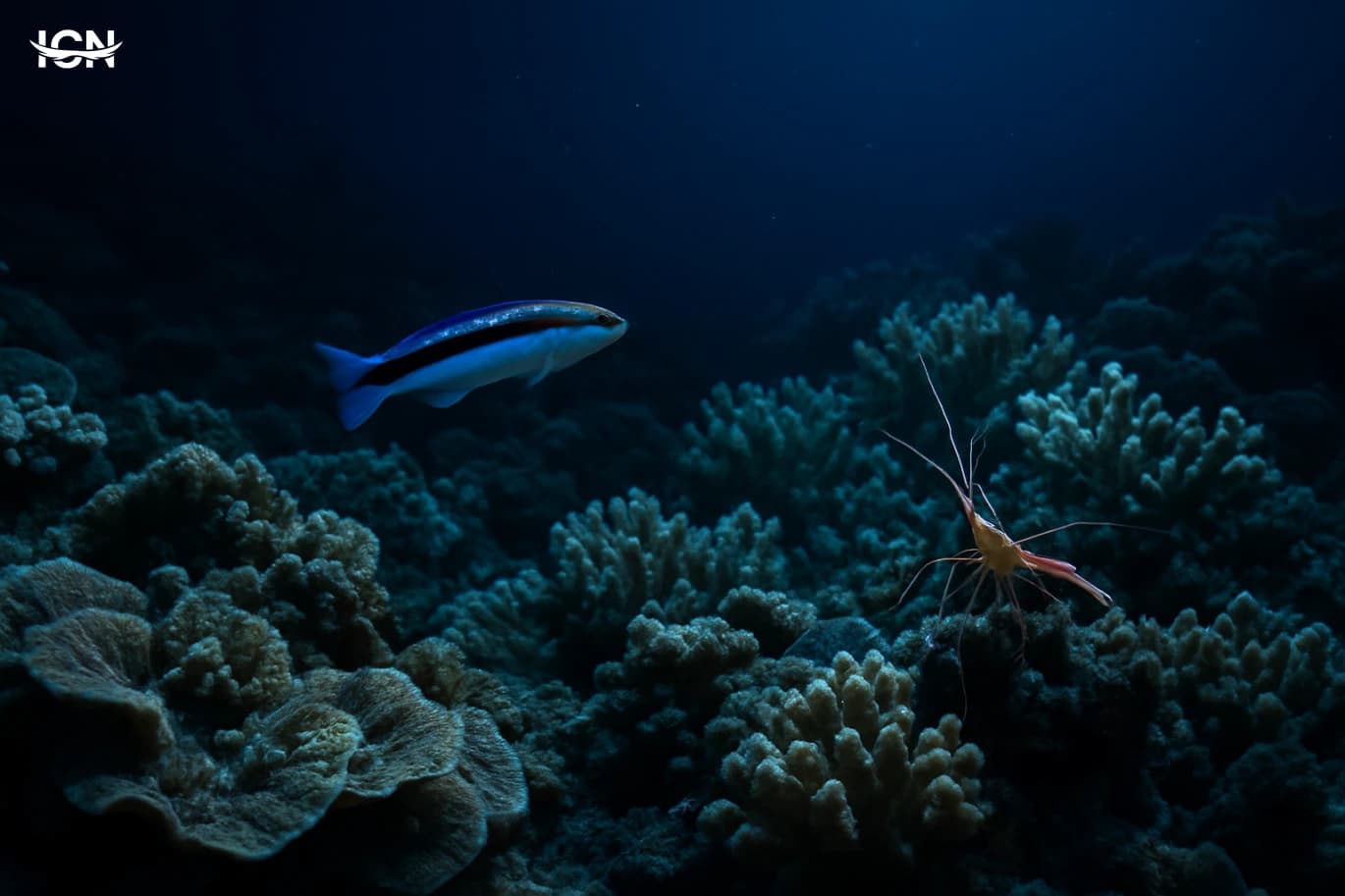
Many people picture coral reefs as daytime scenes: bright fish, clear water, and constant motion. After sunset, the same reef can operate on a different schedule. Light levels drop quickly, visual hunters lose an advantage, and animals that avoid daytime competition begin to move. This shift is not just about “more activity at night”; it is a reorganization of roles. Some fish retreat into crevices to reduce risk and conserve energy, while others emerge to feed when fewer competitors are active. Reef soundscapes also change, with different patterns of clicks and snaps that can influence how animals navigate and locate each other. A key driver is the daily rhythm of plankton in the water column. In many regions, small drifting organisms rise closer to the surface at night and sink deeper during the day. That movement can bring food closer to reef edges after dark, drawing in filter-feeders and plankton-eating fish. Temperature and oxygen conditions can also shift slightly overnight, especially in shallow lagoons, affecting where animals choose to rest or forage. Understanding the reef’s nighttime “shift change” helps explain why certain species are rarely seen by daytime snorkelers yet play major roles in keeping the ecosystem stable.
The overlooked workforce of micro-cleaners
When people hear “cleaning station,” they often think of a few well-known fish removing parasites from larger fish during the day. At night, cleaning can become more distributed and less obvious. Small crustaceans such as certain shrimp and amphipods, along with tiny worms and other invertebrates, can take on a quiet maintenance role. They feed on detritus, leftover food particles, and organic films that build up on rock surfaces, coral skeletons, and seagrass blades. This matters because excess organic material can fuel microbial growth that stresses corals and reduces water quality. These micro-cleaners are not a single species or a simple story. Different groups specialize in different “jobs”: some graze on biofilms, others break down larger fragments, and some live in close association with corals or sponges where they benefit from shelter. Their activity can increase after dark because many predators are less effective without light, and because the reef’s daytime traffic calms down. In practical terms, the reef’s cleanliness is partly maintained by organisms that are small enough to be missed in casual observation, yet numerous enough to influence nutrient cycling and the clarity of microhabitats where coral larvae and juvenile fish settle.
How corals feed and defend at night
Corals are often described as “plants of the sea,” but they are animals that can actively feed. Many reef-building corals extend their tentacles more fully at night, when the risk of being noticed by daytime grazers is lower and when drifting prey can be more available. They capture small zooplankton and organic particles, supplementing the energy they gain from their symbiotic algae during daylight. This nighttime feeding can be especially important during periods of stress, when corals may rely more on captured food to meet energy demands. Defense also looks different after dark. Some corals produce mucus layers that help trap particles and can reduce irritation from sediments. Others rely on stinging cells to deter small grazers. The balance between feeding and defense is influenced by water flow, which determines how much food passes by and how quickly waste is removed. In areas with steady currents, corals can feed efficiently without being smothered by fine particles. The nighttime behavior of corals is a reminder that reef health is tied to conditions that are not visible in daytime photos: plankton availability, water movement, and the presence of small organisms that either help keep surfaces clean or add to the organic load.
Night predators, cautious prey, and new routes
As darkness settles, the reef’s traffic patterns can change. Some fish that spend the day in open water move closer to shelter, while others that hide in the daytime begin to forage along sand channels and reef edges. Predation at night is not simply “more dangerous”; it is different. Hunters may rely on smell, vibration sensing, or short-range ambush rather than long chases. This can favor animals that can remain still, blend into the background, or use the reef’s structure to approach prey. For prey species, nighttime survival often depends on micro-decisions: choosing a crevice with the right depth, staying near companions, or selecting resting spots with water flow that carries away scent cues. Even small changes in habitat complexity—broken coral branches, rubble fields, or dense seagrass—can influence who eats and who escapes. These interactions ripple outward. If nighttime predators become too dominant in a disturbed reef, herbivorous fish may reduce grazing time, allowing algae to spread. Conversely, when the reef structure is intact and prey can find safe resting areas, grazing and cleaning behaviors can resume more normally the next day, supporting coral growth and keeping surfaces from being overrun.
What night surveys reveal that day dives miss
Night surveys are increasingly used by researchers and conservation teams because they reveal species and behaviors that daytime monitoring can undercount. Some invertebrates are primarily nocturnal, including certain sea cucumbers, brittle stars, and small crustaceans that emerge to feed on detritus. Their abundance can be an indicator of how much organic material is accumulating and how effectively the reef is processing it. Night observations can also help identify coral stress earlier, such as unusual mucus production or reduced polyp extension that may signal poor water conditions. From a management perspective, nighttime data can change priorities. If a reef shows heavy nighttime algal film growth, it may point to nutrient inputs from nearby land or insufficient grazing pressure. If key micro-cleaner populations appear reduced, it could suggest pesticide runoff, sedimentation, or habitat simplification that removes hiding places. Even simple comparisons—same transect, day versus night—can reveal whether fish communities are balanced across the full 24-hour cycle. This matters for restoration planning, because a reef that looks “fine” at noon may still be struggling if its nighttime maintenance crew is missing or if nocturnal predation pressure is unusually high.
Practical ways to observe without disrupting
Responsible nighttime observation requires different habits than daytime snorkeling. Bright white lights can startle fish, alter feeding, and draw animals out of shelter, changing the very behaviors an observer hopes to see. Using a low-intensity light, keeping the beam angled away from animals’ eyes, and limiting time on any single spot reduces disturbance. Moving slowly is not just a safety practice; it prevents stirring sediment that can settle on corals and interfere with feeding. For citizen scientists and dive operators, simple protocols can make observations more useful. Recording start and end times, water temperature, and a short list of species seen can help build local baselines. Noting the presence of detritus feeders, the amount of visible organic film on rocks, and whether corals are extending tentacles provides clues about nighttime ecosystem function. In areas with protected reefs, following local rules about night access and avoiding contact with the substrate are essential. The goal is to treat the reef as an operating system on a night shift: observe the processes, document them carefully, and leave conditions unchanged so the cleaners, feeders, and resting fish can continue their work until sunrise.