How Seagrass Meadows Keep Coasts Alive
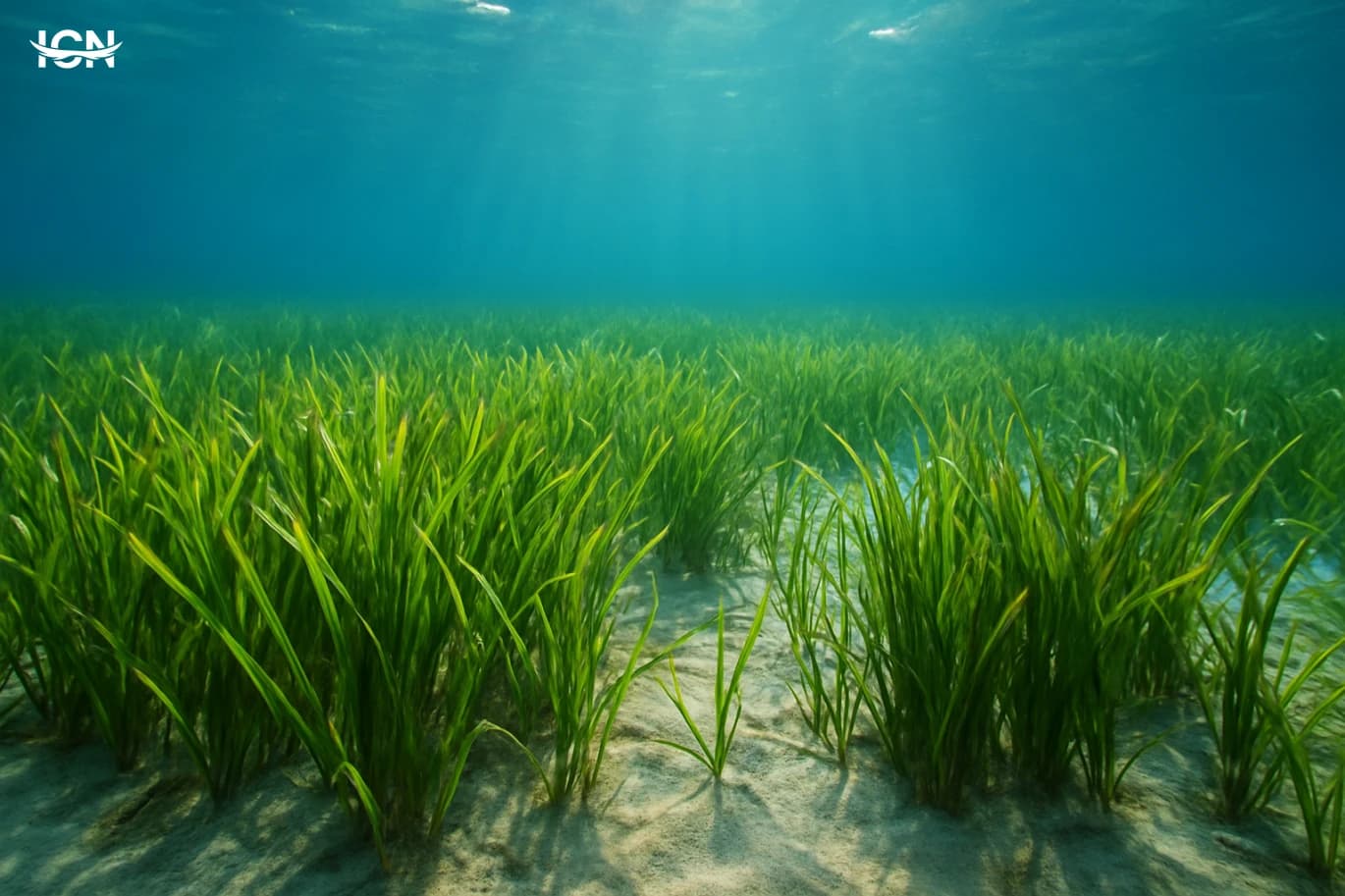
- What seagrass really is
- A nursery for fish and shellfish
- Coastal protection you can measure
- Blue carbon and climate relevance
- What is killing seagrass meadows
- Restoration that actually works
What seagrass really is
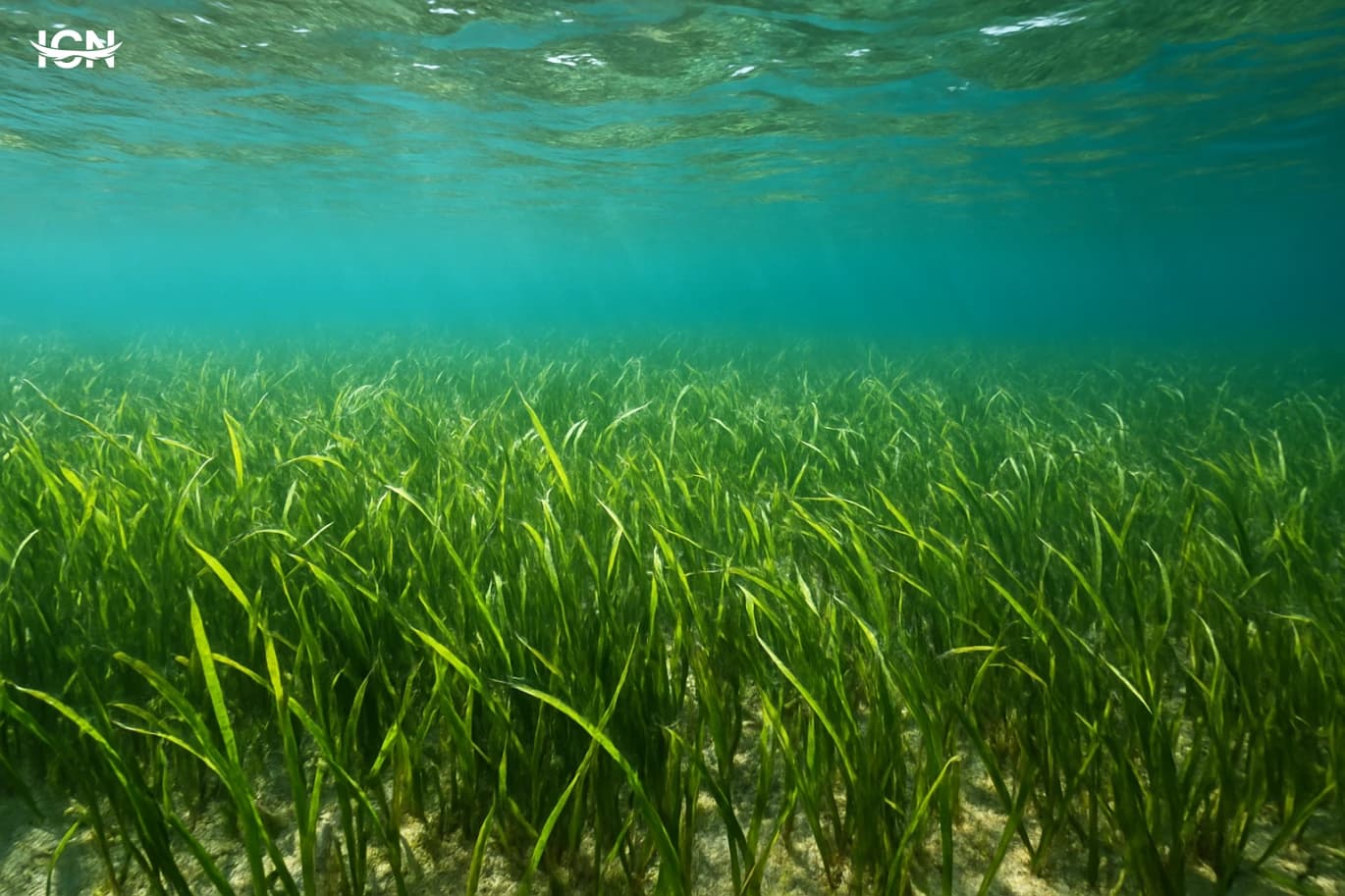
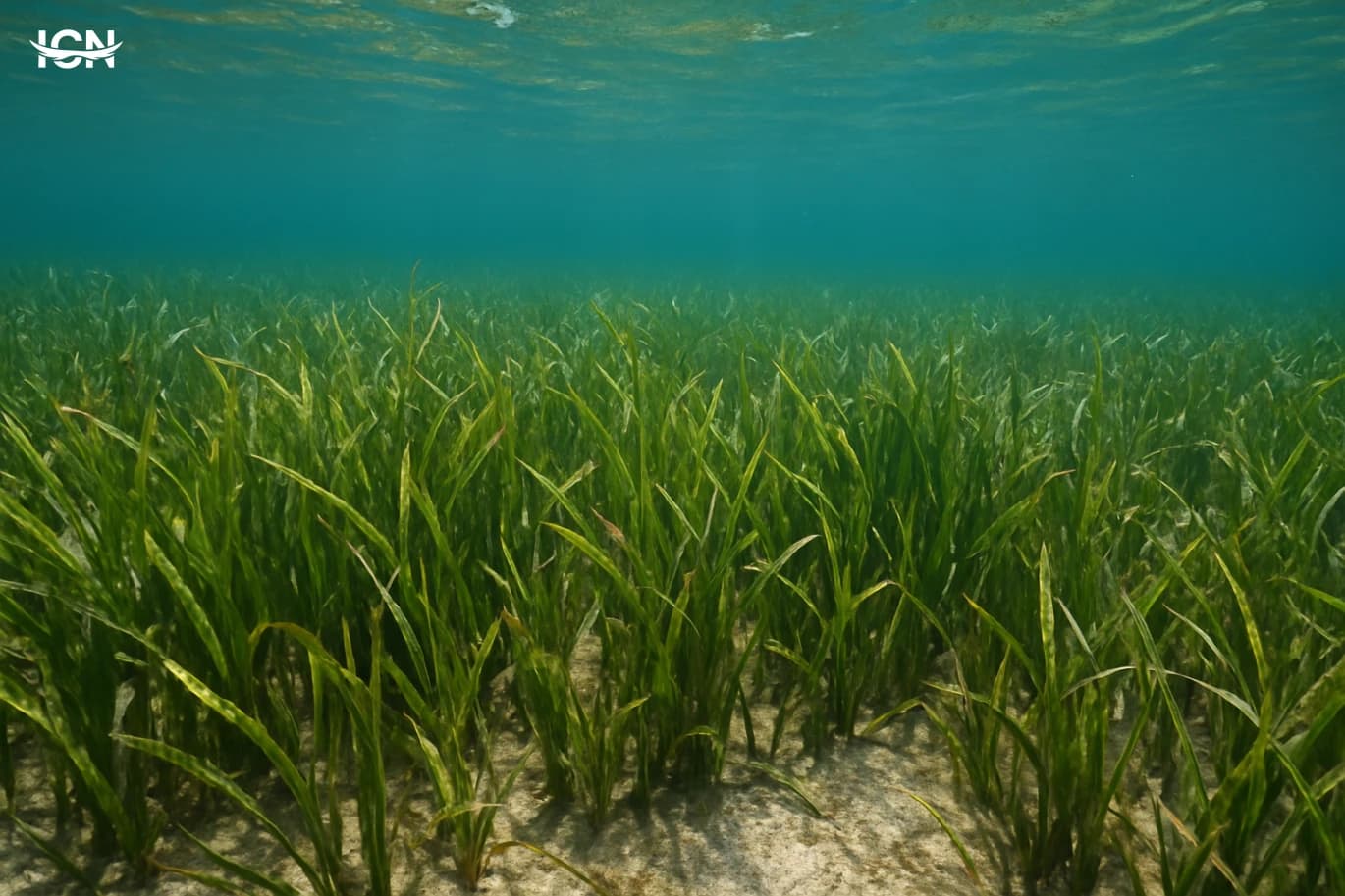
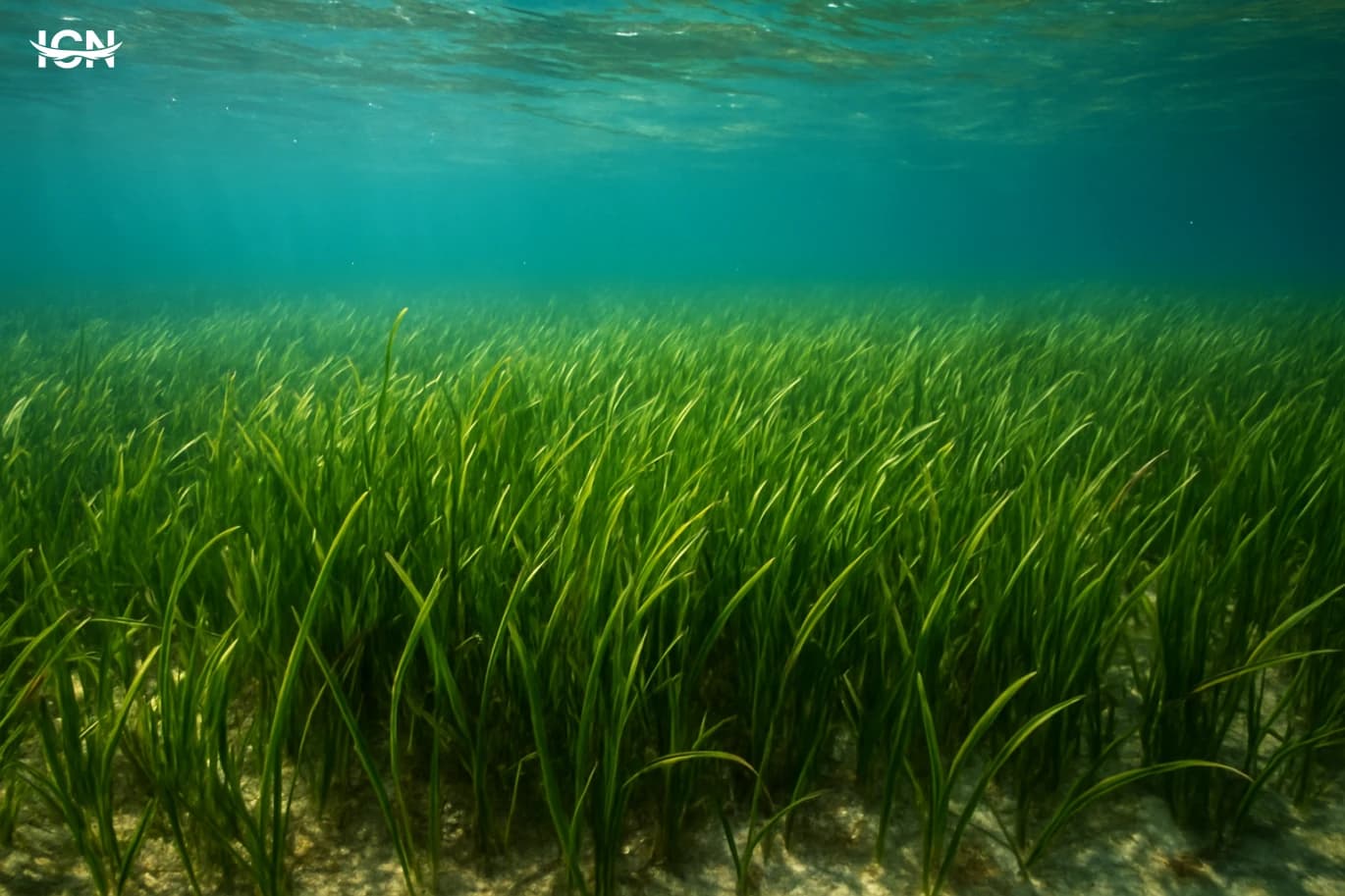
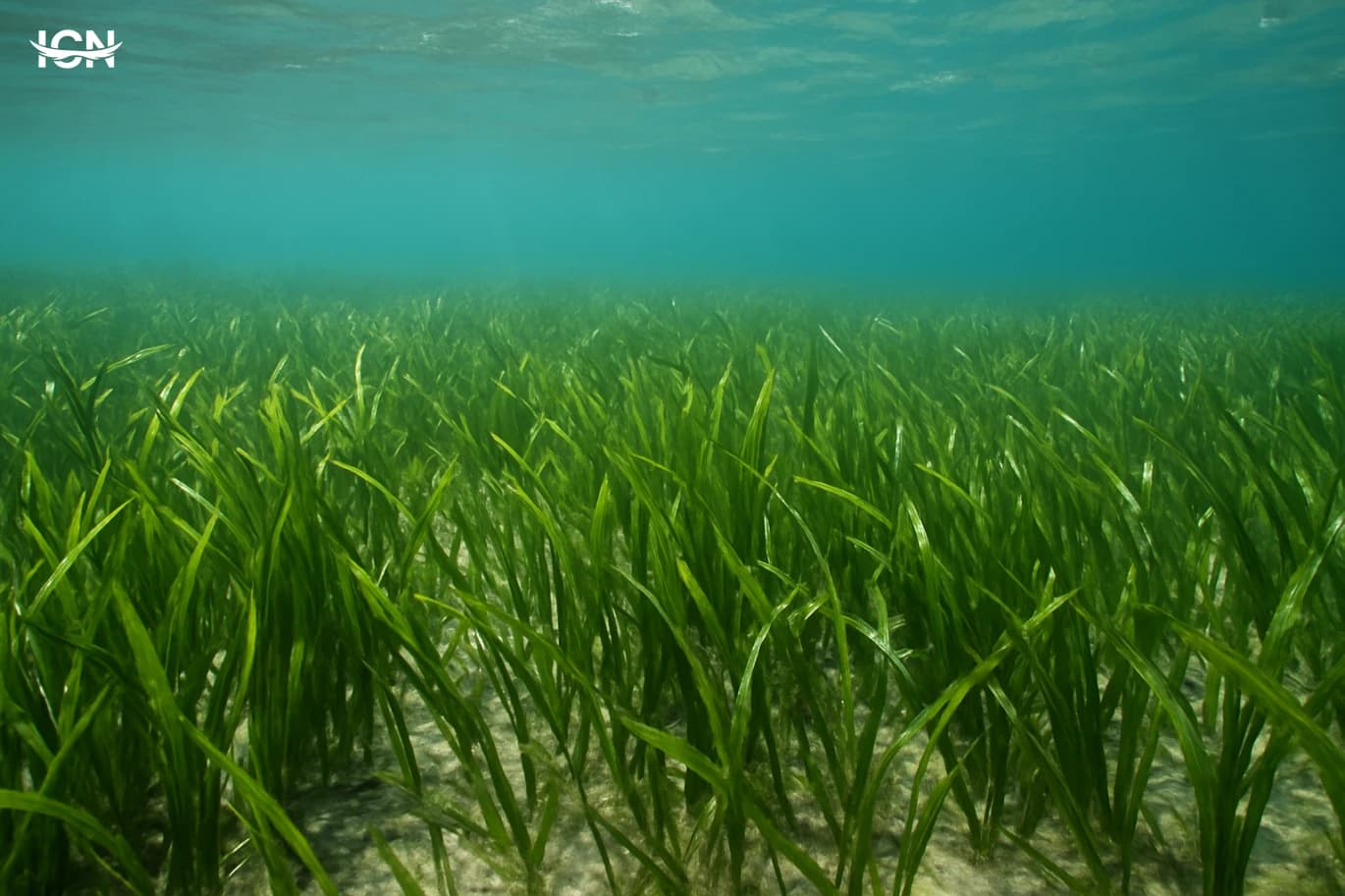
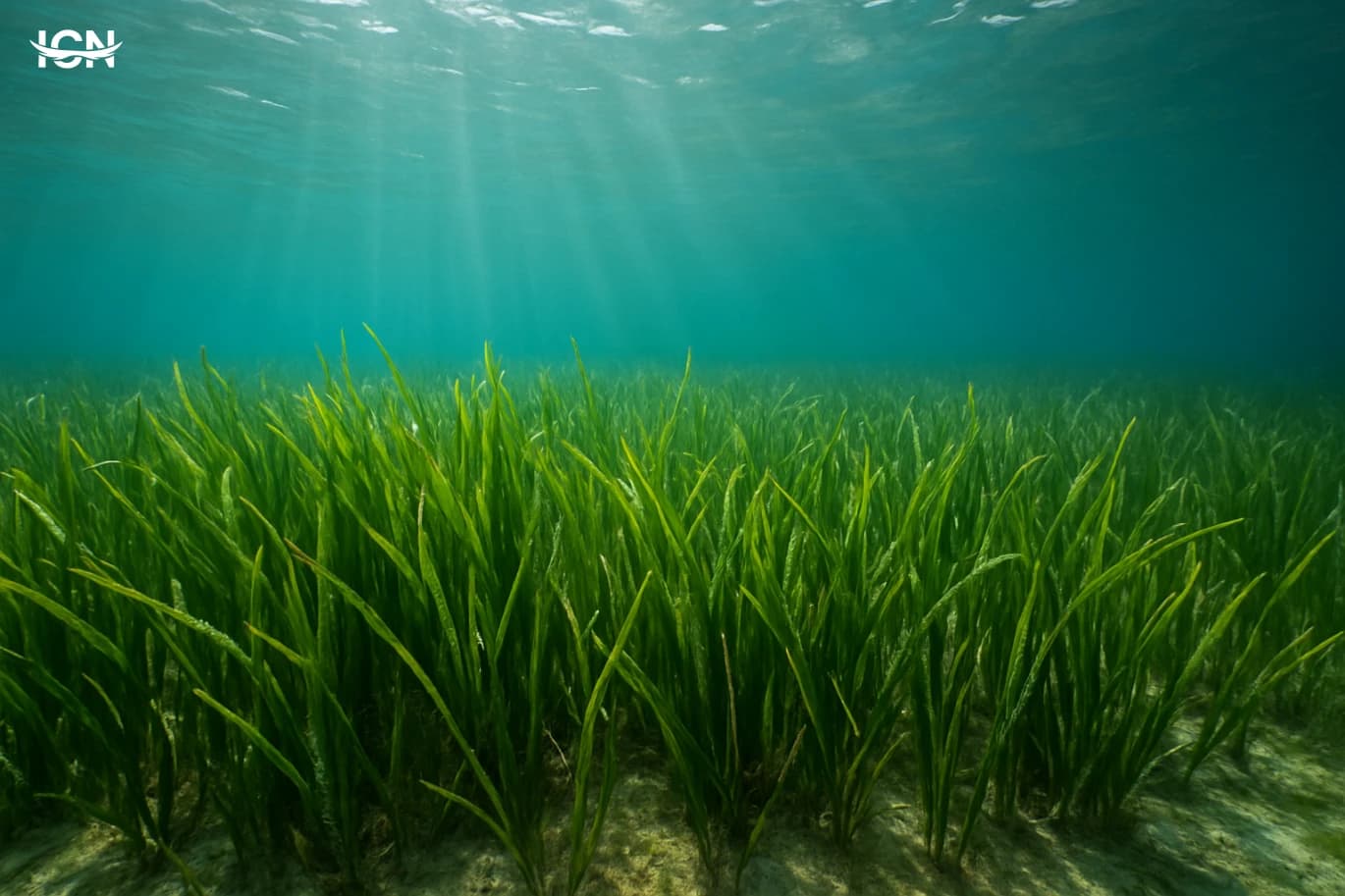
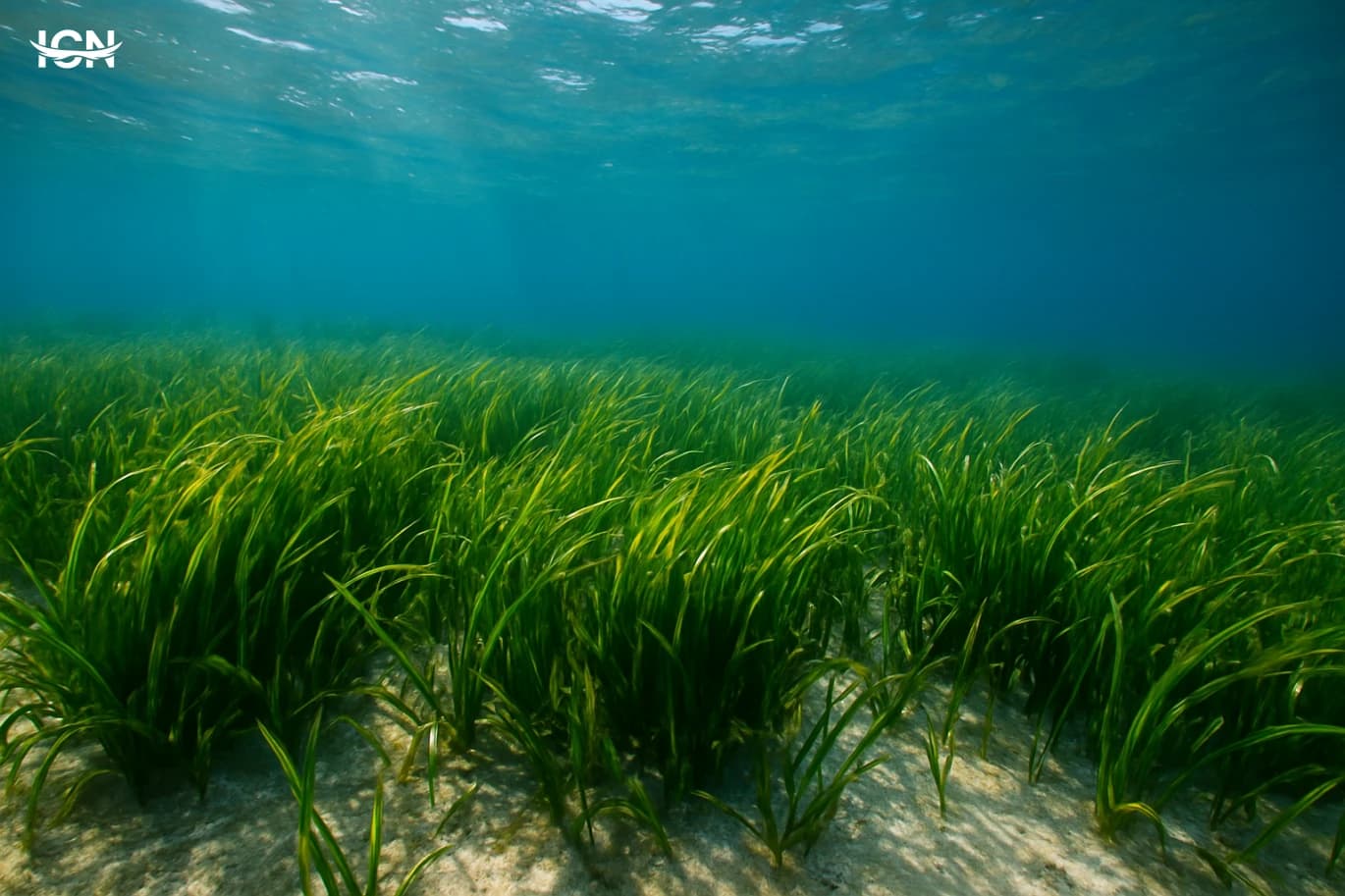
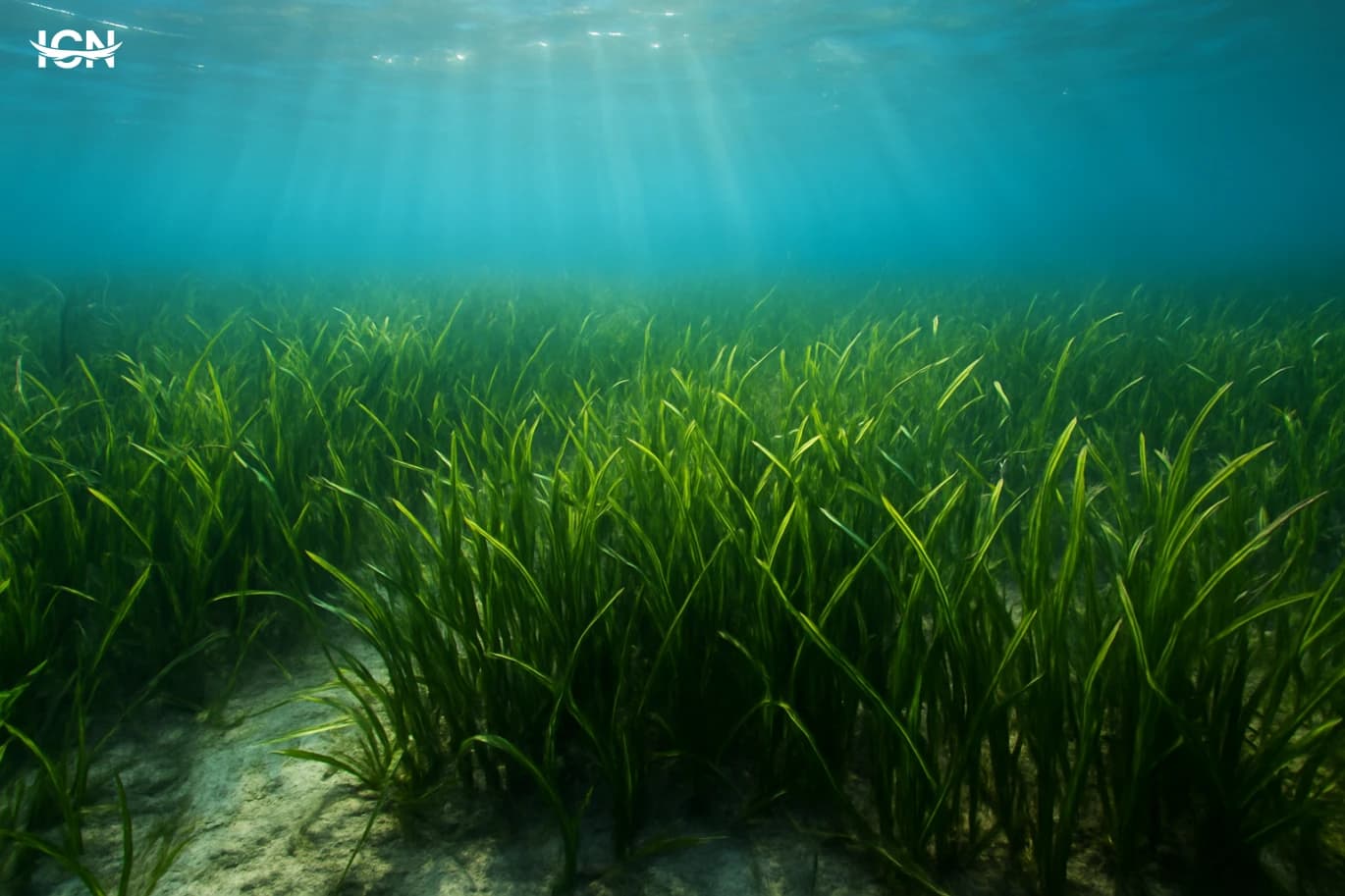
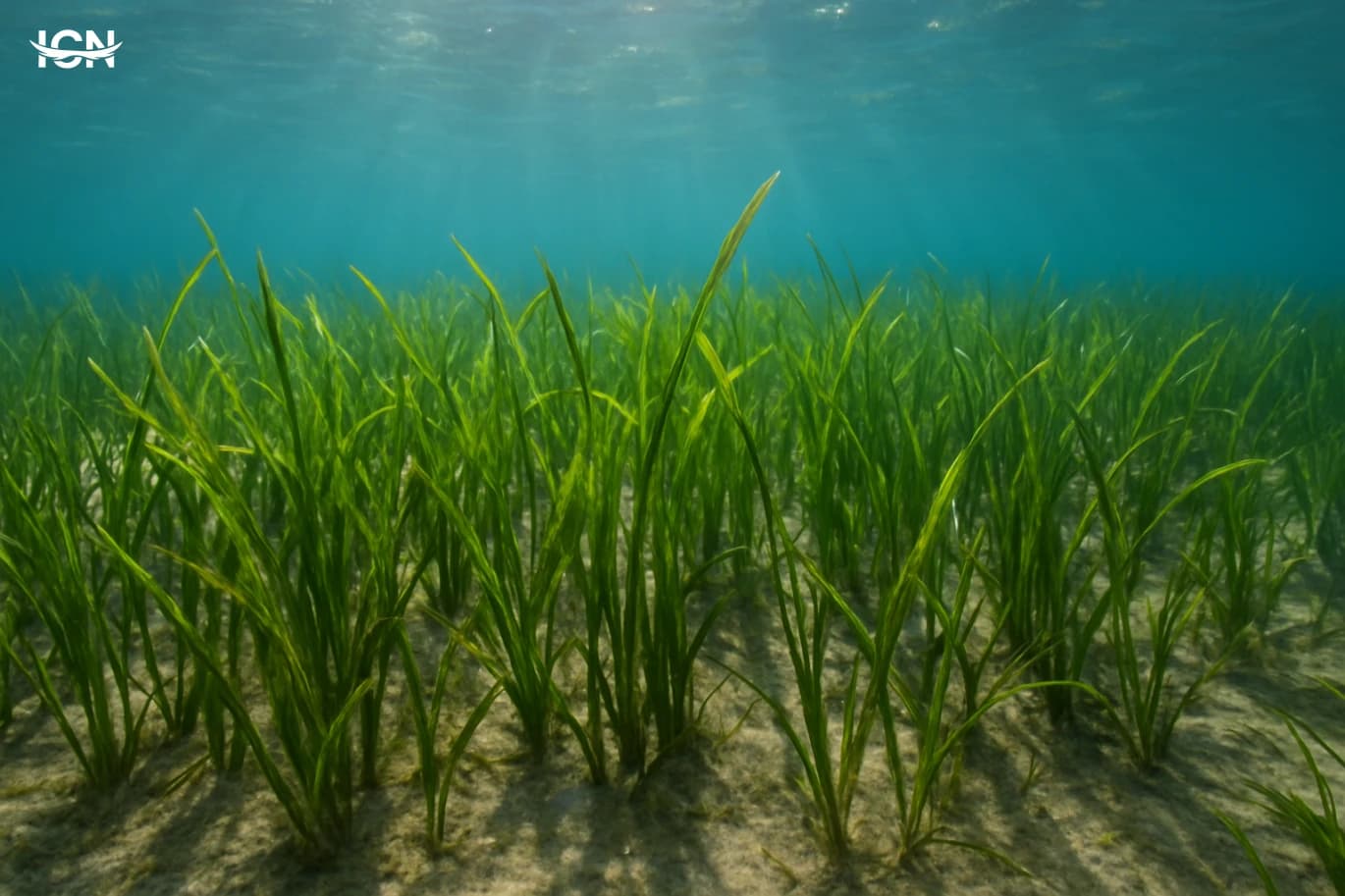
Seagrass is not seaweed. It is a flowering plant that evolved to live fully underwater, with roots, stems, and leaves anchored in sandy or muddy seabeds. It forms dense meadows in shallow coastal waters on every continent except Antarctica, often in bays, lagoons, and sheltered shorelines where sunlight can reach the bottom. Common species include eelgrass in temperate regions and turtle grass in the tropics. These meadows can look simple from the surface, but they are structured habitats. Leaves slow water movement, roots bind sediments, and the plant’s growth creates a three-dimensional space where small animals can hide and feed. Because seagrass needs clear water and stable conditions, its presence is also a practical indicator of coastal health. When meadows thin out or disappear, it often signals broader problems such as pollution, dredging, or repeated heat stress.
A nursery for fish and shellfish
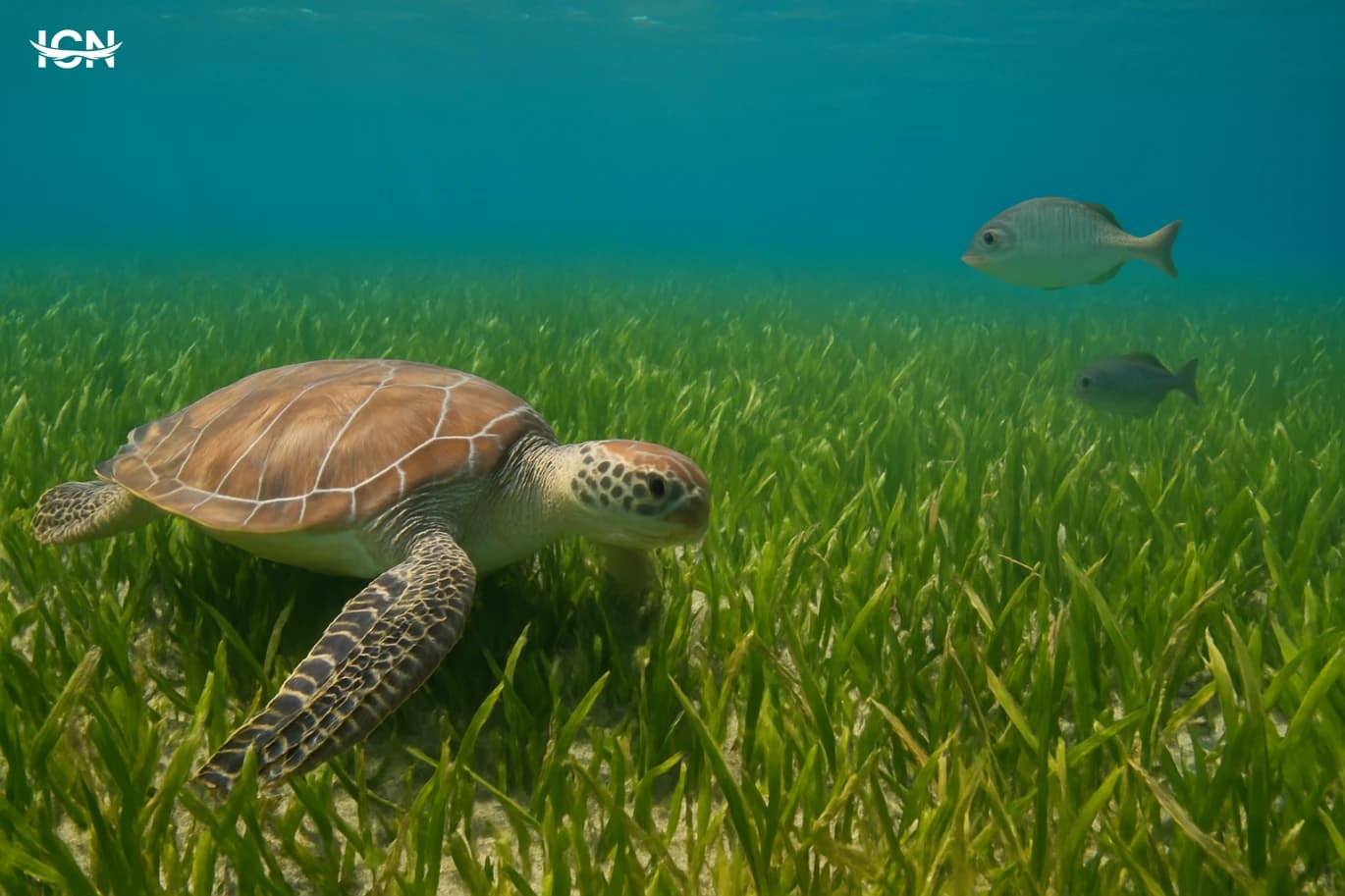
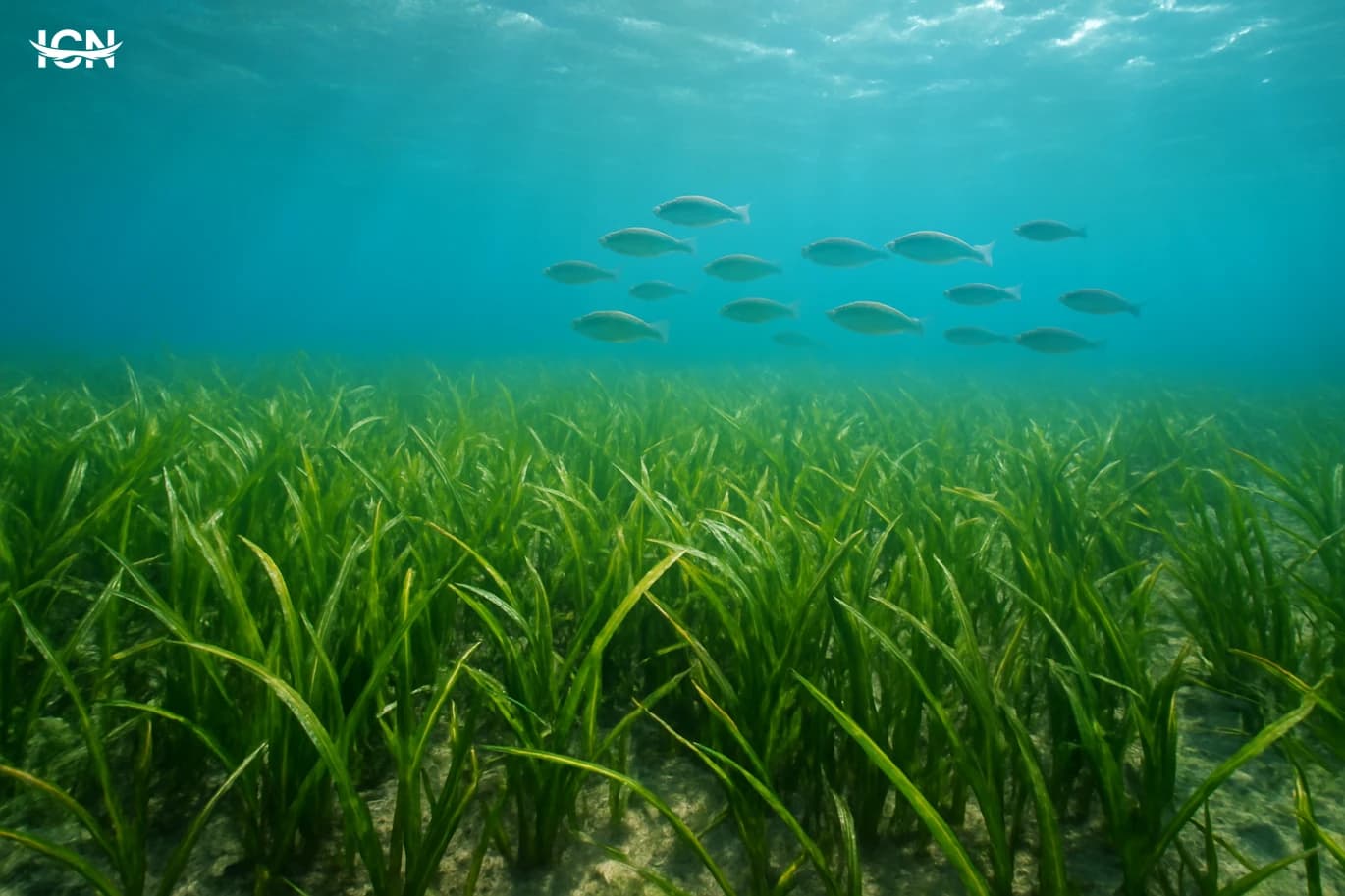
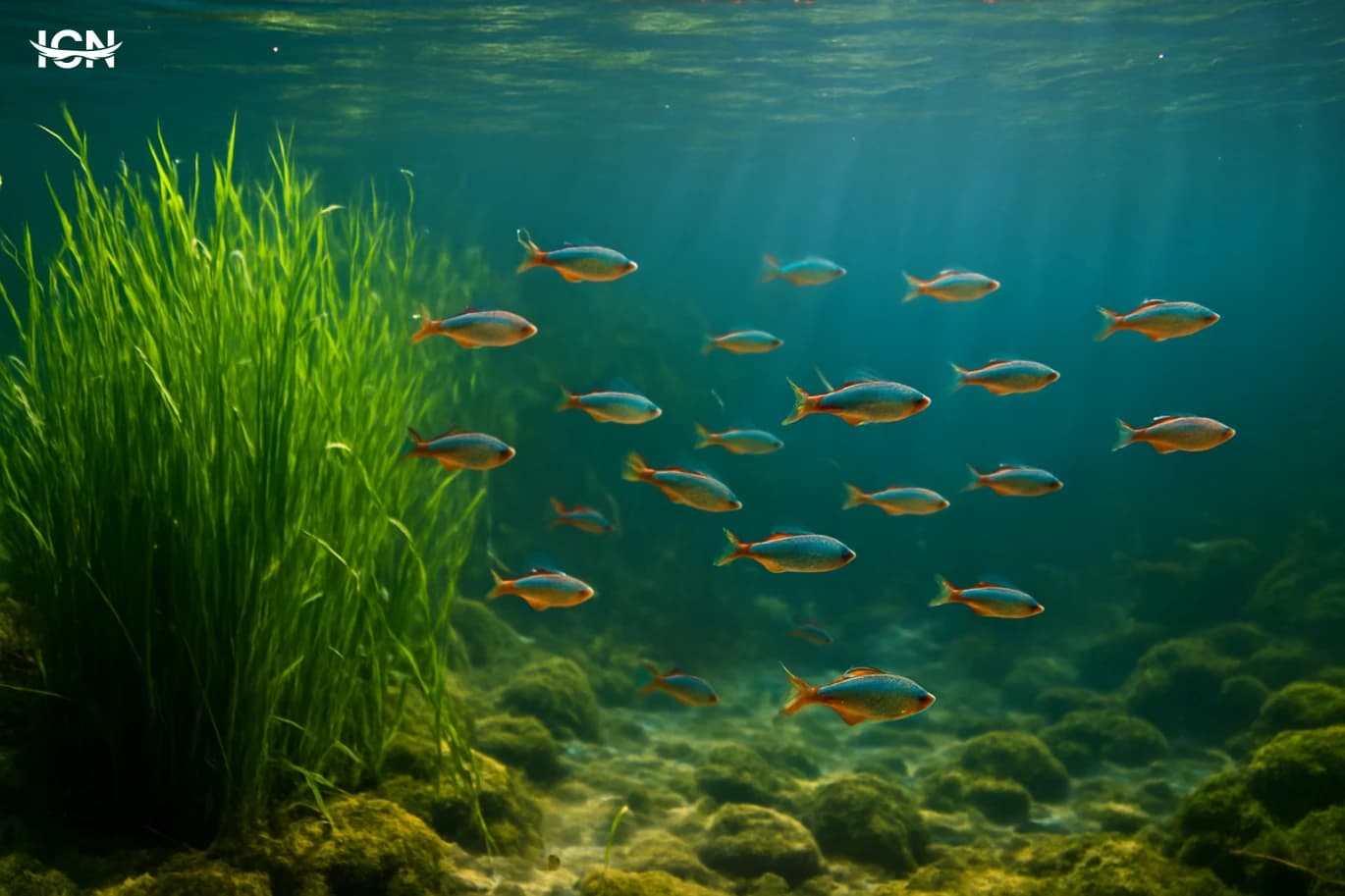
One of the most direct benefits of seagrass is its role as a nursery. Juvenile fish and invertebrates use the leaves as cover from predators and as a feeding ground rich in small crustaceans and worms. In many regions, species that later support commercial and recreational fisheries spend their early life stages in or near seagrass. That includes various snappers, groupers, flatfish, and prawns, depending on local ecosystems. The nursery function is not only about hiding. Seagrass meadows create calmer microhabitats where larvae and young fish can conserve energy, while the plant surfaces host algae and microorganisms that form the base of a food web. When meadows are lost, the impact can show up as fewer young fish surviving to adulthood, which can reduce catches over time. For coastal communities, this link matters because it connects habitat condition directly to food supply and local income.
Coastal protection you can measure
Seagrass meadows protect coastlines in ways that can be quantified. By slowing currents and dampening wave energy near the seabed, they reduce erosion and help keep sediments in place. Their roots and rhizomes act like a natural net, stabilizing the bottom and limiting how much sand and mud are resuspended into the water column. Clearer water then supports more seagrass growth, creating a reinforcing cycle. This matters for infrastructure and for ecosystems. Less erosion can mean more stable shorelines, reduced turbidity around coral reefs and mangroves, and fewer sediment plumes after storms. In areas facing sea-level rise and stronger storm events, maintaining natural buffers becomes a practical risk-management tool alongside engineered defenses. While seagrass cannot replace seawalls in every setting, it can reduce pressure on them and lower maintenance costs by limiting sediment movement and improving water clarity.
Blue carbon and climate relevance
Seagrass is a major player in “blue carbon,” the carbon captured and stored by coastal ecosystems. While the leaves grow and shed, much of the long-term storage happens below ground. Roots and buried organic matter can accumulate in sediments for decades to centuries when conditions are stable. This makes seagrass meadows important not only for biodiversity but also for climate mitigation strategies that focus on protecting and restoring natural carbon sinks. The climate relevance has a second side: when meadows are damaged, stored carbon can be released as sediments are disturbed and oxygen reaches previously buried material. That means loss is not just a missed opportunity for future capture; it can also become an emissions source. For policymakers and coastal managers, this is why mapping seagrass, tracking its condition, and preventing avoidable disturbance are increasingly discussed alongside other climate actions, especially in coastal nations with large shallow-water areas.
What is killing seagrass meadows
The most common drivers of seagrass decline are local and preventable. Nutrient pollution from wastewater and agricultural runoff can trigger algal blooms that block sunlight, while fine sediments from construction and land clearing increase turbidity and smother leaves. Physical damage is also widespread: boat propellers cut scars through meadows, anchors uproot plants, and dredging can remove entire beds. In some places, invasive species alter the balance of grazing and competition. Climate stress is adding pressure. Marine heatwaves can push temperatures beyond what local species tolerate, and stronger storms can churn sediments and tear up shallow beds. Sea-level rise can reduce light at the seabed if water becomes deeper without a corresponding increase in clarity. These threats often interact, meaning a meadow weakened by pollution is less able to recover after a heat event. Effective responses therefore need both immediate local controls and longer-term planning for changing ocean conditions.
Restoration that actually works
Seagrass restoration has moved beyond small experiments, but success depends on choosing the right method for the right site and fixing the original problem first. Common approaches include transplanting shoots from healthy donor beds, spreading seeds, and using biodegradable anchors or frames to keep plants in place until roots establish. Projects increasingly rely on detailed site assessments: light availability, sediment type, water quality, and exposure to waves and boat traffic. Monitoring is essential and should be measured in years, not weeks. A credible project tracks survival rates, meadow expansion, and water clarity, and it sets realistic targets based on local growth cycles. Just as important are protection measures: no-anchor zones, marked boat channels, improved wastewater treatment, and erosion controls on land. For readers who want to help, the most practical actions are local: support clean-water policies, avoid anchoring on vegetation, report illegal dredging, and choose seafood from fisheries that protect nursery habitats. These steps connect individual behavior to measurable outcomes for aquatic life.