Wash Bananas Before You Peel
- Why washing the peel matters
- What can be on the peel
- How to wash bananas correctly
- Peeling, slicing, and kitchen hygiene
- Who benefits most from this habit
- Easy routine to remember
Why washing the peel matters
Many people assume a banana is “self-protected” because you do not eat the peel. In practice, the peel is the first surface your hands touch, and it often comes into contact with knives, cutting boards, lunch boxes, countertops, and other foods. Any residues on the peel can transfer to your fingers and then to the edible fruit when you peel it, slice it, or handle it for a child. This is a classic cross-contamination pathway that is easy to overlook because the peel is discarded. Bananas also travel a long route before reaching your kitchen. They are handled during harvesting, packing, transport, retail stocking, and customer selection. Along the way, the peel can pick up dust, soil particles, and microbes from multiple surfaces. In some supply chains, bananas may also be exposed to post-harvest treatments designed to reduce spoilage or pests. Washing the peel is a simple step that reduces what ends up on your hands and kitchen surfaces. The goal is not to make bananas “sterile,” but to lower avoidable contamination. This is especially relevant when bananas are used in smoothies, sliced directly onto oatmeal, or packed for school snacks where you may not have a sink nearby. A quick rinse takes seconds and can meaningfully reduce the amount of dirt and residues you bring into your food prep routine.
What can be on the peel
The peel can carry several categories of unwanted material. First, there is visible dirt: dust from storage areas, soil residues from farms, and particles from shipping cartons. Even when bananas look clean, fine dust can cling to the surface and transfer to your hands. Second, there are microbes that are not visible. Produce surfaces can pick up bacteria and other microorganisms from handling and from contact with equipment or surfaces. This does not mean every banana is “unsafe,” but it does mean the peel can act as a vehicle for microbes to reach your kitchen. Third, there may be chemical residues. Bananas are not typically eaten with the peel, but residues on the outer surface can still matter because of transfer during peeling and slicing. In addition, some consumers store bananas near other produce, and residues can spread through contact in a fruit bowl or bag. Finally, there are practical household contaminants: pet hair, lint, and residues from reusable shopping bags. People often place bananas directly on countertops or inside backpacks. Washing the peel helps remove a mix of these everyday contaminants and makes food handling more predictable, especially in homes with children or shared kitchens.
How to wash bananas correctly
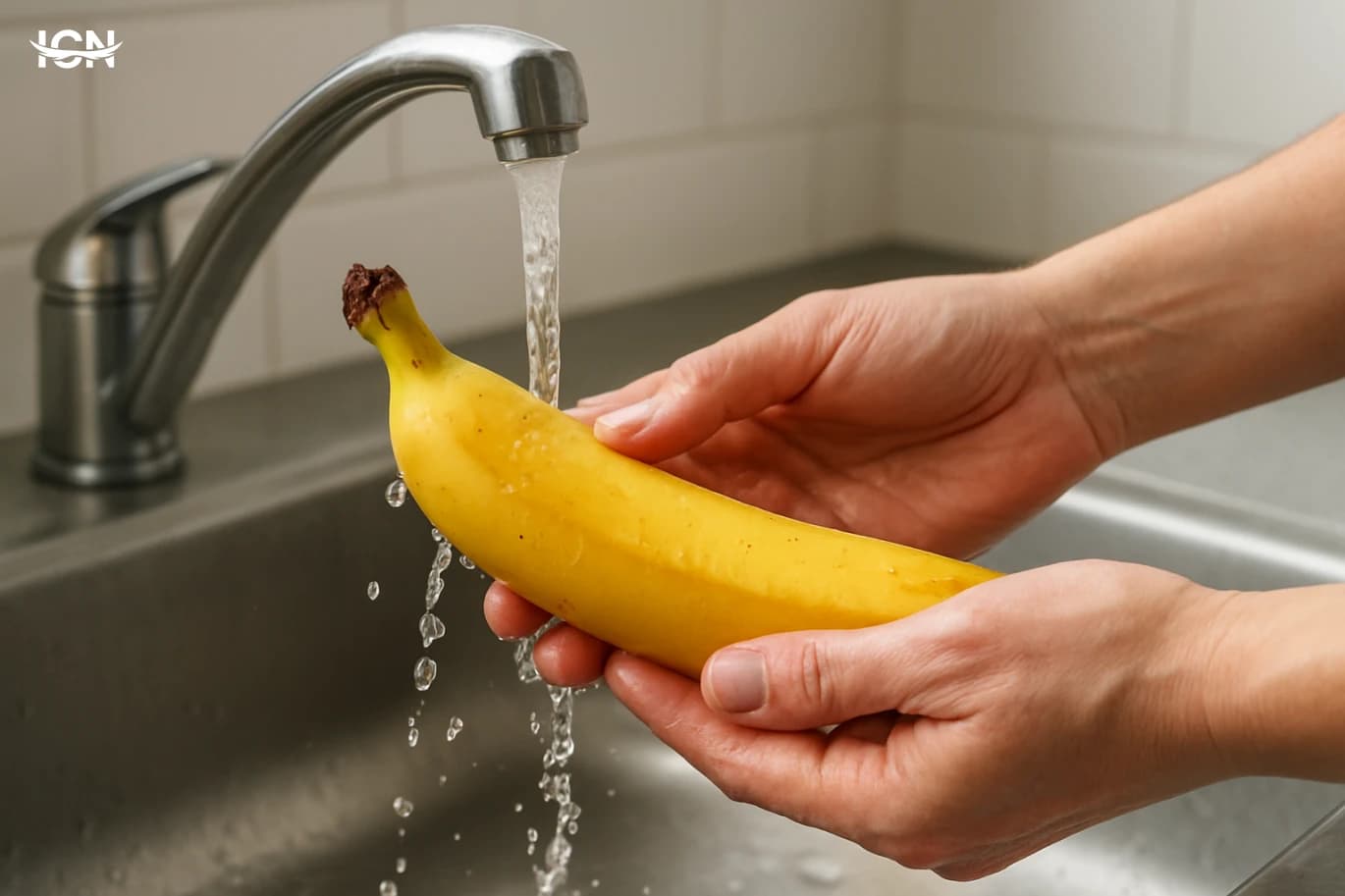
Washing bananas is straightforward, but a few details make it more effective. Start by rinsing the banana under cool running water. Use your hands to gently rub the peel along its length, including the stem area where dirt can collect. A 10–20 second rinse is usually enough for routine home use. If the banana is visibly dirty, you can use a clean produce brush reserved for fruits and vegetables. Brush lightly; you are not trying to damage the peel, only to dislodge particles. After rinsing, dry the banana with a clean paper towel or a dedicated kitchen towel. Drying matters because it removes additional residues and reduces moisture that can spread contaminants to surfaces. Avoid washing bananas with soap, dish detergent, or household cleaners. These products are not intended for food surfaces and can leave residues that you do not want on your hands or on the fruit. Also avoid soaking bananas for long periods; a quick rinse and rub is sufficient. A practical tip: wash bananas before you put them into a fruit bowl or the refrigerator. This prevents residues from spreading to other produce and reduces the need to wash your hands again after handling unwashed peels during meal prep.
Peeling, slicing, and kitchen hygiene
Even with a washed peel, good handling habits make a difference. If you peel a banana and eat it immediately, the main risk is what transfers from the peel to your fingers. Washing the peel reduces that, and washing your hands before eating adds another layer of protection. If you slice bananas for cereal, desserts, or meal prep, pay attention to tools and surfaces. A common mistake is placing an unwashed banana on a cutting board, then peeling it and slicing the fruit on the same board without wiping it. Any residues on the peel can end up on the board and then on the slices. The simplest approach is to rinse and dry the banana first, then peel it over a trash bin, and slice on a clean board. For smoothies, many people handle bananas quickly and may touch other ingredients right after peeling. If the peel is unwashed, residues can transfer to blender lids, measuring cups, and refrigerator handles. A quick rinse of the peel and a hand wash after peeling keeps the rest of the kitchen cleaner. If you pack bananas for children, consider washing at home and drying before placing them in lunch boxes. This reduces contamination inside the box and keeps hands cleaner when the banana is opened later at school or on a trip.
Who benefits most from this habit
Washing banana peels is a small step, but it is especially useful for certain groups and situations. Families with young children benefit because kids often touch the peel and then touch their faces or other foods. A washed peel reduces what ends up on small hands. People who prepare food in shared environments also benefit. In offices, dorms, and shared apartments, countertops and sinks may be used by many people, and cross-contamination is more likely. Washing the peel and drying it before peeling helps keep shared surfaces cleaner. Anyone with a busy meal-prep routine can also gain from consistency. If you regularly slice bananas into containers for breakfast or freeze them for smoothies, washing the peel becomes part of a repeatable process that reduces residues on boards, knives, and storage containers. Finally, this habit is helpful when bananas are handled outdoors, such as during picnics, sports events, or travel. When handwashing facilities are limited, starting with a washed peel at home reduces the amount of dirt and residues you carry with you.
Easy routine to remember
To make this habit stick, keep it simple and consistent. When you bring bananas home, rinse the whole bunch under running water, rub the peels, and dry them. Then store them as usual. This takes less than a minute and prevents residues from spreading to fruit bowls, shelves, and other produce. If you prefer washing right before eating, link it to another routine action. For example, rinse the banana while you fill a water bottle, or while you wash your hands before a snack. The key is to treat the peel like any other produce surface that enters your kitchen. Also consider the “two-step” approach when slicing: wash and dry the peel first, then wash your hands after peeling if you will touch other ingredients. This is a practical way to reduce cross-contamination without turning snack time into a complicated process. Over time, washing banana peels becomes as normal as rinsing apples or cucumbers. It is a low-effort step that supports cleaner food handling and a more hygienic kitchen routine.