Kitchen Organizers That Actually Work
- Why Kitchen Organizers Matter
- Start With a Quick Kitchen Audit
- Core Organizers for Drawers and Countertops
- Cabinet and Pantry Systems That Save Space
- Under-Sink and Cleaning Supply Organization
- Choosing Materials and Keeping the System Going
Why Kitchen Organizers Matter
Kitchen organizers are not decorative extras; they are practical tools that reduce daily friction. When utensils, spices, and cookware have fixed places, you spend less time searching and more time cooking. A well-organized kitchen also supports safer routines: clear countertops reduce accidental spills, and properly stored knives and glassware lower the risk of breakage. The biggest benefit is consistency. A drawer divider or a shelf riser creates a repeatable system that everyone in the household can follow. That matters in busy kitchens where multiple people cook, clean, and restock. Organizers also protect your tools. Stacking pans without separators scratches nonstick coatings, and loose utensils can chip wooden handles. With the right organizers, you extend the life of what you already own and avoid unnecessary replacements.
Start With a Quick Kitchen Audit
Before buying organizers, do a 20-minute audit. Empty one drawer and one cabinet, then group items by use: daily utensils, baking tools, food storage, spices, and cleaning supplies. This reveals what you truly need to store and what can be relocated or removed. Many kitchens feel cramped because duplicates accumulate: three can openers, mismatched lids, or rarely used gadgets. Measure the spaces you plan to organize. Note internal width, depth, and height, and check for obstacles such as hinges, pipes under the sink, or shelf pins. Measurements prevent the most common mistake: buying bins that waste space because they do not fit the cabinet footprint. Also consider your workflow. Keep prep tools near the cutting board area, cooking tools near the stove, and storage containers near the fridge or pantry zone. Organizers work best when they support how you move through the kitchen, not how a catalog photo looks.
Core Organizers for Drawers and Countertops
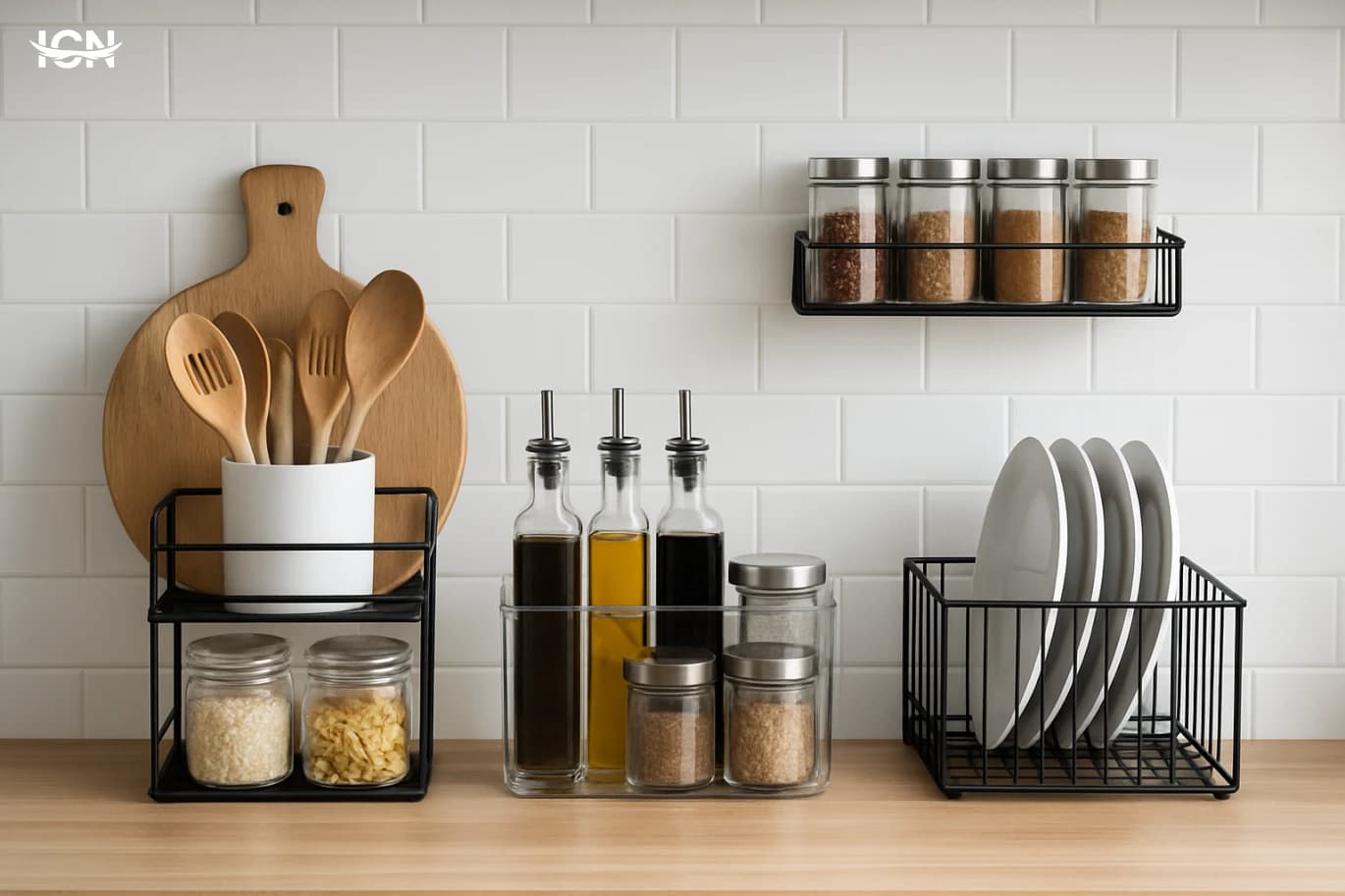
Drawers are where clutter grows fastest, so start there. Adjustable drawer dividers are the most flexible option because they adapt as your tools change. Use one section for cutlery, one for cooking utensils, and a narrow lane for measuring spoons and small tools. For deep drawers, add a second layer with a low-profile tray so small items do not disappear under ladles and tongs. For knives, a dedicated in-drawer knife tray is safer than a loose pile or an open countertop block, especially in smaller kitchens. If you prefer countertop storage, choose a compact block that fits your actual knife set rather than a large block with empty slots. On countertops, the goal is to keep only what you use daily. A utensil crock near the stove can replace multiple drawers opened during cooking, but limit it to a curated set: spatula, tongs, ladle, and whisk. Use a small tray to group frequently used items like oil, salt, and pepper; it keeps the surface easy to wipe and prevents rings and drips from spreading. If you have a coffee or tea routine, a dedicated station with a slim organizer for pods, filters, or spoons reduces scattered items across the kitchen.
Cabinet and Pantry Systems That Save Space
Cabinets and pantries benefit from vertical thinking. Shelf risers create a second level for plates, bowls, or canned goods, making it easier to see what you have. Turntables, often called lazy Susans, are ideal for oils, sauces, and condiments because they bring items forward without pulling everything out. For narrow cabinets, a pull-out organizer or a slim rolling cart can store spices or bottles in a way that is accessible and tidy. Clear, stackable bins are useful in pantries, but only if you label them. Labels reduce overbuying and help everyone return items to the right place. Use one bin for snacks, one for baking supplies, one for breakfast items, and keep heavy items like flour and rice on lower shelves. If you store spices in a cabinet, a tiered spice rack prevents small jars from hiding behind taller ones. For cookware, pan and lid organizers are among the most effective upgrades. Store lids vertically in a rack or in the cabinet door using a secure holder, and separate pans with a simple divider to protect surfaces. These changes make cabinets quieter, faster to use, and easier to keep clean.
Under-Sink and Cleaning Supply Organization
The under-sink area is challenging because of plumbing, but it can become highly functional with the right setup. Start by using a leak-proof tray or mat to protect the cabinet base. Then add stackable drawers or a two-tier sliding shelf that works around pipes. This makes it possible to store sponges, dishwasher tablets, trash bags, and cleaning sprays without creating a pile. Separate categories to avoid confusion: one bin for dishwashing items, one for surface cleaners, and one for backups. If you have limited space, hang small caddies on the cabinet door for brushes and cloths, but avoid overloading the door. Keep hazardous products in a higher, closed bin if children visit the home, and always store chemicals in their original containers with readable labels. A small routine keeps this area from reverting to chaos. Once a month, wipe the tray, discard empty bottles, and check what needs restocking. Under-sink organization is less about buying more and more about maintaining a simple, visible system.
Choosing Materials and Keeping the System Going
Material choice affects durability and cleaning. Plastic bins are lightweight and affordable, but choose thicker options that do not warp. Acrylic looks clean and modern and makes it easy to see contents, though it can scratch over time. Metal organizers are sturdy for pans and lids, while bamboo and wood add warmth and work well for drawer trays, provided they are kept dry. Standardize where possible. Using a small set of bin sizes makes rearranging easier and prevents wasted gaps. Prioritize organizers that can be adjusted: expandable dividers, modular bins, and stackable shelves. Avoid buying a large set before testing one area; a single cabinet organized well will show you what sizes and styles you actually need. Finally, make the system easy to maintain. Keep the most-used items at eye level and within one reach. Store rarely used appliances higher or deeper. When you bring in a new tool, decide immediately where it lives; if there is no space, remove something else. This one-in, one-out habit is what turns kitchen organizers from a one-time project into a professional, lasting setup.