Keep Cheese Fresh in the Fridge
- Start with the right temperature and spot
- Choose wrapping that lets cheese breathe
- Store by cheese type and moisture level
- Prevent cross-contamination and off flavors
- Handle mold, drying, and texture changes safely
- A simple routine for longer-lasting cheese
Start with the right temperature and spot
Cheese keeps its best flavor when the fridge stays consistently cold, ideally around 1–4°C. The biggest enemy is temperature fluctuation, which speeds up drying and can push strong aromas into other foods. Avoid storing cheese in the door because it warms up every time you open the fridge. A better choice is the lower shelf or a dedicated drawer where the temperature is steadier. If your refrigerator has adjustable humidity drawers, use a medium-humidity setting for most cheeses. Very dry zones can crack the surface of semi-hard cheeses, while overly humid corners can encourage unwanted surface moisture. Keep cheese away from foods with strong odors like onions, fish, or heavily spiced leftovers; cheese absorbs smells easily and the taste changes quickly. If possible, group cheeses together in a small container to reduce exposure to circulating air.
Choose wrapping that lets cheese breathe
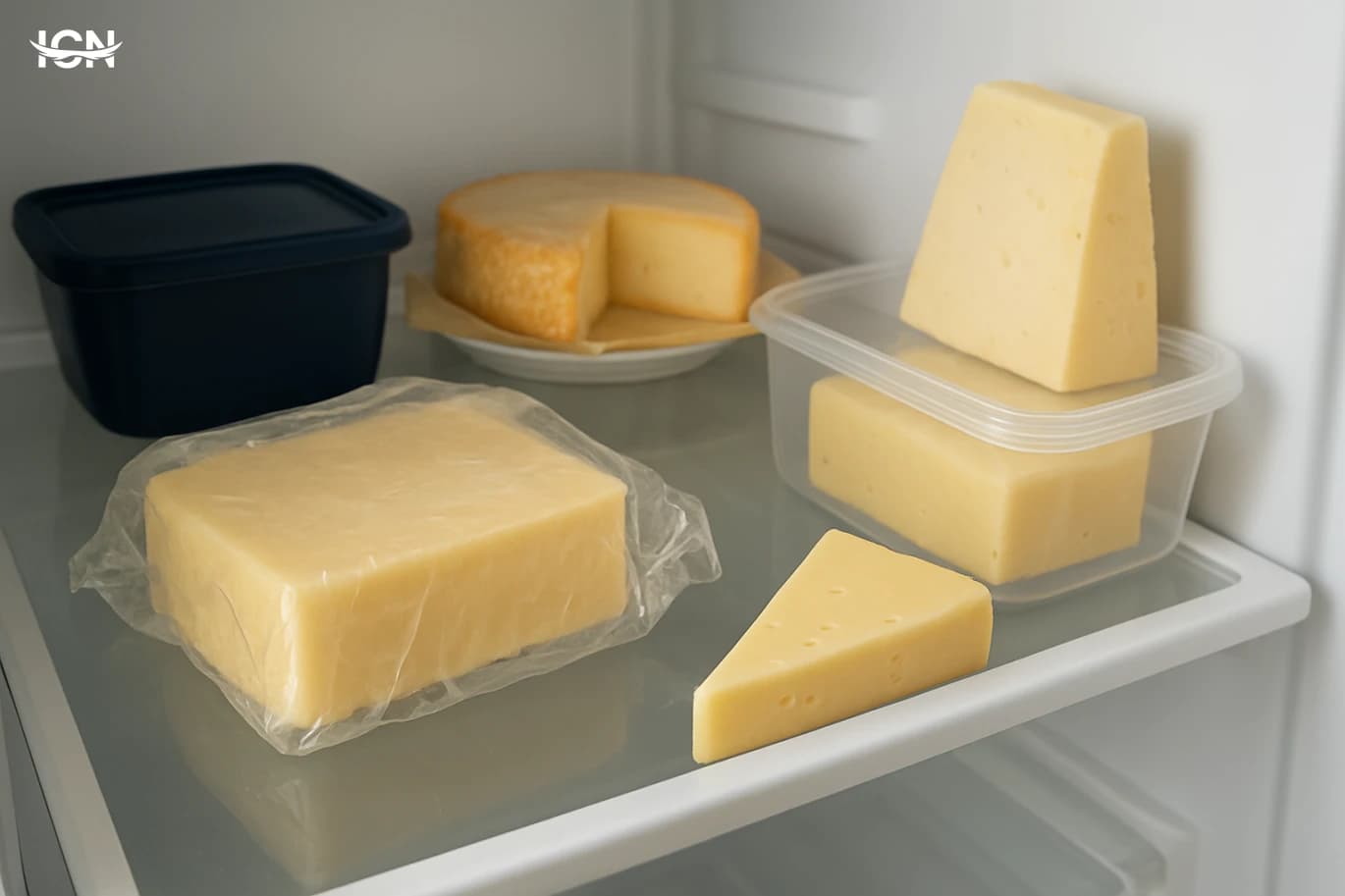
Cheese needs protection from drying, but it also needs a little airflow. Tight plastic wrap can trap moisture on the surface, leading to sliminess on soft cheeses and off aromas on semi-soft styles. A practical approach is to wrap cheese in cheese paper, wax paper, or parchment paper first, then add a loose outer layer such as a reusable bag or a lightly closed container. This keeps the surface from drying while preventing excess condensation. For hard cheeses like Parmesan or aged Gouda, a breathable wrap plus a container works well, and you can rewrap after each use. For soft-ripened cheeses like Brie or Camembert, avoid sealing them in an airtight box for long periods; they can develop ammonia-like smells if they cannot release gases. Blue cheeses are best kept in their own wrap and container because their aroma spreads quickly. Labeling the wrap with the date helps you track freshness and rotate what you use first.
Store by cheese type and moisture level
Different cheeses behave differently in the fridge, so one method does not fit all. Fresh cheeses such as mozzarella, ricotta, and cottage cheese are high in moisture and should stay in their original sealed container until opened. Once opened, keep them tightly closed and use clean utensils to avoid introducing bacteria. Many fresh cheeses taste best within a few days after opening, even if the date on the package allows longer. Brined cheeses like feta should remain covered in brine; if the brine level drops, top it up with a simple saltwater solution so the cheese does not dry out. Semi-soft cheeses such as Havarti or young cheddar do well with breathable wrapping and a container. Hard and aged cheeses tolerate longer storage, but they still lose aroma if left exposed. Grated cheese dries faster than a block, so store it in a well-sealed bag and consider grating smaller amounts more often for better flavor.
Prevent cross-contamination and off flavors
Flavor changes in cheese often come from what happens around it, not just time. Always cut cheese on a clean board and use a clean knife; crumbs from bread, herbs, or deli meats can introduce moisture and microbes that shorten shelf life. If you serve cheese on a platter, do not return the leftover pieces to the original storage wrap if they have been sitting at room temperature for a long time or touched by other foods. Keep strong cheeses separated. Blue cheese, washed-rind cheeses, and smoked cheeses can transfer aroma through the fridge air and even through thin packaging. A small lidded container inside the main cheese box helps. Also watch for condensation: if you see water droplets inside a container, wipe it dry and rewrap the cheese. Excess moisture is a common reason for slimy surfaces and sour notes.
Handle mold, drying, and texture changes safely
Not every surface change means the cheese is ruined, but you need to respond correctly. On hard and semi-hard cheeses, small spots of mold can often be removed by cutting at least 2–3 cm around and below the spot, then rewrapping the remaining piece in fresh paper. Use a clean knife so you do not spread spores. If mold appears repeatedly, the storage environment is likely too humid or the wrap is trapping moisture. On soft cheeses and fresh cheeses, visible mold is a stronger warning sign because it can spread through the high-moisture interior. In those cases, it is safer to discard the product. Dry edges on hard cheese are usually just dehydration; trimming the edge restores a better bite. If a cheese smells sharply unpleasant, tastes bitter, or has a sticky film that returns quickly after wiping, treat it as spoiled and do not keep testing it.
A simple routine for longer-lasting cheese
A consistent routine makes cheese storage easy. Buy amounts you can finish in a reasonable time: fresh cheeses in smaller packs, aged cheeses in larger blocks. At home, portion large pieces into two: keep one wrapped and untouched, and use the other for daily slicing. Rewrap after each use with fresh paper if the wrap becomes damp or greasy. Once a week, check your cheese container: remove crumbs, wipe any moisture, and confirm the fridge temperature is stable. When serving, let cheese sit at room temperature for 15–30 minutes for better flavor, then return it to the fridge promptly. This approach reduces repeated warming and cooling cycles that dull aroma. With the right temperature, breathable wrapping, and clean handling, most cheeses stay tasty longer and waste drops noticeably.