Fork Shapes That Change How You Eat
- Why Fork Design Matters
- Tines and Spacing
- Curvature and Bowl Shape
- Handle, Grip, and Weight
- Choosing the Right Fork for Common Foods
- A Quick Home Checklist
Why Fork Design Matters
A fork looks like a simple tool, but its shape quietly guides how you cut, scoop, and pace your meal. The length of the handle affects leverage and comfort, especially when eating tougher foods or when the plate is deep. The angle of the neck changes how naturally the fork meets your mouth, which can influence bite size and how often you pause. Even the balance point matters: a fork that feels front-heavy encourages quicker, more direct movements, while a well-balanced fork tends to support slower, more controlled bites. Design also shapes etiquette and practicality. In many dining settings, people unconsciously match their behavior to the tool: a heavier, formal fork often leads to smaller bites and more frequent cutting, while a lighter everyday fork encourages faster eating and more scooping. For households, the “right” fork is not just about tradition; it is about reducing effort, improving grip, and making common foods easier to manage. When you notice these details, you start to see why restaurants and cutlery brands offer multiple fork types rather than one universal option.
Tines and Spacing
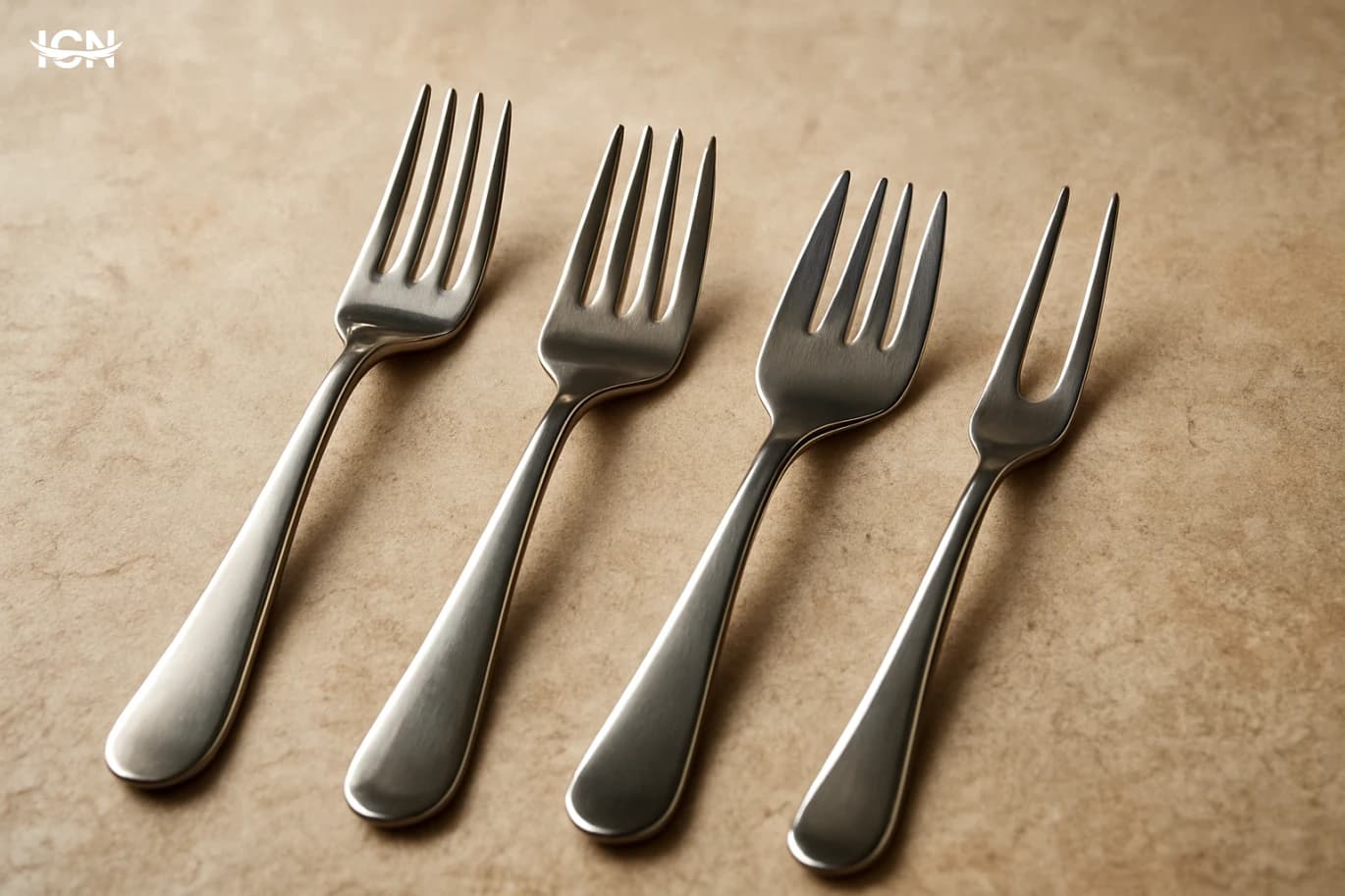
The most visible difference between forks is the tines: how many there are, how sharp they feel, and how far apart they sit. Four tines are common because they balance piercing ability with stability. Wider spacing helps with foods that need a bit of “grab,” such as leafy salads or long pasta, because the gaps allow strands and leaves to settle between tines. Tighter spacing supports cleaner bites with softer foods like omelets or delicate fish, reducing the chance that the food breaks apart before reaching your mouth. Tine length influences bite size and control. Longer tines can spear deeper and hold larger pieces, which is useful for thick vegetables or meat cubes, but it can also encourage bigger bites. Shorter tines often lead to smaller, more frequent bites because they hold less volume and require more deliberate loading. Tip shape matters too: slightly pointed tips pierce skins and firm textures more easily, while rounded tips are gentler on soft foods and can feel safer for children or for casual snacking. These small differences change how often you need a knife, how much you rely on scooping, and how tidy the plate stays.
Curvature and Bowl Shape
Not all forks are equally flat. Some have a noticeable curve and a shallow “bowl” that helps with scooping. This matters for foods that are small, slippery, or mixed with sauce. A fork with more curvature can lift rice, grains, or chopped vegetables more efficiently because it holds a small mound rather than relying only on piercing. It also helps with saucy pasta, where the goal is to capture both solids and a bit of sauce without dripping. A flatter fork, by contrast, favors precision and cutting. It slides under thin items like slices of roasted vegetables or pieces of fish, and it can press food against the plate more effectively when used with a knife. The curvature also affects how the fork feels at the lips: a deeper curve can guide food inward, while a flatter profile may require a slightly different wrist angle. In practical terms, people often eat faster with a fork that scoops well because it reduces the number of attempts needed to load a bite, especially with mixed dishes such as stir-fries or grain bowls.
Handle, Grip, and Weight
The handle is where design becomes personal. A thicker handle can reduce finger fatigue and improve control, especially for people who prefer a firm grip or who eat heavier foods. A slimmer handle feels agile and is common in minimalist sets, but it may encourage a tighter pinch grip, which some people find tiring over long meals. Texture matters as well: a matte or lightly patterned handle can prevent slipping when hands are wet, while a highly polished handle may look elegant but can be less secure. Weight changes pacing. Heavier forks tend to stabilize the hand and make movements feel deliberate, which can slow down eating and reduce accidental drops. Lighter forks are easier to lift repeatedly and can speed up casual meals, but they may feel less steady when spearing firm items. Balance is the hidden factor: if the fork’s center of mass sits too far forward, it can tip in the hand; too far back, and the head may feel less responsive. For everyday use, many people end up preferring a medium weight with a handle that supports a relaxed grip rather than a tight pinch.
Choosing the Right Fork for Common Foods
Matching fork shape to the meal can make eating cleaner and more efficient. For salads, a fork with slightly wider tine spacing and a comfortable handle helps manage leaves without constant chasing around the plate. For pasta, a fork with longer tines and moderate curvature improves twirling and reduces slipping, especially with spaghetti or linguine. For rice, grains, and mixed bowls, a more curved fork with a subtle bowl shape helps scoop small pieces and sauces together. For delicate foods like flaky fish or soft vegetables, a fork with tighter spacing and less aggressive tips reduces tearing and keeps the bite intact. For steak or firm roasted items, sturdier tines and a handle that provides leverage make it easier to hold the food steady while cutting. If you often eat desserts with a fork, a smaller fork with shorter tines can encourage smaller bites and better control, particularly with cakes or fruit. The practical test is simple: if you regularly need to switch tools, wipe drips, or reload the same bite, the fork shape may be working against the food you eat most.
A Quick Home Checklist
You can evaluate forks at home without special equipment. First, try the “plate test”: use the fork to pick up a mixed bite from a common meal you eat, such as rice with vegetables or pasta with sauce. If the fork struggles to hold a complete bite, consider more curvature or tighter spacing. Second, do the “comfort test”: hold the fork for five minutes while eating and notice whether your fingers tense up; discomfort often points to a handle that is too slim, too slippery, or poorly balanced. Third, check “knife dependence.” If you frequently need a knife for foods that should be manageable, the tines may be too short or too blunt for your typical meals. Finally, consider storage and consistency: a set with two complementary fork styles can cover most needs better than forcing one design to do everything. Small changes in shape can reduce mess, improve control, and make meals feel smoother, especially for families with different eating habits and age groups.