Rescuing Overwatered Houseplants Without Guesswork
- Why Overwatering Happens Indoors
- Fast Diagnosis Using Simple Checks
- Immediate Rescue Steps in the First 48 Hours
- Repotting When Roots Are Already Damaged
- A Watering System That Prevents Repeat Mistakes
Why Overwatering Happens Indoors
Overwatering is less about how often you water and more about how slowly the pot dries. Indoors, evaporation is weaker than outdoors, especially in winter when heaters reduce humidity but also limit airflow. Many people follow a weekly routine that ignores changes in light, temperature, and plant growth rate. A plant near a bright window may use water quickly in summer, while the same plant in a darker corner can stay wet for days. Potting mix also plays a major role. Dense mixes with a lot of peat can hold water for a long time, and decorative cachepots can trap runoff at the bottom. Small pots dry faster than large ones, but they can still stay waterlogged if drainage holes are blocked or the saucer is never emptied. Understanding these indoor factors is the first step to fixing the problem without replacing the plant.
Fast Diagnosis Using Simple Checks
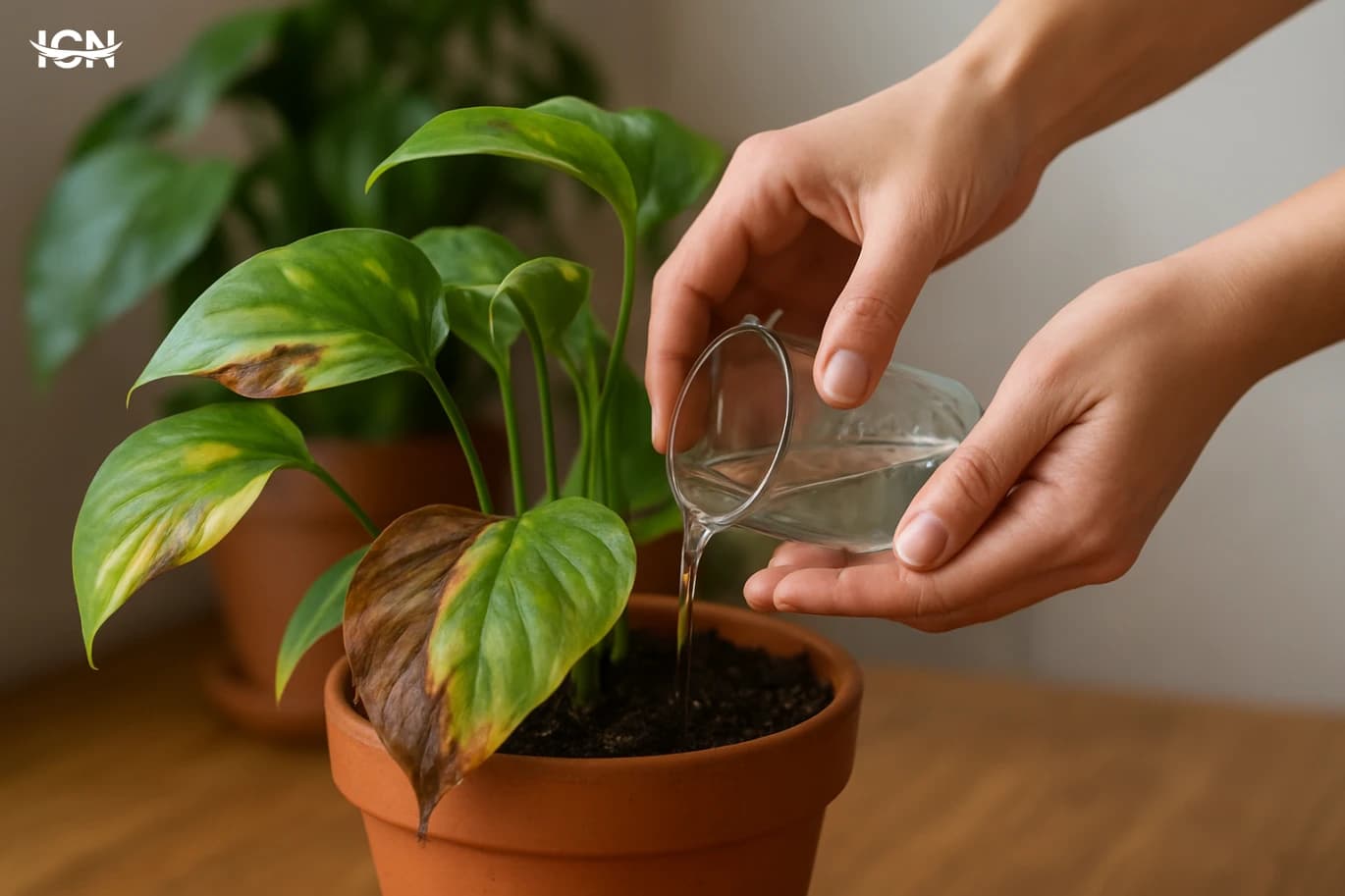
Start with the soil, not the leaves. Press a finger 3–5 cm into the mix; if it feels cool, heavy, and sticks to your skin, the root zone is likely still wet. Lift the pot: a waterlogged pot feels noticeably heavier than a dry one of the same size. Smell the surface and drainage holes; a sour or musty odor often signals stagnant moisture. Leaf symptoms can be confusing because overwatering can mimic underwatering. Yellowing lower leaves, soft stems, and slow growth are common, but some plants also droop when roots can’t breathe. Check the drainage: confirm that water can exit freely and that the saucer is empty after watering. If you can, slide the plant out gently and inspect the roots. Healthy roots are firm and light-colored; damaged roots may look brown, feel mushy, or pull apart easily. These checks help you decide whether you need a drying period, a repot, or both.
Immediate Rescue Steps in the First 48 Hours
If the plant is only mildly overwatered, stop watering immediately and improve drying conditions. Move it to brighter indirect light, increase airflow with a fan on low (not blasting the leaves), and remove any decorative outer pot so the inner pot can breathe. Empty the saucer and keep it dry. If the top layer is soggy, you can gently loosen it with a chopstick to help oxygen reach the root zone. For more serious cases, act quickly but carefully. Tilt the pot and let excess water drain, then place the pot on several layers of paper towel or an absorbent cloth for an hour to wick moisture from the drainage holes. Avoid direct sun as a “quick fix” because stressed roots can’t support sudden heat. Do not fertilize; fertilizer salts can burn weakened roots. The goal in the first two days is to restore oxygen around the roots and prevent further breakdown, not to force new growth.
Repotting When Roots Are Already Damaged
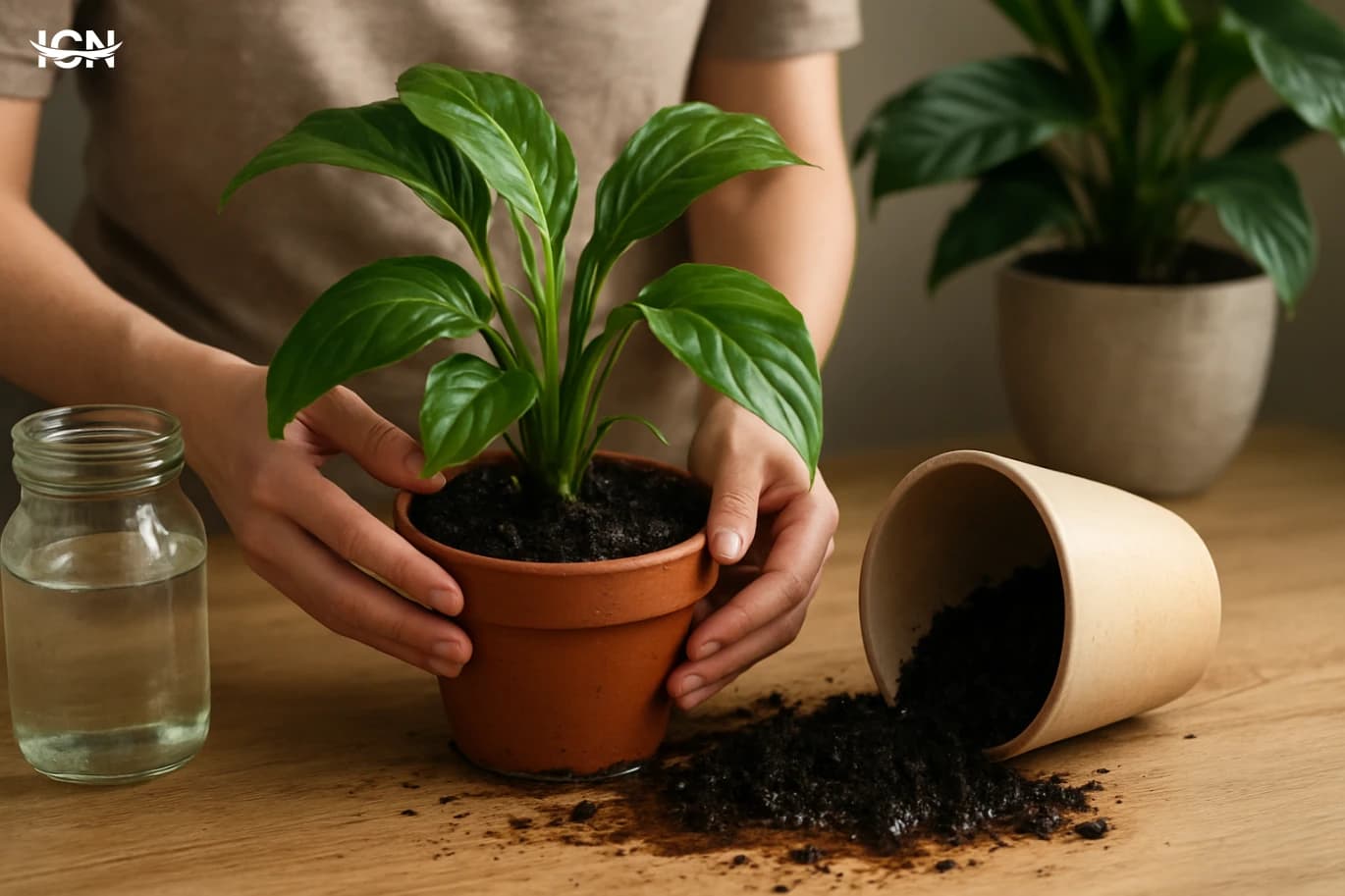
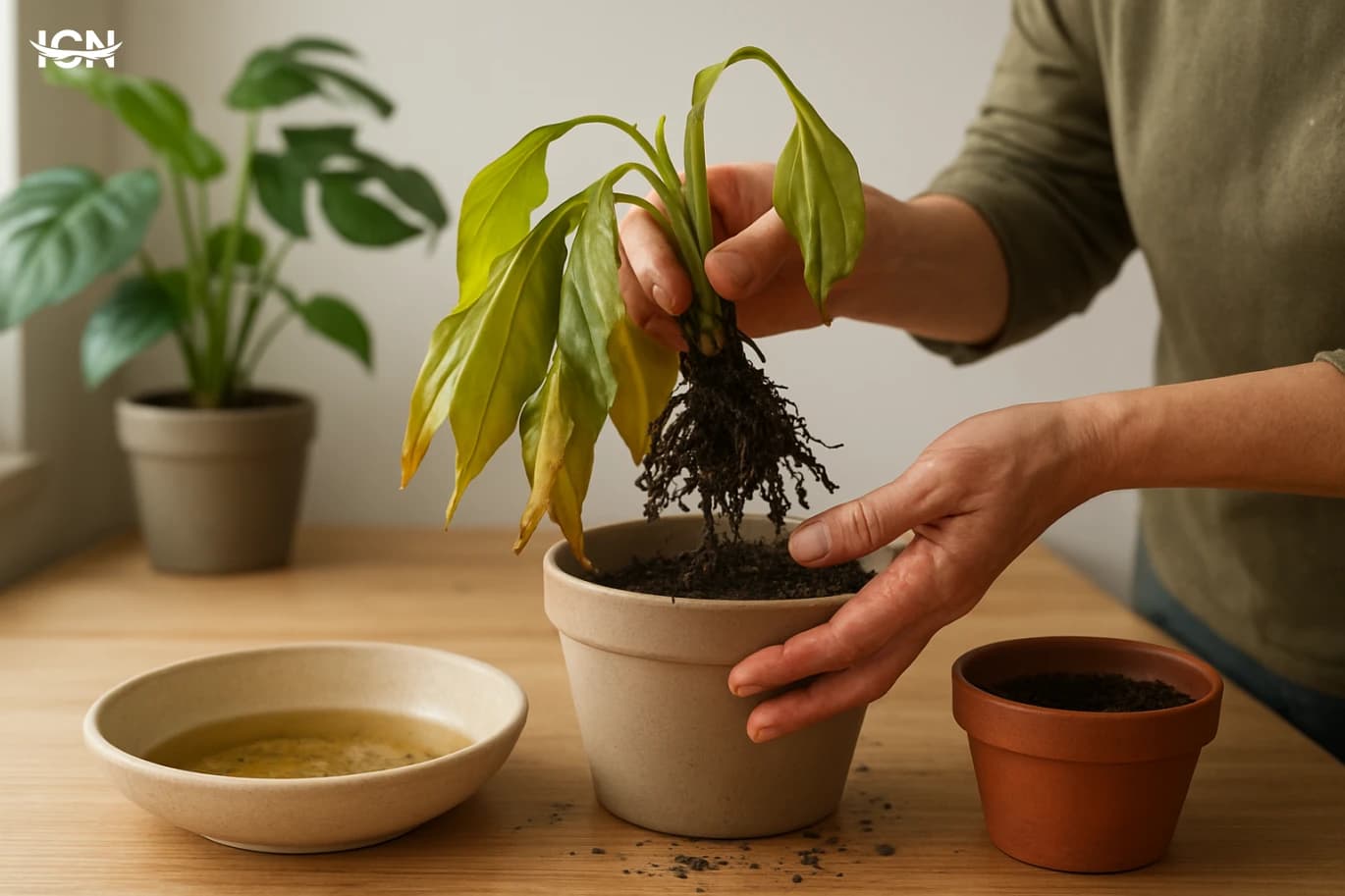
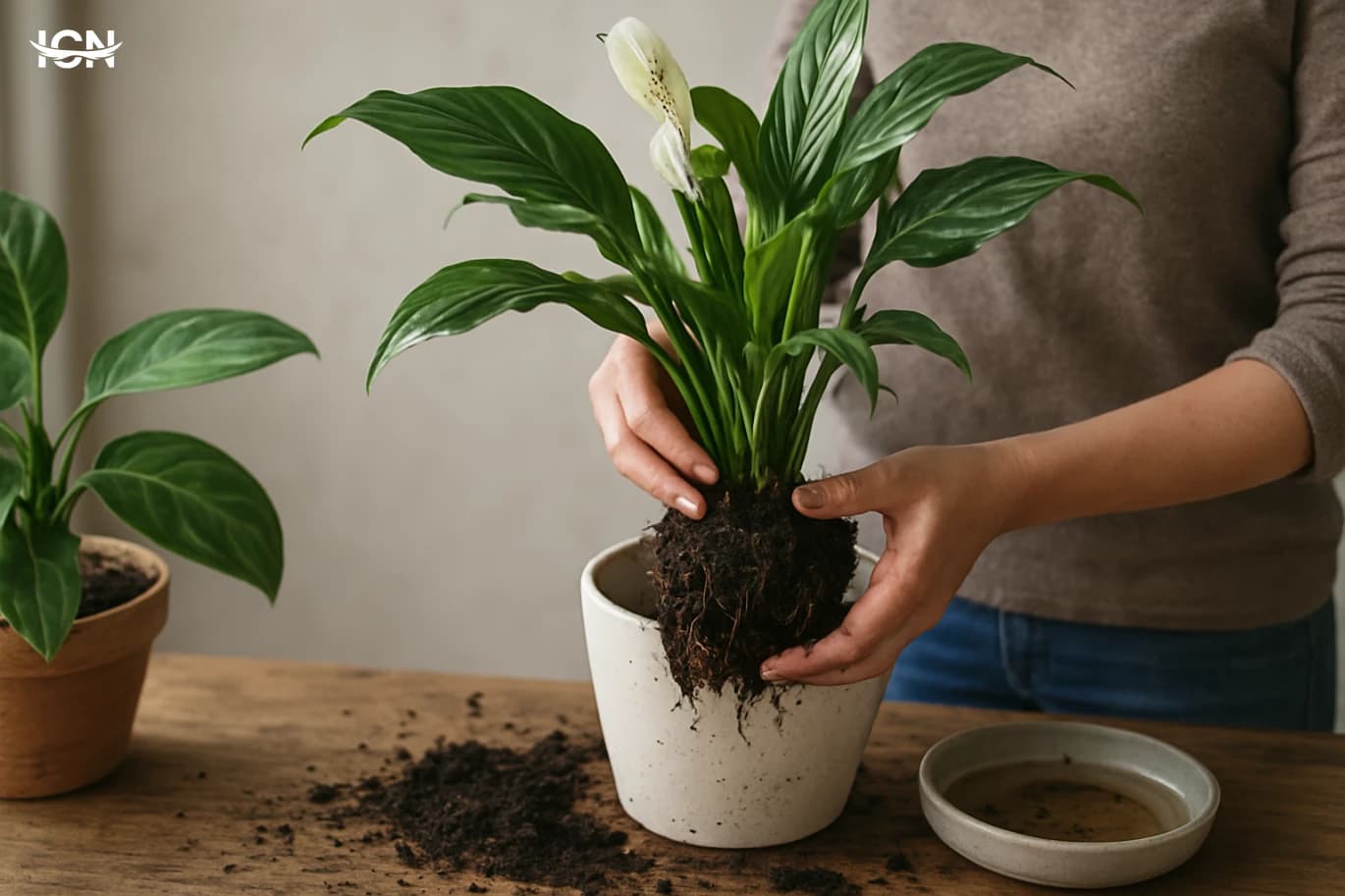
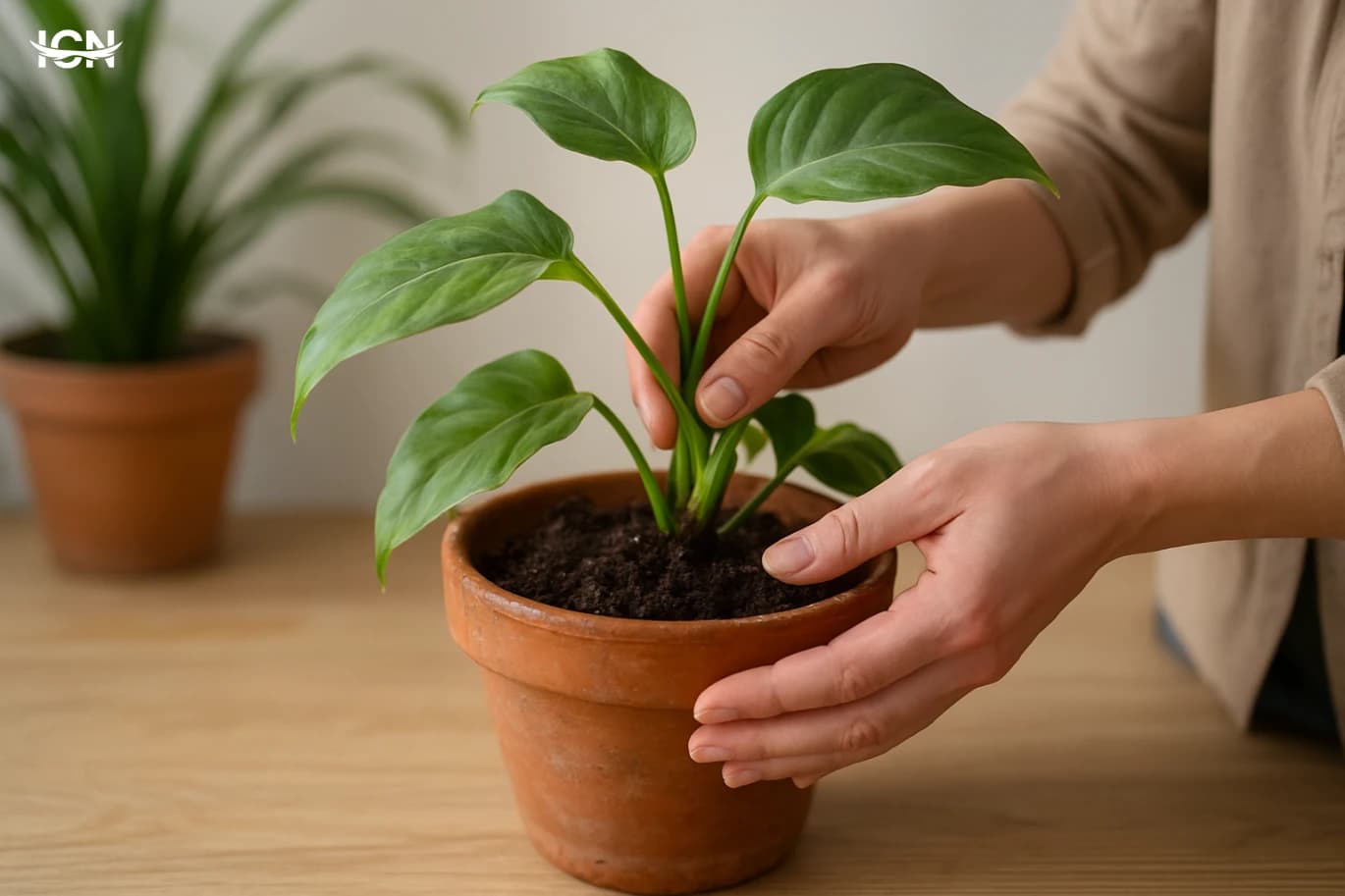
Repotting is necessary when the mix stays wet for many days, the plant smells sour, or roots are visibly brown and soft. Prepare a clean pot with drainage holes and a fresh, airy mix suited to the plant type. For many common houseplants, adding perlite, pumice, or coarse bark improves oxygen and prevents the “mud” effect. Avoid reusing the same saturated soil because it can keep harmful microbes and remains structurally collapsed. Remove the plant and gently shake off wet soil. Trim only clearly dead roots with clean scissors; healthy roots should be kept even if the plant looks weak. If a large portion of roots is lost, choose a slightly smaller pot to match the reduced root mass, which helps the soil dry at a reasonable pace. After repotting, water lightly only to settle the mix, then wait until the top few centimeters dry before watering again. Label the date and observe the plant for two weeks; recovery is usually gradual, with new firm growth as the best sign.
A Watering System That Prevents Repeat Mistakes
Replace fixed schedules with a decision system. Use a moisture meter only as a secondary tool; your main indicators should be pot weight, soil feel, and plant behavior over time. Water thoroughly until it drains, then empty the saucer. This “deep watering, then dry-down” approach encourages roots to grow and reduces constant saturation. Match the pot and soil to your environment. In low light or cool rooms, choose a faster-draining mix and avoid oversized pots. In bright, warm rooms, plants can handle more frequent watering, but they still need drainage and airflow. Consider bottom watering for plants that hate wet crowns, but limit the soak time to 10–20 minutes and let the pot drain fully afterward. Finally, track seasonal shifts: many houseplants slow down in winter and need less water even if they look unchanged. A simple note on your phone about last watering and room conditions can prevent most overwatering cases.