Practical Tips for Ramadan’s Final Week
- Set clear priorities for the last days
- Sleep and energy management
- Smart hydration and balanced meals
- Stay active without overexertion
- Mental focus and stress control
- Prepare for the transition after Ramadan
Set clear priorities for the last days
The final week often feels faster than the rest of the month, so a simple plan helps you use it well without stress. Start by choosing two or three priorities you can realistically maintain every day, such as a consistent prayer routine, a short daily reading, and one act of support for others. Write them down and decide when they will happen: before work, during a lunch break, or after evening prayers. This reduces last-minute pressure and keeps your focus steady. Protect time blocks that are usually lost to distractions. Limit social media to a fixed window and avoid long, unplanned outings that push sleep later. If you have family responsibilities, agree on a shared schedule for meals and errands so no one carries the full load. Many people find that preparing a simple weekly menu and shopping list saves time and prevents heavy, late-night cooking. Keep expectations realistic. The goal is consistency, not perfection. If you miss a planned activity one day, return to your routine the next day without trying to “make up” everything at once. A calm, repeatable plan is more effective than an ambitious schedule that collapses after two days.
Sleep and energy management
Sleep is often the hidden factor behind mood, focus, and the ability to keep good habits. In the last week, many people reduce sleep because of late gatherings or long screen time, then struggle with fatigue during the day. Aim for a practical target: 6.5 to 8 hours total in 24 hours, using a split schedule if needed. A short nap of 20–30 minutes can improve alertness without making it hard to sleep at night. Create a wind-down routine after evening prayers. Keep lights lower, avoid heavy meals right before bed, and stop caffeine at least 6 hours before sleep. If you drink coffee at night out of habit, switch to decaf or herbal options. Try to keep wake-up time consistent, even if bedtime shifts slightly, because a stable wake-up time supports better sleep quality. Manage energy with pacing. Plan demanding tasks earlier in the day when possible, and reserve lighter tasks for the afternoon. If you exercise, keep it moderate: a 20–40 minute walk after iftar or before suhoor is enough for circulation and stress relief without draining you. The goal is to finish the day with enough energy to maintain your routine, not to push through exhaustion.
Smart hydration and balanced meals
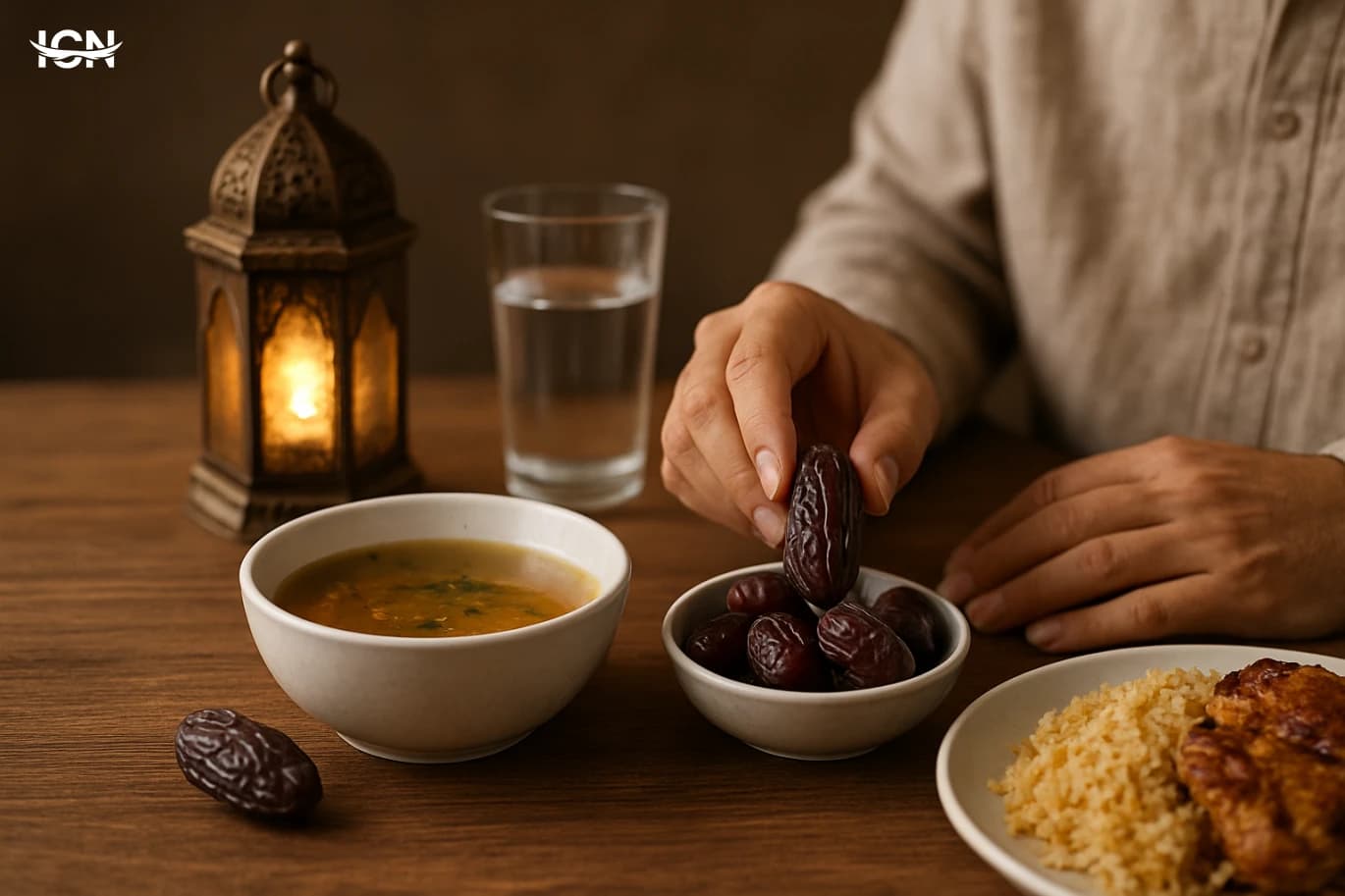
Hydration and food choices become more important in the last week because fatigue accumulates. A simple hydration plan between iftar and suhoor can prevent headaches and low energy. Many adults do well with roughly 6–10 cups of fluids in the evening window, adjusted for body size, climate, and activity. Spread fluids across the night instead of drinking a large amount at once. Water is the base; soups and milk can help; limit sugary drinks because they can increase thirst. For iftar, start light and steady. A small portion of dates or fruit with water, then a short pause, can reduce overeating. Build the main plate around three parts: a protein source (fish, chicken, legumes, eggs), a complex carbohydrate (brown rice, whole grains, potatoes), and vegetables. This combination supports satiety and steadier energy. Keep fried foods and heavy desserts occasional, not daily, especially late at night. Suhoor is your daytime fuel. Choose foods that digest slowly: oats, whole-grain bread, yogurt, beans, and nuts. Add a protein element to reduce hunger later. Reduce very salty items, which can increase thirst. If you have digestive discomfort, keep portions moderate and avoid eating right before sleep. These small adjustments often make fasting hours noticeably easier.
Stay active without overexertion
Physical activity supports circulation, posture, and stress control, but the last week is not the time for extreme training. Choose low to moderate intensity and focus on consistency. A daily walk is the simplest option, and it can be done after iftar when hydration is available. If you prefer home workouts, use short sessions: mobility exercises, light strength work with body weight, and stretching. Pay attention to timing. Exercising right before iftar can be fine for some people, but it may increase dehydration and dizziness for others, especially in hot weather or long fasting hours. If you try it, keep it brief and stop if you feel lightheaded. After iftar, wait at least 60–90 minutes after a full meal before more intense movement. Support your body with recovery habits. Gentle stretching before bed can reduce muscle tightness. If you stand for long periods, elevate your legs for 10 minutes to reduce swelling. These practical steps help you stay comfortable and keep your routine stable through the final days.
Mental focus and stress control
The last week can bring pressure: unfinished tasks, family logistics, and changing routines. Managing stress is not only about comfort; it affects sleep, digestion, and decision-making. Start with a simple daily check-in: identify the top three tasks that must be done today, and postpone non-essential tasks. This reduces mental overload. Use short, practical techniques to reset during the day. Two minutes of slow breathing, a brief stretch, or a quiet walk can lower tension. If you feel overwhelmed by messages and calls, set specific times to respond instead of staying available all evening. For many people, reducing screen exposure in the hour before bed improves both sleep and next-day mood. If you have ongoing health conditions such as diabetes, migraines, or gastrointestinal issues, the final week is a good time to be extra consistent with your care plan. Keep medications and meal timing organized, and consult a clinician if symptoms worsen. Practical self-management supports a smoother end to the month.
Prepare for the transition after Ramadan
A smooth transition after Ramadan protects your health and helps you keep the best habits. In the last few days, gradually adjust your sleep and meal timing if your schedule has shifted significantly. For example, move bedtime earlier by 15–20 minutes each night, and keep suhoor portions moderate so you do not rely on very late eating. Plan how you will maintain key routines. Choose one nutrition habit (such as limiting sugary drinks), one movement habit (a daily walk), and one time-management habit (fixed screen limits). Write them as a simple checklist for the first week after Ramadan. This approach is more effective than trying to keep every Ramadan routine at full intensity. Finally, prepare your kitchen and shopping list for balanced meals. Stock easy staples: eggs, yogurt, legumes, frozen vegetables, whole grains, and fruit. When healthy options are available at home, it becomes easier to avoid overeating and irregular meals during busy days. A practical transition plan helps you carry the benefits of Ramadan into the following month.