App Logo

Download Our App

Shop your way

logologo
Image

Crypto world

10/22/2025By: ICN
Crypto world

Introduction to the world of crypto

A. The Concept of Crypto and Digital Currencies Crypto, or digital currency, is a type of digital money that uses cryptography to secure transactions. These currencies are decentralized, meaning they are not regulated by any government or financial body. Cryptocurrencies include the most popular currencies such as Bitcoin and Ethereum. for. History of the development of cryptocurrencies Cryptocurrencies first appeared in 2009 with the emergence of Bitcoin. Since then, the market has developed significantly, and there are more than 5,000 different digital currencies. These currencies are used for multiple purposes, from investment to everyday transactions. The technology and associated applications continue to advance, reflecting broad possibilities for the future of crypto in the global economy.

Blockchain technologies and smart contracts

A. Blockchain technology and how it works Blockchain technology is the foundation on which digital currencies are based. It is a distributed database that records all transactions in a secure and transparent way. Transactions are grouped into blocks, with each previous block linked to the next, making it difficult to modify data after it has been recorded. This enhances transparency and trust in the system. for. Smart Contracts and Their Uses Smart contracts are applications that run on the blockchain, and they execute automatically when pre-defined conditions are met. This technology allows transactions to be carried out without the need for an intermediary, which reduces costs and speeds up operations. Smart contracts are used in various fields such as finance, insurance, and real estate.

The most famous digital currencies and their importance

A. Bitcoin: Bitcoin is considered the first digital currency that was launched in 2009, and it is the most famous among digital currencies. It is based on blockchain technology and is used as a means of exchange and investment. Bitcoin represents great value, as it is seen as a safe haven against inflation. for. Ethereum Founded in 2015, Ethereum allows users to create smart contracts and decentralized applications. Its importance in revolutionizing many industries, such as finance and gaming. In addition, Ethereum is an ideal platform for developing financial applications and trading digital assets.

How to buy and trade digital currencies

A. Trading platforms and criteria for choosing them When considering purchasing digital currencies, an investor must choose a reliable platform for trading. Criteria to consider include security, ease of use, and low fees. It is best to look for platforms with a strong reputation and positive user ratings. for. Tips for Safe Investment To ensure a safe investment, investors should follow some tips. First, do not invest more than you can afford to lose. Second, diversify the investment portfolio to reduce risks. Finally, following market news and global trends helps in making informed decisions about cryptocurrencies.

Crypto applications in daily life

A. Digital Payments and Transfers Cryptocurrencies are an effective means of digital payment, which individuals can use to make purchases online or in stores that accept crypto. These currencies offer speed in transfers at lower costs compared to the traditional banking system, making them a popular choice among users. for. Other uses such as contracts and voting The uses of digital currencies are not limited only to payment, but also extend to the field of smart contracts that allow conditions to be executed automatically without the need for intermediaries. Blockchain is also being used in voting processes to ensure transparency and security, revolutionizing how elections are managed and data is stored.


* All articles published on this blog are sourced from various websites and are provided for informational purposes only. They should not be considered as confirmed studies or accurate information. Please verify the information independently before relying on it.

Similar ARTICLES

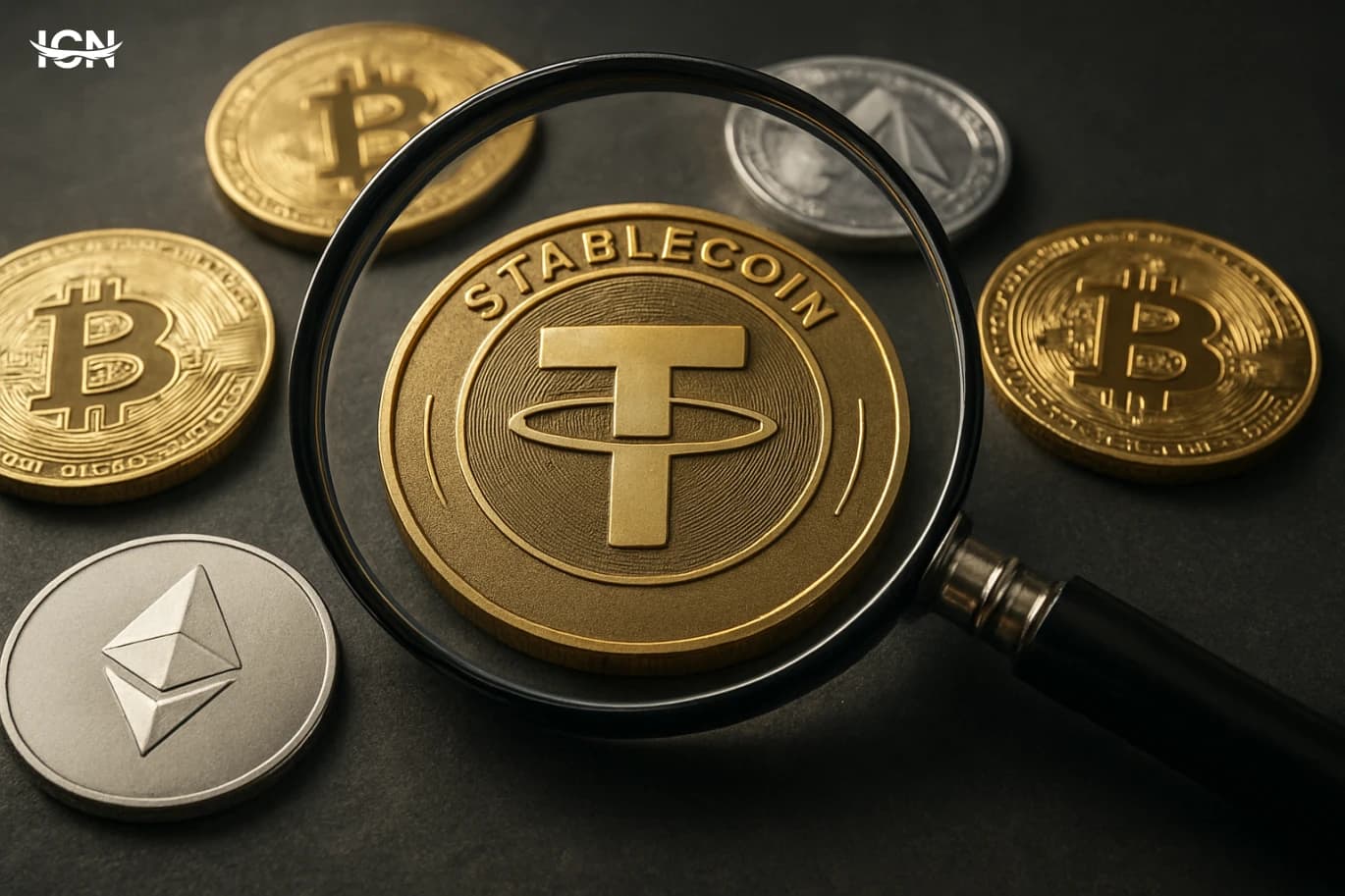
Stablecoin Reserves Under the Microscope
Stablecoins are often treated like digital cash: people park funds between trades, pay freelancers, or move money across borders quickly. That convenience depends on one basic promise: the token should be redeemable for a predictable value, typically one US dollar. Reserves are the assets held to support that promise, and they are the difference between a stablecoin behaving like a reliable payment tool or like a risky investment. When reserves are strong and liquid, redemptions can be met even during market stress. When reserves are opaque, illiquid, or mismatched, users can face delays, price slippage, or a token trading below its peg. For everyday users, reserve quality shows up in practical ways. A stablecoin with high-quality, short-term assets can usually handle large withdrawals without disrupting the market. A stablecoin backed by longer-dated or riskier instruments may look fine in calm periods but struggle when many holders want to exit at once. The key point is that “stable” is not a feature you can assume; it is something that must be continuously supported by asset management, risk controls, and transparent reporting. Understanding reserves is therefore not just for analysts. It is basic consumer protection in a market where tokens can be widely used but not equally safe.
Stablecoins Under Stress in Real Markets
Stablecoins sit at the center of today’s crypto economy because they function as the cash layer for exchanges, lending platforms, and cross-border transfers. For many users, they are the default way to move value without touching a bank wire, especially when local banking is slow, expensive, or limited to business hours. They also act as the unit of account for pricing tokens, settling derivatives, and parking funds during volatility. But stablecoins are not simply “digital dollars.” They are financial products with different backing models, operational risks, and legal exposures. When markets are calm, these differences are easy to ignore. Under stress—when redemptions spike, liquidity dries up, or confidence drops—stablecoins reveal how they are built. Understanding that structure is essential for anyone using stablecoins for payroll, remittances, treasury management, or everyday payments, not just speculation.
Stablecoins Under the Microscope
Stablecoins have moved from a niche tool for crypto traders to a core piece of the digital-asset economy. They are widely used to park value during market swings, move funds between exchanges, and settle trades without touching traditional bank rails. In many regions, they also function as a practical bridge for cross-border transfers, especially where local banking is slow or expensive. This growing role makes stablecoins worth examining as products, not just tokens: who issues them, what backs them, and what risks users actually take. The term “stablecoin” can sound like a guarantee, but stability is a design goal, not a promise. Some stablecoins aim to track the US dollar, others track the euro, and a few target commodities or baskets. The mechanisms vary widely, and so do the failure modes. Understanding the differences is increasingly important for everyday users, businesses that accept crypto payments, and investors who treat stablecoins as cash equivalents inside crypto portfolios.
Stablecoins Under the Microscope
Stablecoins have moved from a niche tool for crypto traders to a core piece of the digital-asset economy. They are used to park funds during market swings, settle trades quickly, and move value across platforms without touching traditional bank rails. Their growth also reflects a practical demand: many users want the speed of blockchain transfers but prefer a unit of account that does not change in price every hour. As stablecoins expand into payments, remittances, and business treasury operations, the question is no longer whether they are useful, but whether their stability claims can be verified in a consistent, transparent way. This topic matters because stablecoins sit at the intersection of technology, finance, and operational risk. A stablecoin can look reliable on a price chart while still carrying hidden fragilities in reserves, governance, or redemption mechanics. For readers, the goal is to understand what “stable” actually means in different designs, and what signals to watch before trusting a token for savings, payroll, or routine transfers.
Stablecoin Reserves Under the Microscope
Stablecoins are often discussed as if the only question is whether one token equals one dollar. In practice, the real risk sits behind the scenes: what backs the token, how quickly that backing can be converted to cash, and whether the issuer can meet redemptions during market stress. A stablecoin can hold its peg on screens for a while and still be fragile if its reserves are concentrated, illiquid, or hard to verify. This matters to everyday users who park savings in stablecoins, to traders who use them as base pairs, and to businesses that accept them for payments. Reserves also shape how stablecoins behave across different platforms. When confidence is high, stablecoins circulate like digital cash. When confidence drops, users rush to redeem, and the issuer’s ability to pay out becomes the story. That is why analysts focus on reserve composition, custody arrangements, and transparency practices. The goal is not to predict a dramatic failure, but to understand the conditions under which a stablecoin remains reliable as a settlement asset in crypto markets.
Stablecoins Under the Microscope
Stablecoins have moved from a niche tool for crypto traders to a core piece of the digital-asset economy. They are used to park value during market swings, settle trades quickly, and move money across platforms without relying on bank transfers that can be slow or restricted by hours and geography. In many exchanges, stablecoins act as the practical “cash leg” for buying and selling other tokens, which makes their reliability a system-wide issue rather than a product feature. Their growth also matters because stablecoins sit at the intersection of technology, finance, and consumer expectations. Users often treat them like digital dollars or digital euros, even though the underlying structures differ widely. Some are backed by reserves held in traditional financial instruments, while others rely on on-chain mechanisms. Understanding what you are actually holding is essential, because the risks are not the same as holding cash in a bank account or a money market fund.
Stablecoin Reserves Under the Microscope
Stablecoins are often marketed as the “cash layer” of crypto, used for trading, remittances, payroll, and parking funds during volatility. That promise depends on one practical question: what backs the token when you want to redeem it? If reserves are high quality and liquid, redemptions tend to be smooth even during market stress. If reserves are opaque or concentrated in risky assets, a stablecoin can lose its peg, freeze redemptions, or impose delays and fees that users did not anticipate. For everyday users, reserve quality shows up in simple ways: whether the stablecoin stays close to one unit of currency on exchanges, whether withdrawals settle quickly, and whether the issuer can handle sudden spikes in redemption requests. Reserves also affect counterparty risk. A stablecoin may be widely accepted, but if its backing relies on a small set of banks, custodians, or short-term lending arrangements, disruptions in those channels can ripple into the token’s price and availability. Understanding reserves is not about reading dense financial statements for sport. It is about knowing what you are holding when you treat a token like cash. Users who learn the basics can compare issuers, choose safer options for savings or business operations, and avoid stablecoins whose stability depends more on market confidence than on verifiable backing.
Stablecoin Reserves Under the Microscope
Stablecoins are marketed as the calm corner of crypto: a token that should hold a steady price, usually around one US dollar. For everyday users, that promise affects basic decisions such as where to park cash between trades, how to move money across exchanges, and how to avoid short-term volatility. The catch is that price stability depends on what sits behind the token. If the issuer’s reserves are weak, opaque, or hard to liquidate quickly, the stablecoin can drift from its peg at the exact moment people need it most. Reserves also shape the broader market. Stablecoins are widely used as trading pairs, collateral in lending protocols, and settlement assets for cross-border transfers. When confidence in reserves drops, liquidity can dry up, spreads widen, and withdrawals can accelerate. That chain reaction is not theoretical; it is why analysts track reserve disclosures, attestations, and redemption policies as closely as they track token price charts. Understanding reserves is less about accounting trivia and more about knowing whether a “digital dollar” behaves like cash or like a risky credit product.
Stablecoin Transparency in Everyday Payments
Stablecoins moved from a niche trading tool to a practical payment rail because they reduce price swings while keeping the speed of crypto transfers. For freelancers, small exporters, and online merchants, the appeal is simple: send value across borders in minutes, often at lower fees than card networks or international bank wires. In many markets, stablecoins also act as a bridge between local currencies and global digital commerce, especially when access to foreign currency is slow or expensive. But the same feature that makes stablecoins convenient—users treating them like “digital cash”—creates a new expectation: people want to know whether the token is actually backed, how quickly it can be redeemed, and what happens during market stress. In payments, trust is not optional. A stablecoin used for payroll, subscriptions, or supplier invoices must behave predictably not only on a good day, but also when liquidity tightens, redemptions spike, or the issuer faces operational problems. This is where transparency becomes a core product feature, not a marketing slogan.
Stablecoin Reserves Under the Microscope
Stablecoins are often treated like digital cash: a quick way to move value between exchanges, pay contractors, or park funds during volatile market swings. That convenience depends on a simple promise—one token should reliably match one unit of currency. Reserves are the practical mechanism behind that promise. If a stablecoin issuer holds high-quality assets that can be converted to cash quickly, redemptions are more likely to work smoothly even when many users want out at the same time. For everyday users, reserves are not an abstract accounting detail. They influence whether you can redeem at par, how quickly withdrawals clear, and whether the token keeps trading close to its peg during stress. They also affect the hidden costs you pay: a stablecoin that frequently drifts off its peg can create slippage, unexpected losses on conversions, and operational headaches for businesses that need predictable cash flows. Understanding what “backed” really means is the first step toward using stablecoins responsibly.
Proof of Reserves That Actually Builds Trust
In cryptocurrency, the biggest practical question for everyday users is simple: does an exchange actually hold the assets it says it holds? Proof of Reserves (PoR) emerged as a response to that question, especially after a series of market shocks that highlighted how quickly confidence can evaporate when custody is opaque. PoR is not a marketing slogan; it is a set of reporting and verification practices intended to show that customer balances are backed by on-chain assets. The concept matters because most users still rely on centralized exchanges for liquidity, fiat on-ramps, and convenience. When funds sit on an exchange, users are effectively creditors, not direct owners of private keys. PoR aims to reduce that information gap by letting the public verify that specific wallets exist and contain assets, and by letting customers confirm that their own balances are included in a published liability snapshot. Done well, it can discourage reckless balance-sheet behavior and raise the cost of misrepresentation. However, PoR is often misunderstood as a complete audit. It is not. A reserve snapshot can be real while the business is still fragile due to hidden liabilities, borrowed funds, or mismatched asset quality. The baseline value of PoR is transparency about custody at a point in time, not a guarantee of solvency. The difference between “we have coins in these wallets” and “we can meet all obligations under stress” is where the real analysis begins.
Stablecoin Reserves Under the Microscope
Stablecoins are often described as the “cash layer” of crypto markets, but their usefulness depends on one practical question: what backs the token you hold? In day-to-day trading, stablecoins are used for moving value between exchanges, settling over-the-counter deals, paying contractors, and parking funds during volatility. That scale turns reserve quality into a system-wide issue rather than a niche concern. If reserves are liquid, transparent, and conservatively managed, the stablecoin can behave like a reliable settlement asset. If reserves are opaque or concentrated in risky instruments, the token can trade below its peg at the exact moment users need it most. The reserve topic has also become more urgent because stablecoins now interact with traditional finance in visible ways. Issuers place funds in short-term government bills, bank deposits, and money-market instruments, which means changes in interest rates, banking conditions, and liquidity rules can affect how quickly redemptions can be met. For readers, the key takeaway is that “stable” is not a guarantee; it is an outcome produced by reserve composition, redemption mechanics, and governance. Understanding those moving parts helps you compare products and avoid treating all stablecoins as interchangeable.
Stablecoins Under Pressure in 2026
Stablecoins have moved from a niche crypto tool to a core piece of day-to-day market plumbing. They are widely used to move value between exchanges, park funds during volatility, settle trades quickly, and access crypto services without constantly converting back to bank money. In many markets, they also function as a practical bridge for people who want digital dollars without relying on international bank transfers. In 2026, the stakes are higher because stablecoins sit at the intersection of trading, payments, and risk management. When confidence in a stablecoin weakens, liquidity can dry up fast, spreads widen, and the cost of moving money increases. Even users who never “invest” in stablecoins can be affected through slower withdrawals, higher fees, or reduced access to certain platforms. This topic is timely because the stablecoin landscape is no longer defined by a single dominant model. Cash-and-bill backed coins, crypto-collateralized designs, and yield-bearing variants all compete for users. Each approach comes with different transparency standards, reserve management practices, and operational risks, making it harder for everyday users to judge safety by brand recognition alone.
By clicking the SUBSCRIBE button, you are agreeing to our Privacy & Cookie Policy If you want to unsubsribe the marketing email, please proceed to our privacy center.
© 2005-2026 ICN. All Rights Reserved.