App Logo

Download Our App

Shop your way

logologo
Image

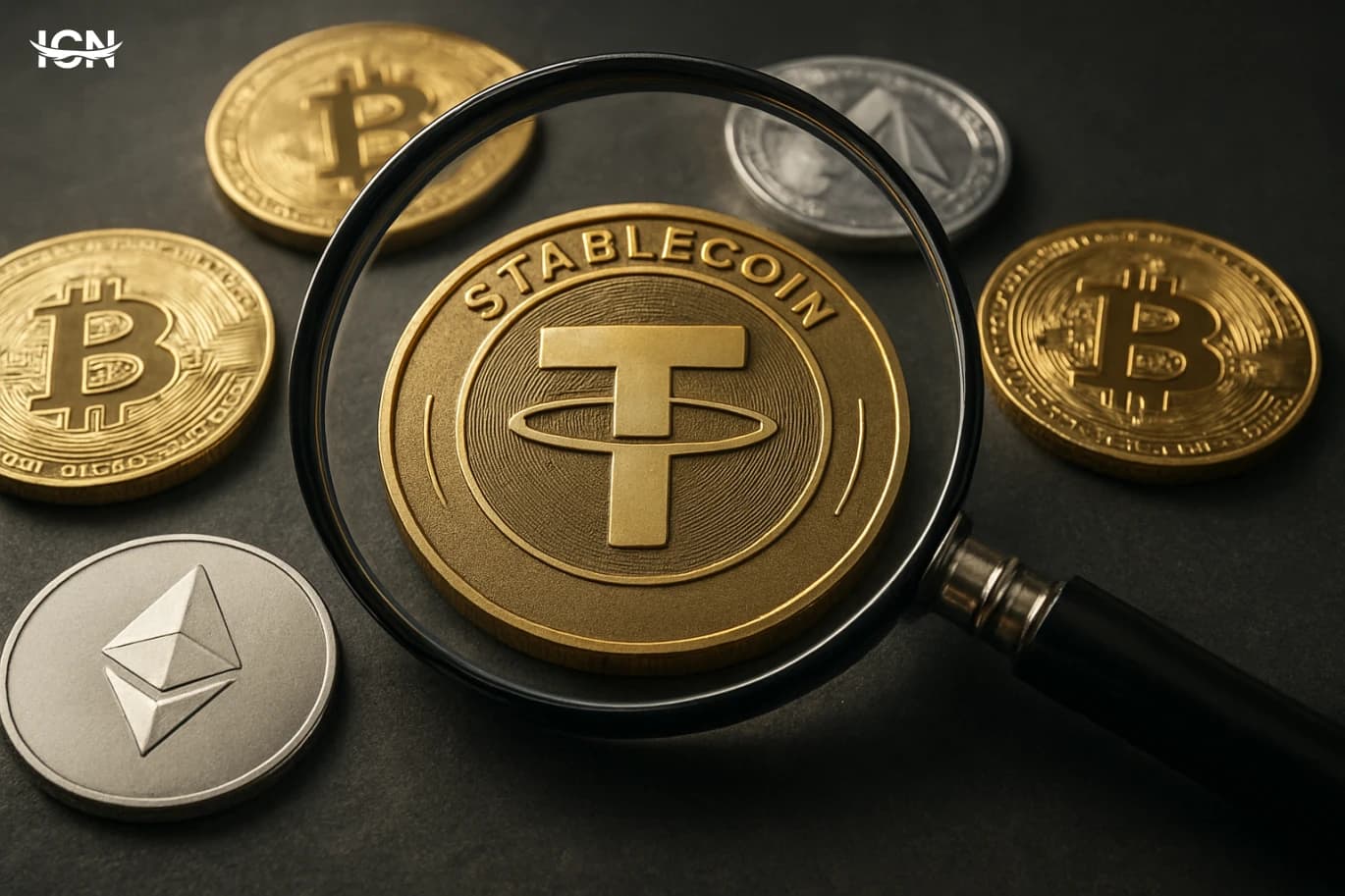
Stablecoin Reserves Under the Microscope

07/11/2026By: ICN Writer
Stablecoin Reserves Under the Microscope

Why Reserves Matter to Everyday Users

Stablecoins are often treated like digital cash: people park funds between trades, pay freelancers, or move money across borders quickly. That convenience depends on one basic promise: the token should be redeemable for a predictable value, typically one US dollar. Reserves are the assets held to support that promise, and they are the difference between a stablecoin behaving like a reliable payment tool or like a risky investment. When reserves are strong and liquid, redemptions can be met even during market stress. When reserves are opaque, illiquid, or mismatched, users can face delays, price slippage, or a token trading below its peg. For everyday users, reserve quality shows up in practical ways. A stablecoin with high-quality, short-term assets can usually handle large withdrawals without disrupting the market. A stablecoin backed by longer-dated or riskier instruments may look fine in calm periods but struggle when many holders want to exit at once. The key point is that “stable” is not a feature you can assume; it is something that must be continuously supported by asset management, risk controls, and transparent reporting. Understanding reserves is therefore not just for analysts. It is basic consumer protection in a market where tokens can be widely used but not equally safe.

What Counts as a Reserve and What Does Not

Not all reserves are created equal, and the label “backed” can hide major differences. In the strongest setups, reserves are held in cash and cash equivalents such as short-term government securities, overnight repurchase agreements, or insured bank deposits. These instruments are designed to preserve value and can typically be converted to cash quickly. Some issuers also hold high-grade commercial paper or corporate bonds, which may introduce additional credit and liquidity risk. The further reserves move away from cash-like assets, the more the stablecoin begins to resemble a credit product. It also matters where reserves are held and under what legal structure. Are the assets segregated for token holders, or are they part of a broader corporate balance sheet? Are they held with reputable custodians, and are there clear policies for managing duration, counterparty exposure, and concentration risk? Another important distinction is between “reserves” and “capital.” Reserves are meant to match liabilities (the tokens in circulation). Capital is an extra buffer that can absorb losses. Some issuers highlight reserve totals without clarifying whether there is any meaningful capital cushion. Finally, users should be cautious with terms like “overcollateralized,” “algorithmic,” or “partially backed.” Overcollateralized models may use volatile crypto assets that can drop quickly, requiring active risk management and liquidation mechanisms. Algorithmic designs may rely on market incentives rather than hard assets, which can fail under pressure. The practical takeaway is to read reserve disclosures as you would read the ingredients list on food: the details determine the outcome.

How Attestations and Audits Actually Differ

Many stablecoin issuers publish monthly “attestations,” and users often assume these are full audits. They are not the same. An attestation is typically a snapshot prepared by an accounting firm based on specific procedures at a point in time. It may confirm that reported assets exceeded reported liabilities on a given date, but it may not deeply test internal controls, evaluate ongoing risk management, or verify every underlying position with the same rigor as an audit. The scope is narrower, and the assurance level can be different. A full financial audit is broader. It is designed to provide reasonable assurance that financial statements are free of material misstatement, and it includes testing of controls and processes over a period, not just a single day. For stablecoins, the most useful reporting goes beyond a headline number. It breaks down reserve composition, maturity profiles, counterparties, and custody arrangements, and it explains how the issuer manages liquidity under stress. It also clarifies whether liabilities include all outstanding tokens across chains and whether any affiliated lending or investment activities could affect reserves. For readers, the practical approach is to look for consistency and detail. Are reports published on a predictable schedule? Do they provide comparable categories month to month? Do they identify the accounting standards used and the firm responsible? If a stablecoin is widely used for payments or treasury management, higher-quality disclosure is not a luxury; it is a prerequisite for trust. The market is gradually rewarding issuers that treat transparency as a product feature rather than a marketing line.

Redemption Mechanics and Liquidity Stress Tests

The most revealing question is simple: how do you get out? Redemption mechanics vary widely. Some issuers allow direct redemption only for institutional clients with minimum thresholds, while retail users rely on exchanges and market liquidity. In calm markets, that difference may not matter. In stressed markets, it can define whether a user exits at $1.00 or at a discount. A stablecoin can be fully backed on paper yet still trade below peg if redemption channels are slow, restricted, or operationally complex. Liquidity stress is not theoretical. It can come from sudden market sell-offs, large holders rebalancing, or external shocks that increase demand for cash. Good reserve management anticipates this by holding a meaningful share of assets in instruments that mature quickly, maintaining diversified banking and custody relationships, and setting clear policies for same-day or next-day liquidity. Some issuers publish information about weighted average maturity or the share of reserves in overnight instruments, which helps users judge how quickly assets can be converted to cash. Users evaluating a stablecoin for payments or savings should consider practical indicators: typical redemption times, fees, minimums, and whether the issuer has a track record of honoring redemptions during volatile periods. If the only exit route is selling on an exchange, then exchange liquidity, market depth, and counterparty risk become part of the stablecoin’s real-world risk profile. Stability is ultimately a system, not a slogan.

A Practical Checklist for Comparing Stablecoins

For readers who want a clear way to compare options, a checklist approach works better than chasing headlines. Start with reserve composition: what percentage is in cash, short-term government securities, and overnight instruments? Next, look at maturity and liquidity: are there long-dated holdings that could be hard to sell quickly without losses? Then examine transparency: are reports frequent, detailed, and produced by recognizable firms, and do they explain custody and counterparty exposure? Operational access is the next layer. Can you redeem directly, and if not, how dependent are you on exchange liquidity? What are the minimum redemption sizes, fees, and settlement times? Also consider multi-chain issuance: does the issuer clearly reconcile total supply across networks, and are there controls to prevent mismatches? For businesses, additional questions matter: are there APIs, compliance tools, and clear terms of service that define user rights in a dispute? Finally, assess concentration and ecosystem risk. If a stablecoin is heavily used in a single trading venue or DeFi protocol, a disruption there can affect price stability even if reserves are solid. Diversified usage and deep liquidity across multiple venues generally reduce fragility. None of these checks guarantees safety, but together they provide a grounded, repeatable method for choosing a stablecoin based on measurable factors rather than brand recognition.

* All articles published on this blog are sourced from various websites and are provided for informational purposes only. They should not be considered as confirmed studies or accurate information. Please verify the information independently before relying on it.

Similar ARTICLES

Stablecoins Under Stress in Real Markets
Stablecoins sit at the center of today’s crypto economy because they function as the cash layer for exchanges, lending platforms, and cross-border transfers. For many users, they are the default way to move value without touching a bank wire, especially when local banking is slow, expensive, or limited to business hours. They also act as the unit of account for pricing tokens, settling derivatives, and parking funds during volatility. But stablecoins are not simply “digital dollars.” They are financial products with different backing models, operational risks, and legal exposures. When markets are calm, these differences are easy to ignore. Under stress—when redemptions spike, liquidity dries up, or confidence drops—stablecoins reveal how they are built. Understanding that structure is essential for anyone using stablecoins for payroll, remittances, treasury management, or everyday payments, not just speculation.
Stablecoins Under the Microscope
Stablecoins have moved from a niche tool for crypto traders to a core piece of the digital-asset economy. They are widely used to park value during market swings, move funds between exchanges, and settle trades without touching traditional bank rails. In many regions, they also function as a practical bridge for cross-border transfers, especially where local banking is slow or expensive. This growing role makes stablecoins worth examining as products, not just tokens: who issues them, what backs them, and what risks users actually take. The term “stablecoin” can sound like a guarantee, but stability is a design goal, not a promise. Some stablecoins aim to track the US dollar, others track the euro, and a few target commodities or baskets. The mechanisms vary widely, and so do the failure modes. Understanding the differences is increasingly important for everyday users, businesses that accept crypto payments, and investors who treat stablecoins as cash equivalents inside crypto portfolios.
Stablecoins Under the Microscope
Stablecoins have moved from a niche tool for crypto traders to a core piece of the digital-asset economy. They are used to park funds during market swings, settle trades quickly, and move value across platforms without touching traditional bank rails. Their growth also reflects a practical demand: many users want the speed of blockchain transfers but prefer a unit of account that does not change in price every hour. As stablecoins expand into payments, remittances, and business treasury operations, the question is no longer whether they are useful, but whether their stability claims can be verified in a consistent, transparent way. This topic matters because stablecoins sit at the intersection of technology, finance, and operational risk. A stablecoin can look reliable on a price chart while still carrying hidden fragilities in reserves, governance, or redemption mechanics. For readers, the goal is to understand what “stable” actually means in different designs, and what signals to watch before trusting a token for savings, payroll, or routine transfers.
Stablecoin Reserves Under the Microscope
Stablecoins are often discussed as if the only question is whether one token equals one dollar. In practice, the real risk sits behind the scenes: what backs the token, how quickly that backing can be converted to cash, and whether the issuer can meet redemptions during market stress. A stablecoin can hold its peg on screens for a while and still be fragile if its reserves are concentrated, illiquid, or hard to verify. This matters to everyday users who park savings in stablecoins, to traders who use them as base pairs, and to businesses that accept them for payments. Reserves also shape how stablecoins behave across different platforms. When confidence is high, stablecoins circulate like digital cash. When confidence drops, users rush to redeem, and the issuer’s ability to pay out becomes the story. That is why analysts focus on reserve composition, custody arrangements, and transparency practices. The goal is not to predict a dramatic failure, but to understand the conditions under which a stablecoin remains reliable as a settlement asset in crypto markets.
Stablecoins Under the Microscope
Stablecoins have moved from a niche tool for crypto traders to a core piece of the digital-asset economy. They are used to park value during market swings, settle trades quickly, and move money across platforms without relying on bank transfers that can be slow or restricted by hours and geography. In many exchanges, stablecoins act as the practical “cash leg” for buying and selling other tokens, which makes their reliability a system-wide issue rather than a product feature. Their growth also matters because stablecoins sit at the intersection of technology, finance, and consumer expectations. Users often treat them like digital dollars or digital euros, even though the underlying structures differ widely. Some are backed by reserves held in traditional financial instruments, while others rely on on-chain mechanisms. Understanding what you are actually holding is essential, because the risks are not the same as holding cash in a bank account or a money market fund.
Stablecoin Reserves Under the Microscope
Stablecoins are often marketed as the “cash layer” of crypto, used for trading, remittances, payroll, and parking funds during volatility. That promise depends on one practical question: what backs the token when you want to redeem it? If reserves are high quality and liquid, redemptions tend to be smooth even during market stress. If reserves are opaque or concentrated in risky assets, a stablecoin can lose its peg, freeze redemptions, or impose delays and fees that users did not anticipate. For everyday users, reserve quality shows up in simple ways: whether the stablecoin stays close to one unit of currency on exchanges, whether withdrawals settle quickly, and whether the issuer can handle sudden spikes in redemption requests. Reserves also affect counterparty risk. A stablecoin may be widely accepted, but if its backing relies on a small set of banks, custodians, or short-term lending arrangements, disruptions in those channels can ripple into the token’s price and availability. Understanding reserves is not about reading dense financial statements for sport. It is about knowing what you are holding when you treat a token like cash. Users who learn the basics can compare issuers, choose safer options for savings or business operations, and avoid stablecoins whose stability depends more on market confidence than on verifiable backing.
Stablecoin Reserves Under the Microscope
Stablecoins are marketed as the calm corner of crypto: a token that should hold a steady price, usually around one US dollar. For everyday users, that promise affects basic decisions such as where to park cash between trades, how to move money across exchanges, and how to avoid short-term volatility. The catch is that price stability depends on what sits behind the token. If the issuer’s reserves are weak, opaque, or hard to liquidate quickly, the stablecoin can drift from its peg at the exact moment people need it most. Reserves also shape the broader market. Stablecoins are widely used as trading pairs, collateral in lending protocols, and settlement assets for cross-border transfers. When confidence in reserves drops, liquidity can dry up, spreads widen, and withdrawals can accelerate. That chain reaction is not theoretical; it is why analysts track reserve disclosures, attestations, and redemption policies as closely as they track token price charts. Understanding reserves is less about accounting trivia and more about knowing whether a “digital dollar” behaves like cash or like a risky credit product.
Stablecoin Transparency in Everyday Payments
Stablecoins moved from a niche trading tool to a practical payment rail because they reduce price swings while keeping the speed of crypto transfers. For freelancers, small exporters, and online merchants, the appeal is simple: send value across borders in minutes, often at lower fees than card networks or international bank wires. In many markets, stablecoins also act as a bridge between local currencies and global digital commerce, especially when access to foreign currency is slow or expensive. But the same feature that makes stablecoins convenient—users treating them like “digital cash”—creates a new expectation: people want to know whether the token is actually backed, how quickly it can be redeemed, and what happens during market stress. In payments, trust is not optional. A stablecoin used for payroll, subscriptions, or supplier invoices must behave predictably not only on a good day, but also when liquidity tightens, redemptions spike, or the issuer faces operational problems. This is where transparency becomes a core product feature, not a marketing slogan.
Stablecoin Reserves Under the Microscope
Stablecoins are often treated like digital cash: a quick way to move value between exchanges, pay contractors, or park funds during volatile market swings. That convenience depends on a simple promise—one token should reliably match one unit of currency. Reserves are the practical mechanism behind that promise. If a stablecoin issuer holds high-quality assets that can be converted to cash quickly, redemptions are more likely to work smoothly even when many users want out at the same time. For everyday users, reserves are not an abstract accounting detail. They influence whether you can redeem at par, how quickly withdrawals clear, and whether the token keeps trading close to its peg during stress. They also affect the hidden costs you pay: a stablecoin that frequently drifts off its peg can create slippage, unexpected losses on conversions, and operational headaches for businesses that need predictable cash flows. Understanding what “backed” really means is the first step toward using stablecoins responsibly.
Proof of Reserves That Actually Builds Trust
In cryptocurrency, the biggest practical question for everyday users is simple: does an exchange actually hold the assets it says it holds? Proof of Reserves (PoR) emerged as a response to that question, especially after a series of market shocks that highlighted how quickly confidence can evaporate when custody is opaque. PoR is not a marketing slogan; it is a set of reporting and verification practices intended to show that customer balances are backed by on-chain assets. The concept matters because most users still rely on centralized exchanges for liquidity, fiat on-ramps, and convenience. When funds sit on an exchange, users are effectively creditors, not direct owners of private keys. PoR aims to reduce that information gap by letting the public verify that specific wallets exist and contain assets, and by letting customers confirm that their own balances are included in a published liability snapshot. Done well, it can discourage reckless balance-sheet behavior and raise the cost of misrepresentation. However, PoR is often misunderstood as a complete audit. It is not. A reserve snapshot can be real while the business is still fragile due to hidden liabilities, borrowed funds, or mismatched asset quality. The baseline value of PoR is transparency about custody at a point in time, not a guarantee of solvency. The difference between “we have coins in these wallets” and “we can meet all obligations under stress” is where the real analysis begins.
Stablecoin Reserves Under the Microscope
Stablecoins are often described as the “cash layer” of crypto markets, but their usefulness depends on one practical question: what backs the token you hold? In day-to-day trading, stablecoins are used for moving value between exchanges, settling over-the-counter deals, paying contractors, and parking funds during volatility. That scale turns reserve quality into a system-wide issue rather than a niche concern. If reserves are liquid, transparent, and conservatively managed, the stablecoin can behave like a reliable settlement asset. If reserves are opaque or concentrated in risky instruments, the token can trade below its peg at the exact moment users need it most. The reserve topic has also become more urgent because stablecoins now interact with traditional finance in visible ways. Issuers place funds in short-term government bills, bank deposits, and money-market instruments, which means changes in interest rates, banking conditions, and liquidity rules can affect how quickly redemptions can be met. For readers, the key takeaway is that “stable” is not a guarantee; it is an outcome produced by reserve composition, redemption mechanics, and governance. Understanding those moving parts helps you compare products and avoid treating all stablecoins as interchangeable.
Stablecoins Under Pressure in 2026
Stablecoins have moved from a niche crypto tool to a core piece of day-to-day market plumbing. They are widely used to move value between exchanges, park funds during volatility, settle trades quickly, and access crypto services without constantly converting back to bank money. In many markets, they also function as a practical bridge for people who want digital dollars without relying on international bank transfers. In 2026, the stakes are higher because stablecoins sit at the intersection of trading, payments, and risk management. When confidence in a stablecoin weakens, liquidity can dry up fast, spreads widen, and the cost of moving money increases. Even users who never “invest” in stablecoins can be affected through slower withdrawals, higher fees, or reduced access to certain platforms. This topic is timely because the stablecoin landscape is no longer defined by a single dominant model. Cash-and-bill backed coins, crypto-collateralized designs, and yield-bearing variants all compete for users. Each approach comes with different transparency standards, reserve management practices, and operational risks, making it harder for everyday users to judge safety by brand recognition alone.
Proof of Reserves That Actually Builds Trust
Proof of Reserves (PoR) moved from a niche transparency tool to a baseline expectation after users realized that a trading platform’s interface can look healthy while its balance sheet is not. In practical terms, PoR aims to show that a custodian or exchange holds enough assets to cover customer balances. The appeal is simple: if a platform claims it holds 10,000 BTC for clients, it should be able to demonstrate control of wallets containing at least that amount. However, the reason PoR matters is not only about preventing extreme failures. It also affects everyday decisions: whether users keep funds on-platform, which venues market makers trust for liquidity, and how institutions evaluate counterparty risk. In a market where assets can be moved instantly and liabilities can change by the minute, the credibility of any “we are solvent” statement depends on verifiable evidence and clear reporting cadence. This article topic focuses on what PoR can and cannot prove, how different implementations work, and what readers should look for before treating a PoR report as meaningful assurance. It is not a technical deep dive for cryptographers; it is a practical guide to interpreting PoR disclosures like an analyst reviewing a financial control report.
By clicking the SUBSCRIBE button, you are agreeing to our Privacy & Cookie Policy If you want to unsubsribe the marketing email, please proceed to our privacy center.
© 2005-2026 ICN. All Rights Reserved.