Building Reliable Event Driven Systems
- Why event driven architecture is everywhere
- Choosing the right event backbone
- Designing event contracts that survive change
- Consistency patterns without surprises
- Observability and debugging across services
- bookmark
Why event driven architecture is everywhere
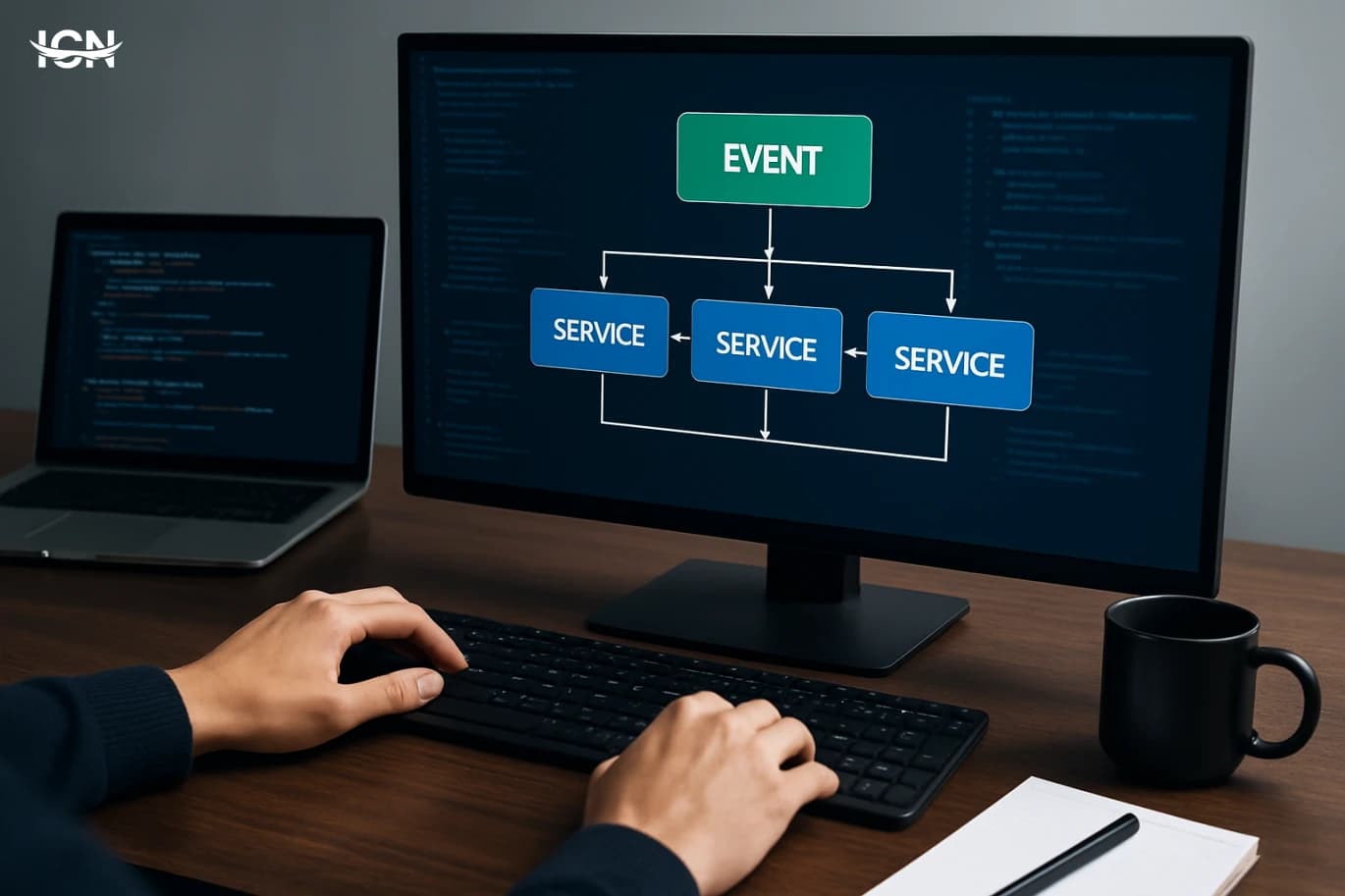
Event driven architecture has moved from niche messaging setups to a default pattern for modern products. Teams adopt it to decouple services, scale specific workloads, and integrate third‑party systems without tight dependencies. Instead of one service calling another synchronously and waiting, producers publish events such as “order placed” or “file uploaded,” and consumers react when they are ready. This improves resilience because a temporary slowdown in one consumer does not necessarily block the producer. The approach also fits how organizations evolve. New features often require new consumers rather than changes to existing producers, which reduces coordination costs. However, the same flexibility can create hidden complexity: event contracts become public APIs, debugging spans multiple services, and data consistency becomes a design choice rather than a default. A practical blog topic is not “what is event driven,” but how to build it so it stays reliable under real traffic, real failures, and real team turnover.
Choosing the right event backbone
Reliability starts with the event backbone: a message broker or streaming platform that matches your delivery guarantees and operational capacity. Traditional brokers excel at work queues and per‑message acknowledgments, while streaming platforms focus on durable logs, replay, and high throughput. The choice should be driven by concrete requirements: peak events per second, message size, retention needs, and whether consumers must replay history to rebuild state. Also decide how you will partition events. Partitioning by a stable key (like customerId or orderId) can preserve ordering for related events, but it also concentrates load if a few keys are hot. Plan for backpressure: what happens when a consumer lags? A reliable system defines limits, alerts, and remediation steps, such as scaling consumers, pausing noncritical producers, or moving heavy processing to separate topics. Operationally, treat the backbone as a product. Define SLOs for publish latency and consumer lag, set quotas to prevent noisy neighbors, and document runbooks for common incidents. Many teams fail not because the technology is weak, but because they never decide who owns the platform and how changes are rolled out safely.
Designing event contracts that survive change
In event driven systems, the event schema is a long‑lived contract. A reliable design starts by defining what an event represents: a fact that happened, not a command or a query. Names should be specific and stable, and payloads should include identifiers, timestamps, and version fields. Avoid embedding large, mutable objects when a reference is enough; oversized events increase costs and make evolution harder. Schema evolution needs rules. Additive changes are usually safe, but removing or renaming fields can break consumers silently. Use explicit versioning and compatibility checks in CI, and publish schema documentation where teams can discover it. Consider a canonical event format that includes metadata such as correlationId, producer name, and trace context. Idempotency is another contract issue. Consumers must assume duplicates can happen due to retries, broker redelivery, or network timeouts. Design events with unique eventId values and have consumers store processed IDs or use natural idempotency keys like (orderId, state). When teams treat idempotency as optional, reliability collapses during the first major incident.
Consistency patterns without surprises
Event driven systems often trade immediate consistency for availability and decoupling. The key is to make that trade explicit and manageable. For cross‑service workflows, use patterns like sagas where each step emits an event and compensating actions handle failures. Keep the state machine visible: define allowed transitions, timeouts, and what “done” means. For publishing events alongside database updates, the outbox pattern is a practical reliability tool. Instead of writing to the database and then publishing separately, write the event to an outbox table in the same transaction, and have a relay publish from the outbox to the broker. This reduces the risk of “data updated but event missing” or “event published but data rolled back.” When consumers build read models, plan for eventual consistency in the UI and APIs. Provide timestamps, processing status, or “last updated” fields so clients can handle delays. Reliability is not only about preventing failure; it is also about making system behavior predictable when delays and partial updates occur.
Observability and debugging across services
Debugging event driven systems requires evidence that spans producers, brokers, and consumers. Start with structured logging that includes eventId, correlationId, topic, partition, and consumer group. Add distributed tracing so a single business action can be followed through publish, processing, and downstream calls. Metrics should cover publish errors, consumer lag, retry counts, dead letter volume, and processing latency percentiles. Dead letter queues (or topics) are essential, but only if they are operationally integrated. Define what qualifies for dead lettering, how messages are inspected, and how they are replayed safely after a fix. Build tooling that lets engineers search by eventId and see the full lifecycle, including schema version and handler version. Finally, test failure modes deliberately. Run controlled experiments that simulate broker unavailability, consumer crashes, slow dependencies, and schema mismatches. Reliability improves when teams practice recovery and can measure how quickly the system returns to normal behavior.
bookmark
A practical way to turn this topic into an actionable blog post is to end with a checklist readers can apply to their own systems. Include items such as: define event naming rules and ownership; document schemas and compatibility policy; enforce idempotency in every consumer; adopt outbox for critical writes; set SLOs for lag and publish latency; standardize correlation IDs and tracing; and create a replay process with approvals. Add a short “first 30 days” plan for teams migrating from synchronous calls. Week 1 can focus on picking the backbone and setting basic observability. Week 2 can introduce schema governance and a shared event envelope. Week 3 can implement outbox and a dead letter workflow. Week 4 can run failure drills and refine runbooks. This keeps the discussion grounded in delivery steps rather than abstract architecture. The result is a specific, serious, and engaging programming topic: not just adopting event driven systems, but building them to be dependable when the system grows, the traffic spikes, and the unexpected happens.