Artificial Womb
- What is an artificial womb and how does it work?
- Basic medical uses: Saving premature infants
- Global research developments in artificial womb: sheep and goats as models
- Technology Comparison: Artificial Womb and Biobag System
- The Ethical and Social Dimensions: Debate on the Future
- Major Technical Challenges: Simulating Placenta Functions and the Bio-Bag System
- Frequently Asked Questions About the Artificial Womb
- Frequently Asked Questions About Artificial Womb Technology
- Bottom Line: The Intersection of Science and Ethics in the Future of Reproduction
What is an artificial womb and how does it work?
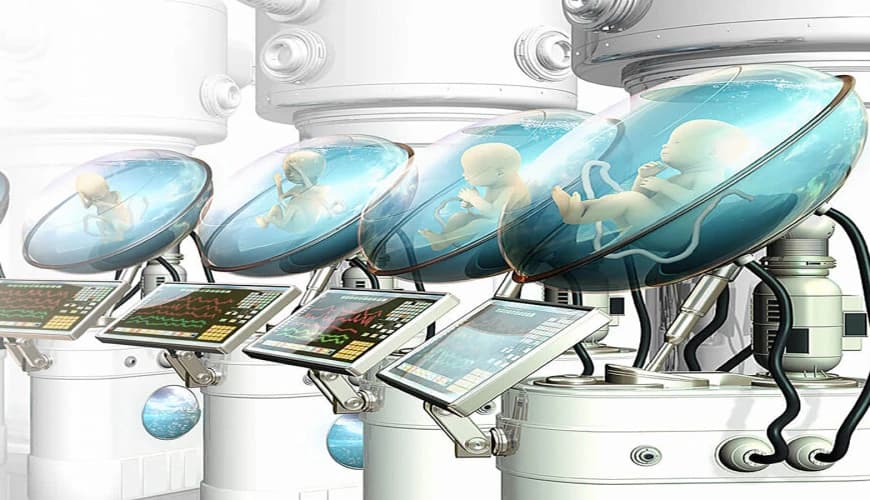
The artificial womb system consists of a transparent biological chamber that acts as an incubator environment for the fetus. This chamber is filled with a liquid known as artificial amniotic fluid, which provides the fetus with the moist, warm, and safe environment necessary for its growth. The biggest challenge in this system is the ability to provide all the vital functions of the indispensable placenta. This is achieved through a complex support system using an artificial umbilical cord connected to advanced external devices. This system is responsible for supplying oxygen and nutrients directly into the fetal bloodstream, while efficiently removing waste and carbon dioxide, ensuring continuous fetal development. Design of the biobag system: the scientific foundation of the technique. Pioneering studies in this field are primarily based on the design of the biobag system. This design consists of a sterile plastic bag filled with fluids, acting as an integrated external support device to keep the fetus in a closed environment. This technique uses advanced sensors for precise monitoring of vital functions, oxygen levels, and blood pressure, just as if the fetus were within a natural womb. Research on animals, specifically experiments conducted on sheep fetuses, has shown significant success in keeping fetuses alive and developing their organs for over four weeks, with results published in prominent scientific journals like 'Nature Communications'. Medical goal: Saving premature infants. The most urgent and anticipated use of artificial womb technology is to save premature infants born at very early stages of pregnancy, specifically between the 23rd and 25th weeks. At this stage, the chances of survival are very low, and their organs, particularly the lungs, are underdeveloped. The artificial womb provides an environment that allows for the continued development of the lungs and maturation of other vital organs outside the harsh traditional incubator environment, significantly reducing mortality rates and chronic health complications associated with premature birth. Other medical applications of the artificial womb. The role of the artificial womb extends beyond caring for premature infants to include other important medical purposes. This technology can help treat conditions like fetal growth delay or placental insufficiency by providing a stable and controlled supply of nutrients and oxygen. Moreover, the artificial womb opens the door for early and secure fetal surgery, especially in cases of congenital abnormalities or treating fetal infections, enhancing the care provided in the field of neonatal medicine.
Basic medical uses: Saving premature infants
2. Successes in animal research and biobag system This concept is no longer just a theoretical technique; it is being applied in animal research. Studies have shown significant success in maintaining sheep embryos in an artificial environment for over 4 weeks using the biobag system design. This system, functioning as an external support, has allowed the noticeable maturation of sheep embryo organs, as documented by American research published in the journal Nature Communications. The system relies on providing oxygen and nutrients through a connection that mimics the umbilical cord, accurately replicating the functions of the natural placenta. 3. Broader medical and health purposes The potential of the artificial uterus technology is not limited to saving premature babies, but extends to a wide range of fetal therapies. This technology can help manage and treat complex conditions like fetal growth restriction, a condition where the fetus does not receive adequate nutrition. It also offers a crucial solution for placental insufficiency, where the natural placenta fails to perform its primary function. Additionally, the artificial uterus can be used in a sterile and controlled environment to reduce the risks faced by mothers during high-risk pregnancies, provide a disease-free environment for early fetal growth and protect from fetal infections, conduct early and complex fetal surgeries, such as treatment of congenital deformities including cardiac or pulmonary congenital anomalies, and advance research on stem cell therapy within a protected fetal environment. 4. Prospects in supporting early stages of pregnancy Current research is moving toward expanding the use of the artificial uterus to support early stages of pregnancy, which opens new horizons in reproductive science. In this context, technological advancements, especially those led by research teams in Japan, have shown that the system can theoretically support fetal development through an external circulation system and advanced monitoring devices. This ability to support early stages may contribute in the future to treating severe infertility cases and providing an optimal growth environment before the fetus becomes viable outside the system.
Global research developments in artificial womb: sheep and goats as models
This scientific study provided strong evidence that a fluid-filled industrial environment can support the development of vital organs and mimic the functions of the placenta. The Japanese leap: Supporting the early stages of pregnancy witnessed a significant qualitative leap in artificial womb technology in Japan, where research focused on supporting embryonic life in very early stages. Japanese researchers have developed an integrated system capable of nurturing life and used a goat fetus in one of the experiments. The system was able to support the development of the fetus through an external circulation system and advanced monitoring devices, precisely mimicking the functions of the placenta. The most important aspect of this achievement is the ability to support early stages of pregnancy, starting from the third week, representing an unprecedented achievement in artificial womb technology. This type of external support system aims to provide an ideal environment for fetal growth outside the body in cases of placental insufficiency or intrauterine growth delay. These experiments show that animal research paves the way to saving not only premature newborns but may also reshape concepts of neonatal care entirely. This achievement represents the pinnacle of decades of scientific studies striving to simulate the mother's womb.
Technology Comparison: Artificial Womb and Biobag System
The fundamental difference lies in how lung development is supported. In a traditional incubator, a premature baby is forced to breathe in an airy environment before the lungs have fully matured, causing long-term structural damage. In contrast, the artificial womb system relies on maintaining the fetus in a liquid environment, just like in the mother's womb. This liquid environment allows the lungs to continue growing normally, significantly reducing the risk of chronic lung injuries faced by premature babies. This advancement represents the greatest hope in saving premature infants and improving their quality of life after birth.
The Ethical and Social Dimensions: Debate on the Future
Redefining motherhood is one of the key contentious points raised by this technology. If developing a fetus becomes fully possible in an external environment like the design of the bio-bag system, who would have the legal rights over the child? Could reliance on an external support system equivalent to the placenta's functions undermine the unique biological and social bond between a mother and her child? Barbara Katz Rothman, a sociologist at the City University of New York, emphasizes that "the artificial womb threatens to undermine the biological and social relationship that connects a mother to her child, opening the door to unprecedented legal questions." Concerns of commercial exploitation and surrogacy are rising. There are fears that the full development of artificial womb technology opens the door to a new and more extensive form of commercial surrogacy. This hypothetical technology could be exploited for purely commercial purposes, far from saving the lives of preemies or treating placental insufficiency or birth defects. This raises questions about the rights of the fetus developing in a non-human environment not aimed at healthcare but profit, exacerbating the debate over ethical considerations. Risks of system failure and impact on fetal development. On a technical level, the risk of system failure always remains, especially since the system relies on precise simulation of the natural womb environment and amniotic fluid. What happens if the external support system feeding the fetus through the umbilical cord breaks down in the middle of fetal development? Additionally, there is concern about the long-term effects on the cognitive and emotional development of a child deprived of direct physical contact with the mother during the critical growth period. For this reason, researchers conducting experiments on sheep fetuses stress that the initial use of the artificial womb should be limited to life-saving cases in late preterm births (weeks 23-25), and not for developing pregnancies from their early stages.
Major Technical Challenges: Simulating Placenta Functions and the Bio-Bag System
Work is also underway to integrate advanced technologies such as stem cell therapy into this system, marking a revolution in embryonic medicine. This may allow the treatment of congenital malformations or genetic diseases, such as placental insufficiency or fetal growth restriction, before birth, opening new horizons for saving premature infants.
Frequently Asked Questions About the Artificial Womb
Here are detailed answers to the most common questions about the future of pregnancy and the care of premature infants. What is the primary purpose of developing the artificial womb? The main purpose is to save the lives of premature infants born very early, usually between the 23rd and 25th weeks of pregnancy. This group of infants faces a high risk of death or disability due to underdeveloped lungs. The artificial womb aims to provide a growth environment that accurately mimics the mother's womb, filled with amniotic fluid, to ensure continued embryonic development safely outside the natural body. What is the difference between an artificial womb and a traditional incubator? The difference is fundamental and lies in the breathing environment. The traditional incubator supports the premature baby breathing air, which can cause significant damage to the incomplete or immature lung. In contrast, the artificial womb provides a sterile aquatic environment that mimics the original uterine environment. The fetus receives oxygen and nutrients through an artificial umbilical cord and artificial placenta that replace the function of the natural placenta, supporting the natural development of the lungs and other vital organs. How does the artificial womb system work and what are its essential components? The artificial womb system relies on an integrated external support system. The system consists of a biological chamber (usually a bio-bag) filled with fluid similar to amniotic fluid. The fetus is connected to the outside through blood vessels in the umbilical cord, where blood is pumped to an external gas exchange device (similar to the function of the placenta), supplying it with oxygen and nutrients, and removing carbon dioxide and waste. This system mimics the complex metabolic cycle of natural placental functions. The goal is to fully simulate the mother's womb, allowing the fetus to grow in an ideal, moist, and pressure-free environment, away from the trauma of premature birth. Has the artificial womb been used on humans already? What about animal research? As of January 2026, the artificial womb has not been fully used on human embryos. This technique is still classified under the category of virtual technology concerning full human application. Current research is intensively focused on animal studies, with American research teams achieving significant success in supporting sheep embryos for more than four weeks, allowing their organs to mature remarkably. These results have been published in prestigious scientific journals such as Nature Communications. It is noteworthy that Japan has pioneering developments in this field, having successfully developed an early support system used on a goat embryo, able to support its development through an external circulation system and monitoring devices, representing a step towards supporting earlier stages of pregnancy. What are the other medical purposes of the artificial womb besides saving premature infants? The artificial womb can serve several other vital medical purposes aimed at improving reproductive opportunities and providing an ideal therapeutic environment: Growth delay treatment: Supporting embryos with fetal growth restriction or placental insufficiency. Fetal surgery: Providing a sterile and stable environment for early fetal operations (stem cell therapy) without exposing the mother or fetus to the risks of premature birth. Complex pregnancies: Reducing the risks associated with certain pregnancies, such as congenital heart or lung defects, or fetal infections. What are the main ethical and social challenges associated with this technology? The artificial womb technique raises significant ethical and social controversy, especially concerning redefining motherhood and childbirth. These challenges include: Redefining motherhood: Researchers like Barbara Katz Rothman from the City University of New York point to concerns about the psychological and social effects on children growing outside the direct biological environment of the mother. Commercial surrogacy: Concerns about exploiting the technology in expanding commercial surrogacy or using it for unethical purposes. Legal considerations: Defining the legal status of a fetus growing in an artificial environment, and who is responsible for making medical decisions in case of system failure. Developments in the artificial womb field represent a quantum leap in neonatal care, but they require deep discussion regarding the limits of science and human responsibility.
Frequently Asked Questions About Artificial Womb Technology
The fetus is connected to the system via the umbilical cord. This system pumps oxygen and essential nutrients directly into the fetal bloodstream, while simultaneously removing carbon dioxide and metabolic waste. The biological chamber filled with amniotic fluid ensures a gravity-free environment and uses advanced mechanisms like extracorporeal membrane oxygenation (ECMO) to support circulation and respiration, providing a stable environment with continuous monitoring akin to the mother's womb. 4. What are the main ethical and social challenges of artificial womb technology? This technology sparks a wide ethical and social debate, particularly regarding redefining motherhood and the concept of birth. Major concerns to be addressed before transitioning to human clinical trials include: Psychological effects: Concerns about a child developing in a non-human environment and its impact on the emotional bond between parents and child. Exploitation: Concerns over the technology's exploitation in commercial surrogacy or its potential use for developing embryos for non-therapeutic purposes. Legal status: Questions about the legal status of a fetus developed entirely outside the body and its rights in case of system failure. Experts emphasize the necessity of establishing strict legal and ethical considerations to ensure that this virtual technology is used solely for the noble medical purpose of saving premature infants.
Bottom Line: The Intersection of Science and Ethics in the Future of Reproduction
The primary goal of developing artificial womb technology is to provide an external support system for prematurely born infants, particularly between the 23rd and 25th weeks of pregnancy, a period when survival chances are slim and lung development is incomplete. This device mimics the mother's natural uterine environment, placing the fetus in a sterile plastic bag filled with artificial amniotic fluid, allowing the fetus to continue developing outside the natural body. The medical and health purposes of this technology go beyond merely saving premature infants; it offers potential treatment for placental insufficiency and fetal growth restriction, in addition to providing the opportunity for complex fetal surgeries in a stable and fully controlled environment. Technical innovation: Design of the bio-bag system The artificial womb relies on the design of a bio-bag system, which is a closed and integrated system. It consists of a transparent biological chamber providing a sterile environment connected to an external circulation system that mimics placental functions. This system provides oxygen and nutrients directly to the fetus via the umbilical cord, while disposing of fetal waste, ensuring organ maturation and lung development in a liquid environment, rather than being exposed to the stress of conventional mechanical ventilation. Current research and animal experiments, specifically on lamb fetuses, have shown significant successes. An American research team published their study results in the journal Nature Communications, where they succeeded in keeping lamb fetuses alive and successfully developing their organs within this system for more than four weeks, representing a giant step towards human application. Technological advancements in Japan have also been pioneering, with early research demonstrating the capability of external support systems to support early fetal development, confirming this concept's transition from a virtual technology to a tangible scientific reality. Ethical and social dimensions: Redefining motherhood Despite its life-saving potential, the development of the artificial womb raises intense ethical and social debates. This controversy not only concerns medical safety but also touches on our fundamental concepts of reproduction and family. This technology raises questions about redefining motherhood and the parental role. Will this innovation lead to the dismantling of the traditional biological bond between mother and child? The technology also raises concerns about the long-term psychological and social effects on children growing up in an artificial and non-human environment. Researcher Barbara Katz Rothman and other ethicists fear the potential exploitation of this technology for non-medical purposes, such as expanding commercial womb leasing or unethically determining fetal traits. Technical challenges remain, as it must be ensured that the artificial womb is entirely safe, and that system failure or misuse does not cause permanent harm to fetal organ development or the nervous system. Future of the artificial womb In conclusion, the artificial womb represents a promising future for fetal and preterm infant care, but it requires a strict legal and ethical framework before widespread adoption. Transitioning from successful experiments on lamb fetuses to human application requires years of careful research and regulatory approval to ensure that this technology serves humanity in saving thousands of children annually, without compromising human dignity or societal values.