Writing Honest Poems in the Phone Notes
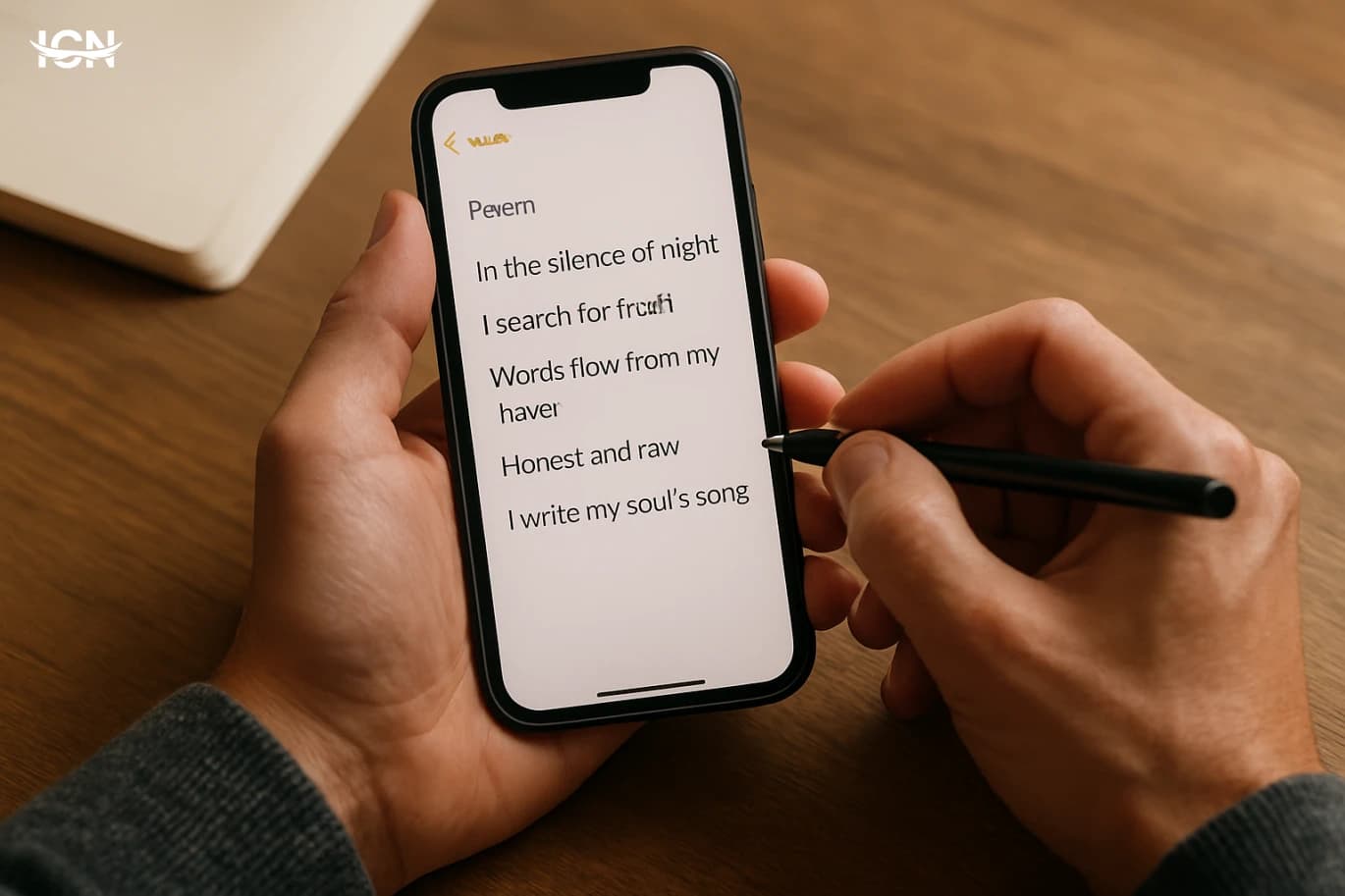
- Why the Notes App Became a Poetry Desk
- Capturing the Exact Moment Without Overwriting It
- Editing on a Small Screen With Clear Rules
- Privacy, Sharing, and the Ethics of Real Life
- Building a Personal Archive That Actually Works
- From Notes to Finished Poems Without Losing Honesty
Why the Notes App Became a Poetry Desk
The phone notes app has quietly become a primary writing space for many poets and casual writers, not because it is romantic, but because it is always available. A line can be captured in a taxi queue, during a lunch break, or in the minutes before sleep without the friction of opening a laptop or carrying a notebook. That immediacy changes what gets written: shorter observations, sharper images, and fragments that would otherwise be forgotten. The notes app also reduces the pressure to “perform” a finished poem; it invites drafts, lists, and half-formed thoughts. This shift has practical consequences. The phone is a device people already check dozens of times a day, so writing can slip into existing habits. The screen’s limited space encourages economy, while the keyboard’s speed supports quick revision. Many writers build a personal archive of dated entries, voice-to-text snippets, and copied phrases from conversations. Over time, the notes app becomes less a storage tool and more a working desk where raw material accumulates and patterns emerge.
Capturing the Exact Moment Without Overwriting It
Writing on a phone often happens in the middle of life, not after it. That can produce a rare kind of accuracy: the weather is still on your skin, the tone of a remark is still in your ear, the irritation or relief is still fresh. The challenge is to record the moment without burying it under explanation. A useful habit is to write what is observable first—what you saw, heard, or did—before adding interpretation. Another is to limit yourself to a small number of lines, forcing the poem to keep only what matters. Phone notes also make it easy to keep multiple versions. You can write a blunt first draft, then duplicate it and test different angles: one version as a direct confession, another as a scene, another as a list of objects. This is not about polishing for social media; it is about protecting the original spark while giving it room to develop. The best notes preserve sensory detail and specific nouns: street names, brand labels, the exact time, the color of a bus seat. Those details are often what later make a poem feel credible.
Editing on a Small Screen With Clear Rules
Editing on a phone can feel cramped, but it can also be disciplined. The small screen forces you to confront each line and notice repetition. A practical approach is to edit in passes with simple rules. First pass: remove filler words and vague adjectives. Second pass: check verbs and replace weak ones with precise actions. Third pass: look for concrete nouns and add one or two that anchor the scene. Fourth pass: read aloud and adjust line breaks for rhythm, even if you are not writing in strict meter. Because the notes app is not a full word processor, it helps to use formatting sparingly: short lines, blank spaces between stanzas, and occasional dashes. Many writers keep a “drafts” folder and a separate “finished” folder to avoid endless tinkering. Another useful rule is to set a time limit for editing, such as ten minutes per day for a week, then stop. The phone makes it easy to edit forever; clear rules protect the poem from being overworked and losing its original voice.
Privacy, Sharing, and the Ethics of Real Life
Phone notes often contain the most personal writing a person produces, and that raises questions about privacy and responsibility. If your poem includes identifiable details about friends, colleagues, or family, the convenience of capturing a scene should not override consent and fairness. A good practice is to change names, merge characters, or remove specific markers unless you have permission. Another is to write a private version for yourself and a public version that protects others. Security matters too. Notes apps can sync across devices and cloud accounts, which is useful but risky if passwords are weak or devices are shared. Basic steps—screen locks, two-factor authentication, and careful account management—are not technical paranoia; they are practical safeguards for intimate work. When it comes to sharing, the phone makes it easy to post instantly, but instant posting can flatten a poem into a reaction. Many writers benefit from a delay: save the draft, revisit it after 24 hours, and decide whether it belongs online, in a workshop, or only in your archive.
Building a Personal Archive That Actually Works
A notes app can become chaotic fast: hundreds of fragments with no way to find the good ones. Turning it into a usable archive requires light structure. One method is to standardize titles: start each note with a date and a short tag such as “commute,” “argument,” “night walk,” or “childhood.” Another is to keep a single “inbox” note for quick captures, then once a week move lines into themed notes. Search is powerful if you feed it consistent keywords. It also helps to track what you are trying to write. If you are working on a sequence about a city, keep a dedicated note where you paste the strongest lines and observations, and another note for discarded material. Periodically export or back up your notes to avoid losing years of work to a device failure or account issue. The goal is not to turn poetry into administration; it is to make sure your best lines are retrievable when you sit down to shape them into finished poems, essays, or spoken-word pieces.
From Notes to Finished Poems Without Losing Honesty
The final step is moving from accumulation to completion. Many phone-written poems fail not because the lines are weak, but because the writer tries to “sound poetic” at the end and abandons the directness that made the draft strong. A reliable process is to identify the core claim of the poem in one sentence, then cut anything that does not support it. Next, check whether the poem shows a scene rather than only stating feelings. If it is all emotion, add one concrete moment: a door closing, a message left unread, a receipt in a pocket. It also helps to decide what form fits the material. Some notes want to stay as short poems; others become prose poems, diary-like entries, or linked sequences. When you revise, keep one line from the original note untouched as a reference point, so the poem does not drift into generic language. Finally, test the poem with a real reader or by reading it aloud into a voice memo. If the voice sounds like you and the details hold up, the poem has kept its honesty—regardless of whether it began on paper or in the glow of a phone screen.