App Logo

Download Our App

Shop your way

logologo
Image

Small Poems for Busy Days

07/08/2026By: ICN Writer
Small Poems for Busy Days

Why micro-poems fit modern schedules

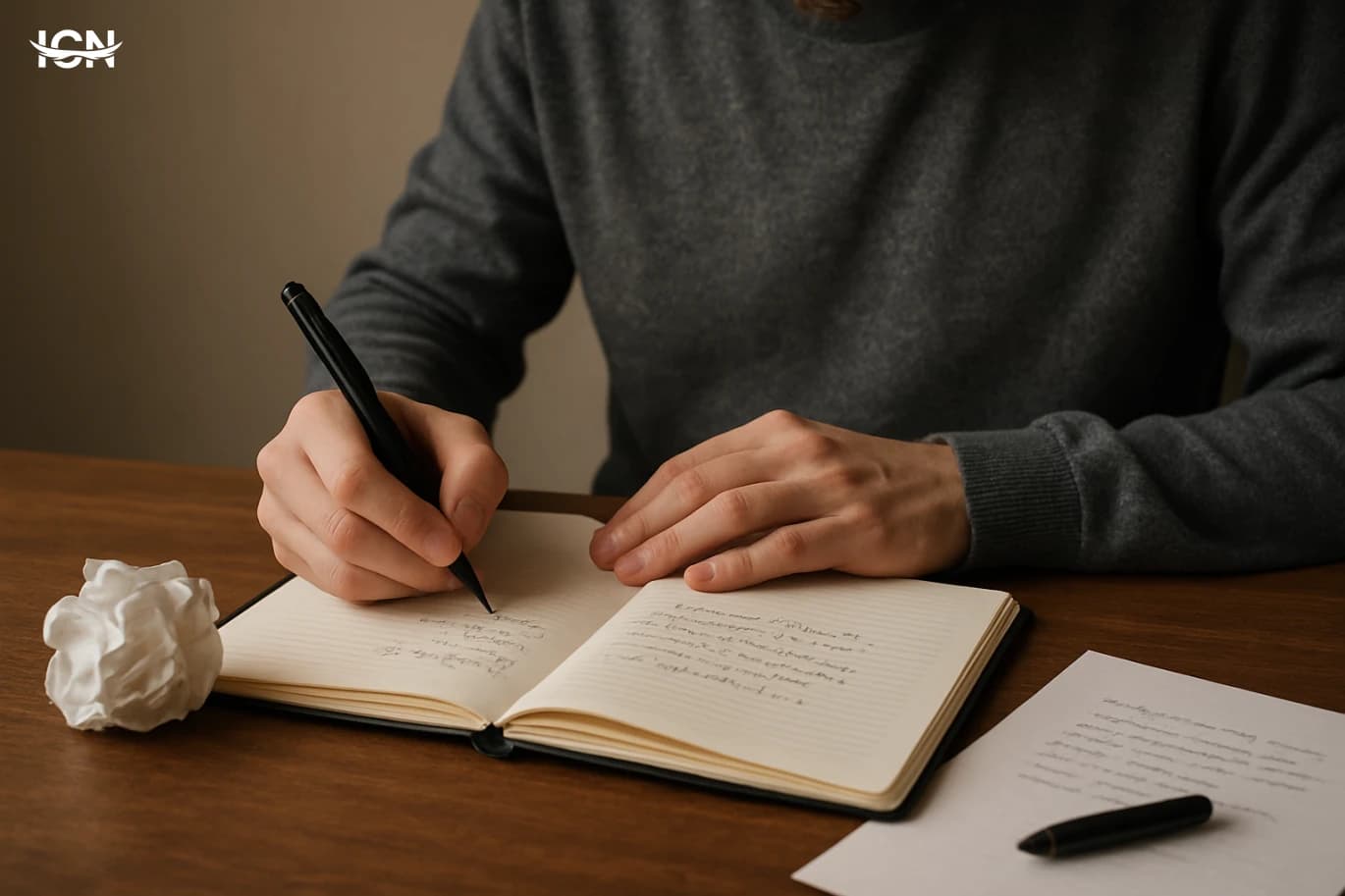
Micro-poems are not a lesser form of writing; they are a response to how many people actually live. Work messages, commuting, and constant notifications fragment attention into short windows. A poem that can be read in 20 seconds has a better chance of being read at all, and that matters for anyone trying to keep a creative habit alive. The constraint also changes the writer’s choices: fewer lines force sharper verbs, cleaner images, and less filler. This topic explores micro-poetry as a practical craft for readers and writers who want depth without long sessions. It looks at how short poems can carry a complete emotional arc, how they can be drafted quickly and revised carefully, and how they can be used as a daily reflective practice. The focus is not on trends or internet fame, but on building a sustainable relationship with language when time is limited.

A simple structure that still feels poetic

A common fear is that short poems become slogans. The difference is structure. One reliable approach is the three-part micro-poem: a concrete observation, a turn, and a closing line that lands. The observation anchors the reader in something specific: a cracked mug, a late bus, a receipt in a pocket. The turn introduces contrast or insight, not by explaining, but by shifting angle. The closing line should be decisive, not vague, and it should avoid summarizing what the reader already knows. Another workable structure is the “two images and a hinge.” You place two images side by side and connect them with a small hinge word or phrase that implies relationship: “until,” “because,” “as if,” “after.” The hinge is where meaning happens. This section can guide readers to pick one structure for a week, repeat it daily, and learn what their voice does under consistent constraints. The goal is to make the poem feel finished, not merely short.

Finding material in ordinary moments

Micro-poems work best when they start from the ordinary. Instead of waiting for a grand idea, the writer collects small, verifiable details. A good practice is the “five-sense note”: write one line each for sight, sound, touch, smell, and taste from a single moment. You do not need to use all five in the final poem, but the exercise forces specificity. Another practice is the “inventory of objects” from a desk, a kitchen counter, or a bag. Objects carry traces of routine, and routine is where many readers recognize themselves. This section can also address how to avoid generic language. Replace broad words like “sad,” “beautiful,” or “busy” with observable signals: a calendar with no blank squares, a phone screen with low battery, a jacket that still smells of rain. The more concrete the starting point, the more room the reader has to feel without being told what to feel. That is especially important in short poems, where every word must earn its place.

Revision in miniature

Short poems are often drafted quickly, but they are rarely finished quickly. Revision is where micro-poetry becomes craft. A practical method is the “one-word audit.” Read the poem and ask of each word: does it add meaning, sound, or rhythm? If not, remove it. Then do a “verb upgrade”: replace weak verbs like “is,” “have,” or “feel” with verbs that show action or change. Finally, check line breaks. In a micro-poem, a line break is not decoration; it controls pacing and emphasis. This section can include a clear checklist: remove abstract nouns, cut adverbs unless they change meaning, and avoid explaining the image. It can also recommend reading the poem aloud to test whether the sound supports the sense. Because the poem is short, the writer can afford multiple versions. Keeping a small archive of drafts helps writers see patterns in their habits and improve faster than they would with longer forms.

A daily practice without pressure

A sustainable routine matters more than occasional bursts of inspiration. Micro-poetry can be built into a day with minimal friction: write one poem during a coffee break, or draft two lines on a commute and finish them later. The key is to set a measurable rule, such as “four lines maximum” or “one image plus one turn.” This keeps the task small enough to start, which is often the hardest part. This section can propose a seven-day plan. Day one: write only observations. Day two: add a turn. Day three: focus on sound with internal rhyme or repetition. Day four: write a poem that uses a single object. Day five: write a poem that begins with a time marker like “at 6:10.” Day six: revise two earlier poems. Day seven: choose one poem to share with a friend or keep as a private record. The point is consistency and learning, not performance.

bookmark

Keep a small “micro-poem bookmark” list: a note on your phone or a card in a book with prompts that reliably produce material. Examples include: “an object I touched today,” “a sound I heard twice,” “a small delay,” “a message I did not send,” and “a detail I noticed too late.” When time is tight, prompts remove decision fatigue and let you write immediately. This closing section can also suggest how to store and revisit poems. Save them by date, not by theme, so you can see how your attention shifts across weeks. Once a month, pick three micro-poems and expand one into a longer piece, or combine two into a sequence. The bookmark is not just a reminder to write; it is a practical system for turning scattered moments into a consistent body of work.


* All articles published on this blog are sourced from various websites and are provided for informational purposes only. They should not be considered as confirmed studies or accurate information. Please verify the information independently before relying on it.

Similar ARTICLES

Quotes That Keep Learning Alive
In a world of courses, apps, and endless content, a short quote can still do something that a long lecture often cannot: it creates a clear mental cue. The best sayings about knowledge and learning work like a headline for your habits. They compress a principle into a sentence you can recall when you are tired, distracted, or unsure whether the effort is worth it. Quotes also help you name what you are experiencing. When you struggle with a difficult concept, you are not failing; you are in the normal phase of skill-building. When you feel behind, you are not late; you are simply at a different point on the learning curve. A good line about science, reading, or practice gives you language for that moment, and language shapes decisions. To make quotes useful, treat them as prompts, not decorations. Pick one or two that match your current goal—passing an exam, changing careers, improving writing, or learning a new tool—and connect each quote to a specific action. A quote that does not change behavior is only a nice sentence. A quote that leads to a small, repeated action becomes a practical learning strategy.
Writing Poems from Everyday Notes
Many people think poetry begins with a grand idea, but in practice it often begins with a small record: a line in a phone memo, a sentence on a receipt, a quick description of a street corner. Everyday notes are powerful because they capture unedited perception. They preserve timing, tone, and detail before the mind smooths everything into a general story. A poem built from notes can feel precise, because it is anchored in what was actually noticed. Notes also reduce pressure. Instead of waiting for inspiration, you collect raw material. A week of short observations can produce multiple poem drafts, each with a different focus: sound, image, or argument. This approach is especially effective for writers who want their work to feel grounded and contemporary. It keeps language close to real life, while still leaving room for shaping, compression, and surprise.
Writing Quietly in a Noisy Day
Modern days are built around constant prompts: notifications, short videos, quick replies, and the expectation of being reachable. In that environment, poetry and reflective writing can become reactive rather than deliberate. Quiet writing is not about escaping life; it is a practical method for regaining authorship over attention. When you write without an audience in mind, you can notice what you actually think, not what you are expected to say. In the Poetry & Thoughts space, quiet writing also changes the quality of language. It favors precise nouns, concrete verbs, and honest pacing over punchlines. A short paragraph written in calm conditions often carries more clarity than a page written while multitasking. The goal is not to produce “beautiful” lines, but to produce accurate ones. Accuracy is what makes a thought worth returning to later. This topic is especially relevant for people who feel they have lost their inner voice. If your notes are mostly lists and your messages are mostly logistics, quiet writing can rebuild a personal register: the words you use when you are not performing. That register is the raw material of poems, micro-essays, and the kind of reflective posts readers save because they recognize their own experience in them.
Writing Poems from Everyday Notes
Many people think poetry begins with a grand idea, but it often starts with a small record: a sentence typed in a phone, a grocery list with a stray thought, a reminder written in a hurry. Everyday notes are valuable because they capture language before it is polished. They preserve real timing, real priorities, and the exact words you used when you were distracted, tired, or excited. That rawness can become the most convincing voice in a poem. Notes also carry context without explaining it. A line like “call the mechanic, then breathe” already contains tension, schedule pressure, and a private emotional instruction. When you build a poem from such fragments, you are not inventing emotion; you are documenting it. This approach suits writers who want their work to feel grounded and specific, even when the poem remains reflective. Using notes as source material is also practical. It reduces the fear of the blank page because you are not starting from nothing. You are selecting, arranging, and refining. The poem becomes an editorial task: choosing what to keep, what to cut, and what to place next to what. That process is accessible to beginners and still challenging for experienced writers because it demands attention to detail and restraint.
Writing Honest Poems Without Overexplaining
Many new poets treat a poem like a short essay: they state the feeling, explain the reason, and then summarize the lesson. The result is often readable but forgettable, because the poem leaves no work for the reader to do. In poetry, meaning is not only delivered; it is discovered through images, rhythm, and carefully chosen omissions. Clarity is not the enemy. The problem is overexplaining, where every line answers the question raised by the previous line. A poem becomes stronger when it creates a controlled gap between what is said and what is understood. That gap invites attention and rereading. It also allows the reader’s experience to enter the text, which is one reason a short poem can feel personal to many different people. A practical way to test this is to highlight lines that begin with “because,” “so,” “therefore,” or “I mean.” These are often signals that the poem is switching into explanation mode. Another test is to ask whether the poem contains at least one concrete scene or object that carries the emotional weight without being labeled. When a poem relies on labels like “sad,” “happy,” or “lonely,” it usually needs more sensory detail and fewer conclusions.
Simple Quotes That Reshaped My Days
Quotes work when they compress a complex idea into a line you can recall under pressure. In busy weeks, I rarely remember a full article or a long lecture, but I do remember a sentence that names the problem clearly and suggests a next step. The best lines are not “deep” in a vague way; they are practical and specific enough to guide a decision. I started collecting quotes during a period when I was trying to improve my routines without turning life into a rigid plan. I noticed that a good quote functions like a mental shortcut: it reduces overthinking, sets a boundary, or reframes a setback into something actionable. Over time, a handful of lines became reference points I return to before meetings, when I procrastinate, or when I feel overwhelmed by choices.
Writing Quiet Poems in a Noisy Day
Many readers think poetry must be dramatic to feel relevant, yet the most durable poems often work in a lower volume. A quiet poem does not avoid reality; it selects a smaller frame and reports it with precision. In a day filled with alerts, meetings, and constant commentary, the poem that notices a single cup cooling on a desk or the sound of an elevator cable can feel more truthful than a long declaration. This approach is not about minimalism as a trend. It is about attention as a skill. Quiet poems matter because they train the mind to observe without rushing to conclusions. They also offer a practical form of rest: not escapism, but a brief pause where language is allowed to be exact. For writers, this style reduces pressure. You do not need a grand event to begin; you need a clear moment, a specific object, and a few honest sentences. For readers, quiet poems create a space where meaning is discovered rather than announced, which makes the experience more personal and often more memorable.
Writing Honest Poems in a Noisy Day
Modern days are filled with constant prompts: notifications, short videos, quick messages, and an endless stream of headlines. This noise does not only steal time; it reshapes attention. Many poets notice that their lines become shorter, their images more rushed, and their endings more abrupt, not because the idea is weak, but because the mind is trained to move on before it settles. In this topic, we examine how daily noise affects the way poems are formed, edited, and even remembered. The goal is not to romanticize silence or criticize technology. It is to identify practical patterns: when you write after a long stretch of scrolling, you may default to familiar phrases, rely on clichés, or imitate the rhythm of what you just consumed. When you write after a walk, a commute without audio, or a quiet meal, you may find more precise verbs and more grounded details. Understanding these differences helps you choose the conditions that support honest writing rather than reactive writing.
When Flowers Speak for the Heart
Across many cultures, flowers became a practical way to deliver feelings when direct words felt too heavy or too risky. A bouquet can say “I’m thinking of you” without demanding a reply, and a single stem can carry a message that fits a moment: apology, gratitude, admiration, or quiet support. This is why flowers are often present in everyday milestones such as welcoming a new neighbor, visiting someone who is unwell, celebrating a graduation, or marking an anniversary. What makes flowers effective as a “language” is their shared visibility and their short life cycle. Fresh blooms are unmistakably present, yet they do not last long, which gives the gesture urgency and sincerity. People also read meaning in color, season, and scent. A spring bouquet suggests renewal, while a winter arrangement can signal warmth and care during a difficult time. Even the choice between a wild, loose bundle and a structured arrangement communicates something about the sender’s personality and intent. In modern life, where messages arrive instantly and disappear quickly, flowers offer a slower form of communication. They occupy space on a table, in a hallway, or on a desk, turning a feeling into a physical reminder. That is why “beautiful words about flowers” remain popular: they help people describe what the gesture already implies, and they add clarity to a message that is meant to be gentle rather than loud.
Writing Quietly in a Noisy Day
Many people want to write poetry or reflective notes, but they try to do it in the same fast rhythm as messages, headlines, and short videos. Quiet writing is a different practice: it is not about being slow for its own sake, but about giving attention to small, accurate observations and letting them settle into clear language. In a noisy day, the mind keeps switching tasks, and that constant switching reduces the chance of noticing details that make a line feel true. A quiet approach creates a small protected space where a thought can develop without being interrupted. This topic is practical, not romantic. Quiet writing can be scheduled, measured, and improved. It can be done in ten minutes before work, on a commute, or during a break, as long as the writer reduces inputs and chooses one narrow focus. The goal is to produce a short piece that has one clear image, one honest statement, or one question worth keeping. Over time, these small pieces become a personal archive of how you actually lived your days, not how you scrolled through them.
Ideas Between Coffee and Pages
Coffee and reading share a practical rhythm that makes them an enduring pair in homes, libraries, and cafés. A warm cup creates a clear start point for a reading session, while the book provides a structured destination: a chapter, a few pages, or a set time. This simple pairing helps many readers move from intention to action, especially on busy days when attention is fragmented. There is also a sensory logic. The aroma and warmth of coffee can signal “focus time,” much like a desk lamp or a quiet playlist. Meanwhile, the physical act of turning pages or scrolling an e-reader offers a steady pace that matches sipping. Together, they form a small routine that reduces decision fatigue: you do not need to plan a complex activity, you just sit, pour, and read. Writers and thinkers often describe this pairing as a gateway to ideas, but the mechanism is usually mundane: a calm environment, a predictable ritual, and uninterrupted minutes. When those conditions exist, the mind has room to connect information across chapters, recall earlier passages, and generate questions. In that sense, coffee and books do not “create” ideas by themselves; they create the conditions where ideas are more likely to appear and be captured.
Timeless Sayings for Everyday Life
Short sayings survive because they compress experience into language that is easy to remember and apply. In daily life, people rarely have time to read long explanations before making decisions at work, at home, or in personal goals. A well-known line such as “What gets measured gets managed” can shape how someone plans a project, tracks expenses, or evaluates progress. Another common idea, “Start where you are, use what you have, do what you can,” helps people move from hesitation to action without waiting for perfect conditions. These phrases also work as shared references. In a team meeting, a manager can say “Focus on what you can control,” and everyone immediately understands the intended direction: reduce distractions, prioritize tasks, and avoid wasting energy on factors outside the team’s influence. In families, a parent might repeat “Patience is a key,” reminding children that results often require time and consistent effort. The value is not in the words alone, but in the repeated use that turns them into habits. However, sayings are not universal rules. They are prompts for thinking, not substitutes for judgment. “Trust, but verify” is useful in business and cooperation, yet it can be harmful if it becomes suspicion in every relationship. The practical approach is to treat each saying as a tool: choose it when the situation matches, and set it aside when it does not. The sections below group well-known life wisdom into themes that people can use as quick guides for decisions and behavior.
Writing Quiet Poems in a Noisy Day
Many readers think poetry must be dramatic to be meaningful, yet the most durable poems often work through restraint. A quiet poem does not avoid reality; it selects a narrow frame and reports it with precision. In a day filled with alerts, meetings, and constant scrolling, the mind becomes trained to expect quick payoff. Quiet poems push back by asking for slower attention, and they reward it with details that would otherwise be missed: the rhythm of a hallway, the pause before an elevator closes, the way light changes on a desk. This approach is not about nostalgia or escapism. It is a practical method for restoring observation and language when both are being compressed into short, reactive messages. From a craft perspective, quiet poems help writers develop control. They encourage clean verbs, concrete nouns, and measured line breaks rather than relying on volume. They also create space for ambiguity without confusion. A reader can feel a shift in mood without being told what to feel, because the poem’s evidence is specific. In a culture that often rewards the loudest statement, a quiet poem becomes a disciplined form of thinking: it shows how to notice, how to choose, and how to leave room for the reader’s own experience.
By clicking the SUBSCRIBE button, you are agreeing to our Privacy & Cookie Policy If you want to unsubsribe the marketing email, please proceed to our privacy center.
© 2005-2026 ICN. All Rights Reserved.