Vanishing River Wildlife Crisis
Overview
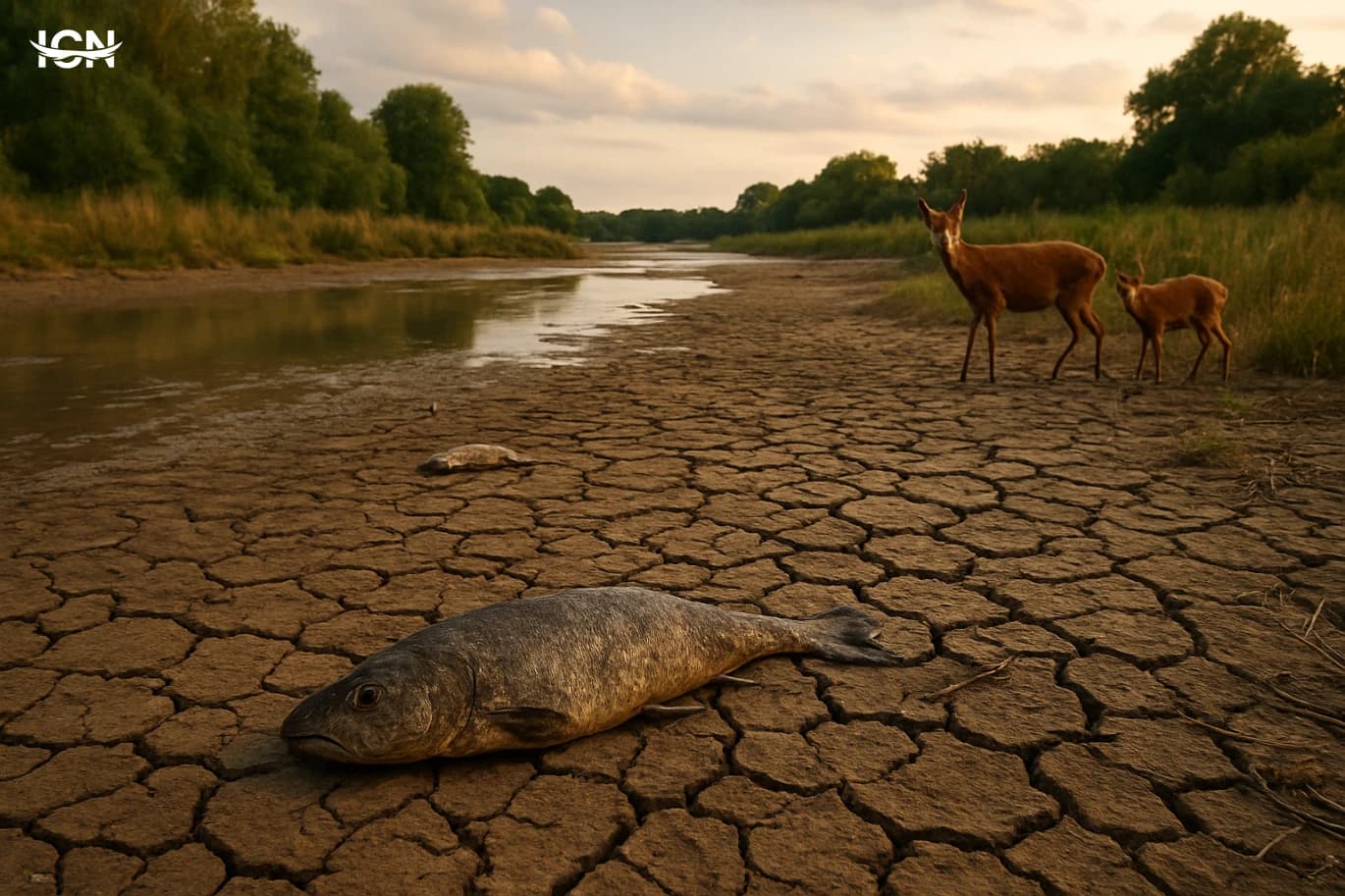
Freshwater river ecosystems support a disproportionate share of global biodiversity and provide ecosystem services for over a billion people, yet they are among the fastest-declining habitats worldwide. Scientific assessments, including recent Living Planet Reports, estimate freshwater vertebrate populations have declined by roughly 80% since 1970, driven by multiple interacting pressures. This section summarizes the scale and scope of river wildlife loss, noting that impacts vary by region: for example, the Mekong basin has seen major declines in large migratory fish due to dam construction, while the Colorado and Murray–Darling systems face acute species loss linked to water extraction and pollution. The overview establishes that declines are measurable, geographically uneven, and the result of identifiable human activities, not natural cycles.
Key Species at Risk
Several high-profile river species illustrate the crisis: river dolphins such as the Ganges (Platanista gangetica) and the Yangtze finless porpoise have experienced severe range contractions from habitat fragmentation, pollution, and bycatch. Large migratory fishes—Mekong giant catfish (Pangasianodon gigas), Atlantic and European sturgeons (Acipenser spp.)—face population collapses from disrupted migration routes and overfishing. Freshwater mussels and otters show local extinctions tied to sedimentation and water quality declines. These species examples are representative of broader functional losses: migratory species transport nutrients and support fisheries; benthic filter-feeders maintain water clarity. Quantitatively, some sturgeon populations have fallen by more than 90% in the last century in parts of Europe, and certain river dolphin subpopulations have dropped to a few hundred individuals, underscoring extinction risk without intervention.
Causes Driving Decline
Multiple anthropogenic drivers combine to degrade river habitats. Hydrological alteration from dams and diversions changes flow regimes, blocks migration corridors, and alters sediment transport; for instance, large dams in the Mekong and Amazon basins have reshaped flood pulses essential for spawning. Pollution—nutrient loading from agriculture, untreated sewage, and industrial discharges—creates hypoxic zones and bioaccumulates toxins in food webs, as documented in the Chesapeake Bay and parts of the Ganges. Over-extraction of surface and groundwater for irrigation reduces base flows in rivers such as the Indus and Colorado, concentrating pollutants and reducing habitat area. Invasive species, from zebra mussels in European rivers to Nile perch in African lakes connected to rivers, further displace native fauna. Climate change exacerbates these threats by altering precipitation patterns and increasing the frequency of extreme flows, which undermines species adapted to historical seasonal cycles.
Case Studies
Case studies illustrate both failure and recovery. The Elwha River restoration in Washington State removed two dams between 2011 and 2014 and reopened approximately 70 miles of upstream habitat; monitoring showed rapid recolonization by several salmonid species and increased sediment transport restoring estuarine substrates. Conversely, the Yangtze River demonstrates persistent degradation: the construction of multiple dams, heavy shipping traffic, and industrial pollution have driven the critically endangered Yangtze finless porpoise to population levels that prompted emergency conservation measures, including captive breeding and translocation trials. The Mekong basin provides a transboundary example where planned hydropower projects threaten more than 1,000 fish species and annual inland fisheries valued at billions of dollars, prompting regional dialogue but limited binding protections to date. These cases show that removal or mitigation of barriers can yield measurable recovery, while piecemeal development without basin planning often accelerates decline.
Conservation Strategies and Policy
Effective responses require integrated basin-scale policies and targeted field actions. Practical measures include setting and enforcing environmental flow regimes that mimic natural seasonality, installing fish passages or removing obsolete dams, and restoring riparian buffers to reduce sediment and nutrient inputs; the European Union’s Water Framework Directive and the U.S. Clean Water Act provide legal models for water-quality standards and monitoring. Fisheries management reforms—size limits, seasonal closures, gear restrictions—protect migratory runs when informed by catch data and community participation. Transboundary governance bodies are essential where rivers cross borders: basin commissions can coordinate hydropower planning, environmental assessments, and benefit-sharing. Financing mechanisms include payment for ecosystem services, conservation trust funds, and conditional infrastructure loans that require biodiversity safeguards. Monitoring must combine biological surveys, remote sensing of flow and land use, and community-based reporting to assess policy outcomes and adaptively manage interventions.