Swimming for Chronic Back Pain Relief
- Why water changes the back pain equation
- Key benefits for chronic back pain management
- Choosing strokes and pool drills that protect the spine
- A realistic weekly plan and progression
- Technique cues and common mistakes to avoid
- Who should be cautious and how to get support
Why water changes the back pain equation
Chronic back pain often worsens when everyday movement repeatedly loads sensitive joints, discs, and surrounding muscles. Water changes that loading pattern. Buoyancy reduces the effective body weight your spine has to carry, which can make movement possible on days when walking or gym exercise feels too irritating. In practical terms, many people feel less compression through the lower back when they are chest-deep in a pool, and that can allow a longer, steadier session without the stop-start pattern that fuels stiffness. Swimming and water-based movement also provide uniform resistance in multiple directions. That matters for back pain because the trunk is designed to stabilize against forces coming from different angles, not just to bend forward and back. In the pool, you can train the muscles that support posture and spinal alignment with lower impact and fewer sudden spikes in load. For people who have been avoiding activity due to fear of pain, water can be a controlled environment to rebuild confidence, improve tolerance to movement, and reduce the cycle of guarding and deconditioning that keeps symptoms persistent.
Key benefits for chronic back pain management
One of the most consistent benefits reported by clinicians who use aquatic exercise is improved mobility with less discomfort. Gentle spinal rotation, hip movement, and shoulder motion can be practiced in water with reduced fear of triggering a flare-up. Over time, better hip and thoracic mobility can reduce compensations that overload the lower back during daily tasks such as standing from a chair or reaching overhead. Swimming and water walking can also support muscular endurance. Chronic back pain is frequently linked to reduced endurance in the deep abdominal and back stabilizers, as well as weakness in the glutes and upper back. Water resistance allows you to train these areas without heavy external weights. Even simple drills like flutter kicking with a board, side-stepping in waist-deep water, or gentle backstroke can build capacity in the muscles that help keep the spine steady. A third benefit is circulation and recovery. Warm pools in particular can promote blood flow and reduce the sense of tightness that many people describe in the morning or after prolonged sitting. While swimming is not a cure for structural issues, improved circulation and regular movement can reduce the intensity of symptoms and improve day-to-day function. Finally, consistent pool sessions can improve sleep quality and stress regulation through aerobic conditioning, which indirectly affects pain sensitivity and coping.
Choosing strokes and pool drills that protect the spine
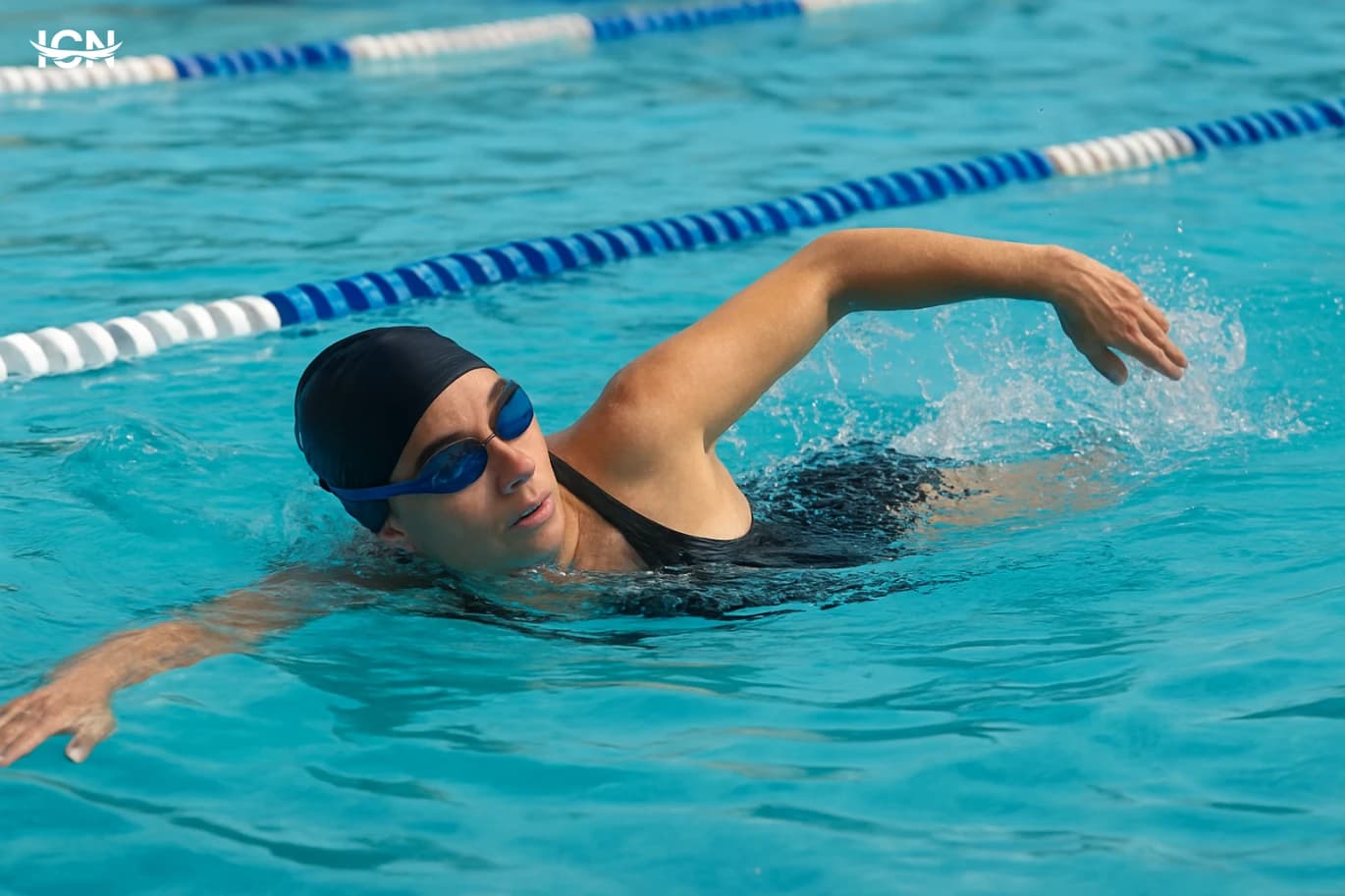
Not every stroke is equally comfortable for every back. Freestyle is often well tolerated when the head position is controlled and the body stays long in the water. Using a snorkel can reduce repeated neck rotation for breathing, which may help people who feel upper back or neck tension. Backstroke is another common option because it encourages a neutral spine and opens the chest, but it can be challenging for those who feel unstable in the water. Breaststroke deserves special attention. The kick and the tendency to lift the head can increase lumbar extension and irritate some lower backs. This does not mean breaststroke is always off-limits, but it often needs technique adjustments, reduced volume, or substitution with other drills. Butterfly is typically the least back-friendly for people with chronic pain because of the high demand on spinal extension and timing. For many readers, the best starting point is not lap swimming but structured pool drills. Water walking with an upright posture, gentle marching, and controlled side steps can build tolerance. Floating on the back with light kicking, or holding the pool wall and doing slow hip extensions, can target glutes without compressive load. A simple rule is to prioritize movements that feel smooth and controlled, avoid sharp pain, and keep sessions short enough that symptoms do not spike later the same day or the next morning.
A realistic weekly plan and progression
A practical plan for chronic back pain focuses on consistency and symptom monitoring rather than intensity. Many people do well starting with two sessions per week of 20–30 minutes in the pool. The first 5–8 minutes can be easy water walking and gentle mobility, followed by 10–15 minutes of simple drills or relaxed laps, then a short cool-down with slow walking and floating. Progression should be gradual. A common approach is to add 5 minutes per session every one to two weeks if symptoms remain stable. Another option is to keep time constant and increase the number of short intervals, such as 6–10 repeats of 25 meters with generous rest. For people who fatigue quickly, alternating one length of swimming with one length of walking can maintain aerobic benefit without forcing technique to break down. Tracking matters. Note how your back feels during the session, two hours later, and the next morning. Mild muscle soreness can be normal, but sharp pain, radiating symptoms, or a clear next-day flare suggests you should reduce volume, switch strokes, or focus on walking and drills for a period. If you are working with a physiotherapist or trainer, share these notes so the plan can be adjusted based on your response rather than a generic template.
Technique cues and common mistakes to avoid
Good technique can be the difference between a helpful session and an irritating one. In freestyle, aim for a long body line and avoid lifting the head forward, which can drop the hips and increase strain through the lower back. Rotate the body as a unit rather than twisting only the neck. If you notice you hold your breath, practice steady exhalation into the water; breath-holding often increases trunk tension. In backstroke, keep the ribs from flaring upward and avoid over-arching. Think of gentle abdominal engagement and a relaxed kick. For drills, choose controlled ranges of motion. Fast, sloppy kicking with a board can provoke back discomfort if the pelvis tilts excessively. If you use a pull buoy, be aware that it can increase lumbar extension in some swimmers; it may feel easier but not always be better for the back. Outside the pool, the biggest mistake is doing too much too soon because the water feels good in the moment. Chronic pain management responds best to predictable, repeatable doses. Another common issue is skipping strength work on land entirely. Many people benefit from combining swimming with simple, back-friendly strength exercises such as glute bridges, bird-dogs, and side planks, as advised by a professional, to carry the gains from the pool into daily posture and lifting tasks.
Who should be cautious and how to get support
Swimming is generally considered low impact, but chronic back pain is not one condition. People with severe radiating symptoms, significant numbness, unexplained weakness, or recent worsening should seek medical assessment before starting a new program. Those with shoulder pain should also be careful, because compensating at the shoulder can change trunk mechanics and indirectly affect the back. Pool environment choices matter. If cold water increases muscle tightness, a warmer pool or a longer warm-up may be more suitable. If you feel anxious in deep water, choose a lane where you can stand or start with aqua jogging and walking in the shallow end. Consider a few sessions with a qualified swim coach or physiotherapist who understands back pain. Small adjustments in breathing, head position, and kick timing can reduce irritation and make the program sustainable. The most useful mindset is to treat swimming as a tool within a broader plan: regular movement, gradual strengthening, and practical habits such as breaking up long sitting periods. When the pool routine is aligned with your symptoms and your daily demands, it can become a reliable way to stay active while protecting a sensitive back.