Build Stronger Knees for Running

- Why Knees Get Irritated in Runners
- A Quick Self-Check Before You Train
- The Four Strength Moves That Matter Most
- Warm-Up and Mobility That Actually Helps
- How to Adjust Running Without Losing Fitness
- A Four-Week Knee-Resilience Mini Plan
Why Knees Get Irritated in Runners
Knee discomfort in runners is often less about the knee joint itself and more about how the whole leg manages load. When weekly mileage rises quickly, or when speed sessions are added without enough recovery, tissues around the knee can become sensitive. Common patterns include pain around the kneecap during stairs or after long runs, or a tight feeling on the outside of the knee late in a run. These issues are frequently linked to limited hip control, weak quadriceps endurance, stiff ankles, or a stride that increases braking forces. A practical way to think about it is capacity versus demand. Demand goes up with hills, faster paces, longer runs, hard surfaces, and poor sleep. Capacity goes up with gradual training, strength work, and consistent mobility. If demand outpaces capacity for several weeks, the knee becomes the “alarm.” The goal of knee-focused training is not to chase pain with random exercises, but to improve the leg’s ability to absorb and produce force repeatedly, especially when fatigue sets in.
A Quick Self-Check Before You Train
Before changing your plan, run a simple self-check to identify the most likely weak links. First, try a 30-second single-leg balance on each side, barefoot if possible. If the foot collapses inward, the knee drifts in, or you need to wave your arms to stay upright, you may need more foot and hip control work. Second, do 10 slow single-leg sit-to-stands from a chair. Watch whether the knee tracks over the middle toes and whether the movement feels smooth or shaky. Third, test ankle mobility with a knee-to-wall drill: with your foot flat, drive the knee toward a wall without the heel lifting. If one side is noticeably tighter, your body may compensate by twisting the knee during running. Finally, note your recent training changes: any jump of more than about 10–15% in weekly volume, or adding two hard sessions in a week, is a common trigger. These checks do not diagnose injuries, but they help you choose the right emphasis: control, strength endurance, mobility, or load management.
The Four Strength Moves That Matter Most
For runners, the most useful knee-friendly strength work is simple, repeatable, and focused on single-leg control. Start with a split squat (rear foot elevated if comfortable). Keep the front foot planted, torso tall, and lower for 3 seconds, then rise in 1 second. This builds quadriceps and glute strength in a running-like stance. Next, add a step-down from a low box (10–20 cm). The goal is control: the knee tracks over the toes, and the pelvis stays level. Third, include a hip hinge such as a single-leg Romanian deadlift with a light dumbbell or kettlebell. This trains the hamstrings and glutes to manage load without the knee collapsing. Fourth, use a calf raise progression: straight-knee raises for the gastrocnemius and bent-knee raises for the soleus. Strong calves reduce stress on the knee by improving ankle stiffness and push-off efficiency. A practical starting dose is 2 sessions per week, 3 sets per exercise. Use 6–10 reps for split squats and hinges (moderate load), 8–12 controlled reps for step-downs, and 10–15 reps for calf raises. Rest 60–90 seconds between sets. If pain rises above mild discomfort during a set or lingers the next day, reduce range of motion, load, or total sets.
Warm-Up and Mobility That Actually Helps
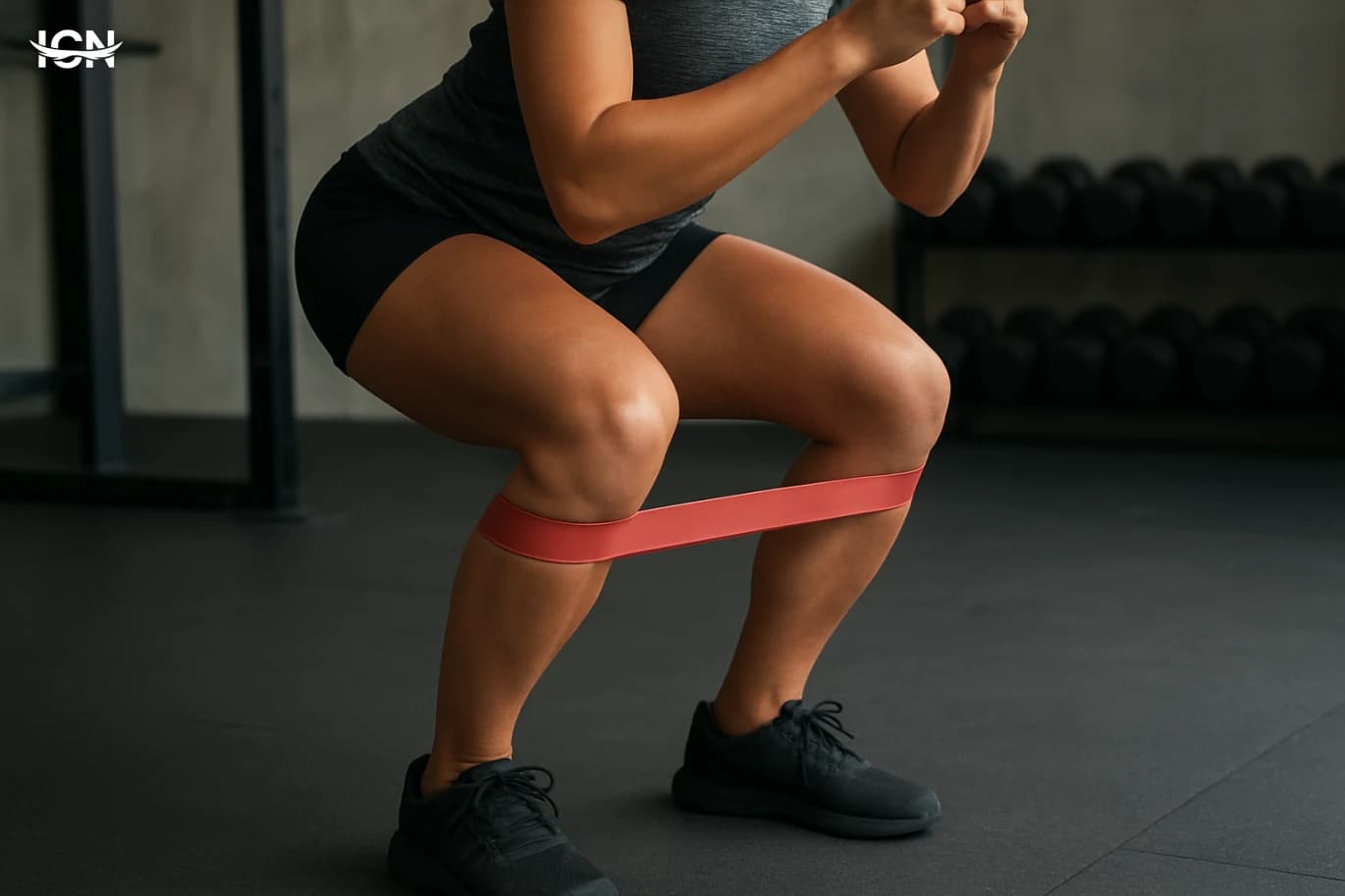
A good warm-up for knee resilience is short and specific. Aim for 6–10 minutes before runs, especially quality sessions. Start with 60–90 seconds of brisk walking or easy jogging to raise temperature. Then do two rounds of: 8–10 leg swings forward/back per side, 8–10 lateral leg swings per side, 10 walking lunges with a small reach, and 10 ankle rocks (knee-to-toe) per side. If you tend to feel tight around the front of the knee, add a 30-second quad stretch per side after the run, not before. If the outside of the knee gets cranky, prioritize hip mobility and glute activation: a short banded lateral walk (2 x 10 steps each way) can improve control without exhausting you. Keep mobility work targeted; long static stretching sessions rarely fix a load problem. The warm-up’s job is to prepare the joints for impact and remind the body of stable alignment, not to create fatigue.
How to Adjust Running Without Losing Fitness
If your knee is irritated, the smartest move is usually to adjust load, not stop everything. Keep running if pain stays mild during the run, does not alter your form, and settles within 24 hours. Reduce weekly volume by 20–30% for 1–2 weeks and remove one intensity session. Replace it with an easy run or a low-impact aerobic option like cycling or elliptical for 30–45 minutes. Use terrain strategically. Flat routes and softer surfaces reduce peak stress. Hills can be helpful or harmful depending on the pattern: steep downhills often aggravate the front of the knee due to higher braking forces, while gentle uphills can reduce impact and encourage shorter steps. Consider a cadence check: increasing step rate by 5–7% at the same pace often reduces knee load by limiting overstriding. Keep the change small and practice it on easy runs. Pair these adjustments with your two weekly strength sessions. The combination of slightly lower running demand and higher strength capacity is what typically moves symptoms in the right direction while preserving aerobic fitness.
A Four-Week Knee-Resilience Mini Plan
Week 1: Keep runs easy and shorten the long run by 15–25%. Do two strength sessions: split squat, step-down, single-leg hinge, and calf raises. Keep loads moderate and focus on perfect control. Add the short warm-up before every run. Week 2: Maintain the reduced volume if symptoms are still present, or add back 5–10% if the knee feels calm. In strength sessions, add a small load increase or one extra set for calf raises. Include one short “strides” session after an easy run: 6 x 15 seconds relaxed faster running with full recovery walking. Week 3: Reintroduce one controlled quality session if the knee has been stable for at least 7–10 days. Choose a low-risk option such as 3 x 6 minutes at comfortably hard effort on flat ground, with 3 minutes easy between. Keep the long run conservative and avoid steep downhills. Week 4: Build toward normal training by adding another 5–10% volume and slightly increasing strength loads. Keep at least 48 hours between the quality run and the heaviest leg strength session. Throughout the four weeks, track three signals: pain during the run, next-day stiffness, and whether your stride feels symmetrical. If any signal worsens for more than two sessions, step back to the previous week’s load and reassess sleep, footwear wear, and recovery habits.