Pickleball Skills for Busy Beginners
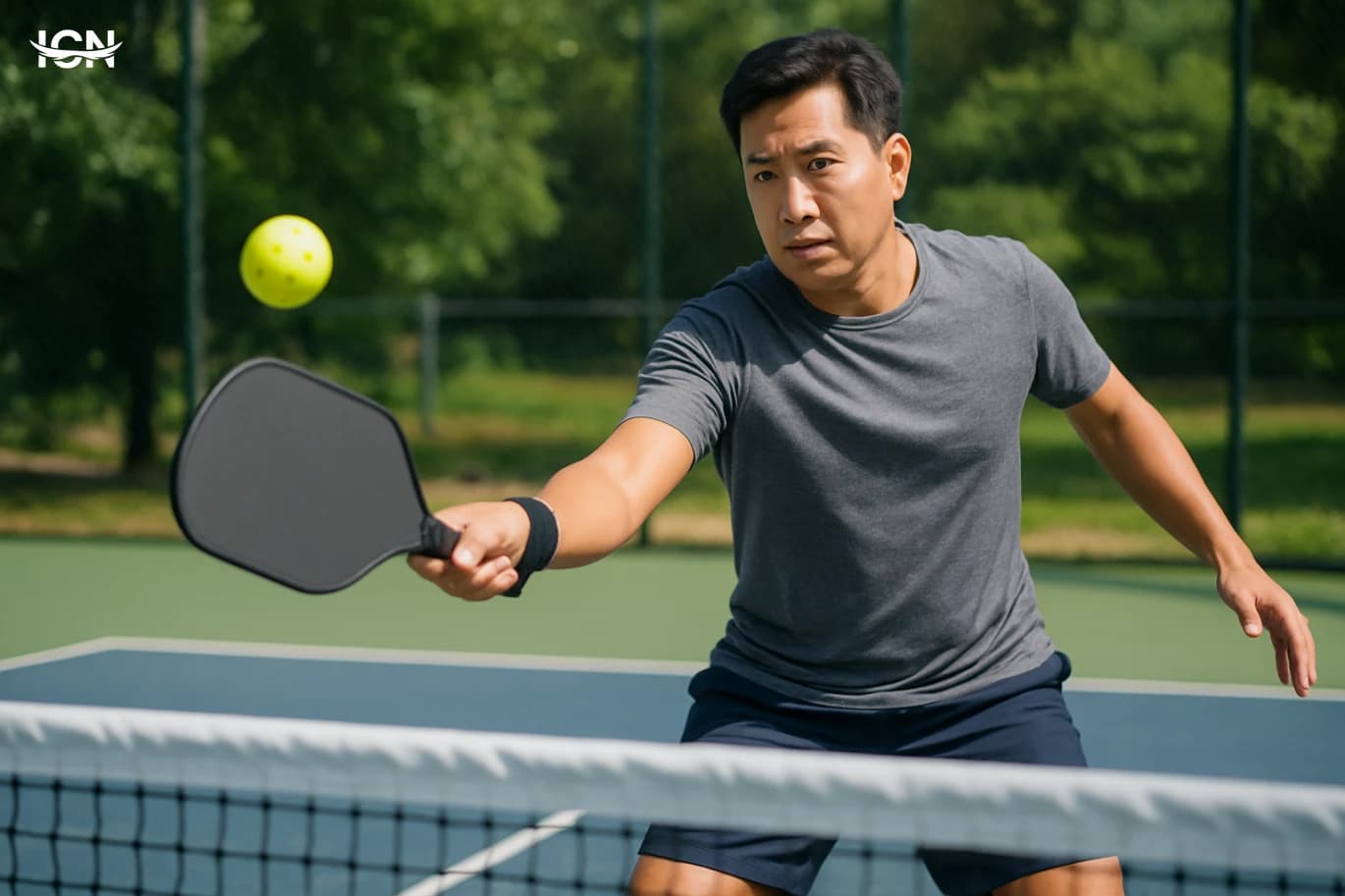
- Why Pickleball Fits a Busy Schedule
- Gear and Court Basics You Actually Need
- The Three Shots That Build Your Game
- Positioning and the Kitchen Line Advantage
- A 30-Minute Weekly Plan for Progress
- Common Beginner Mistakes and Quick Fixes
Why Pickleball Fits a Busy Schedule
Pickleball is one of the easiest racket sports to start because the court is small, rallies begin quickly, and you can get a full workout in a short session. A typical game to 11 points often takes 10–20 minutes, so you can play two or three games and still be done within an hour. The learning curve is friendly: the underhand serve reduces the barrier for new players, and the slower ball speed compared with tennis gives you more time to react. It is also a social sport that does not require a large group. Many community centers and clubs run open play blocks where you rotate partners, which means you can show up alone and still get quality games. For busy beginners, that matters: you do not need to coordinate schedules with three other people every time. Because the equipment is simple and durable, the ongoing costs are low, and you can keep a paddle and balls in your car or work bag for spontaneous sessions.
Gear and Court Basics You Actually Need
Start with a mid-range paddle that feels stable in your hand. Beginners often do better with a slightly larger sweet spot and a comfortable grip size; if the handle feels too small, your wrist works harder and your control drops late in games. Bring two or three outdoor balls if you play on hard courts, because they crack over time and a fresh ball bounces more consistently. Shoes matter more than many new players expect: use court shoes or cross-trainers with lateral support, not running shoes designed for straight-line motion. Learn the court quickly so you stop giving away free points. The non-volley zone, commonly called the kitchen, extends 7 feet from the net on both sides. You can step into it only after the ball bounces, and you cannot volley while standing in it. The serve must be underhand and land diagonally in the opposite service box. After the serve, the receiving team must let the ball bounce once, and the serving team must also let the return bounce once. This “two-bounce rule” is the reason rallies feel manageable for beginners and why positioning becomes more important than power.
The Three Shots That Build Your Game
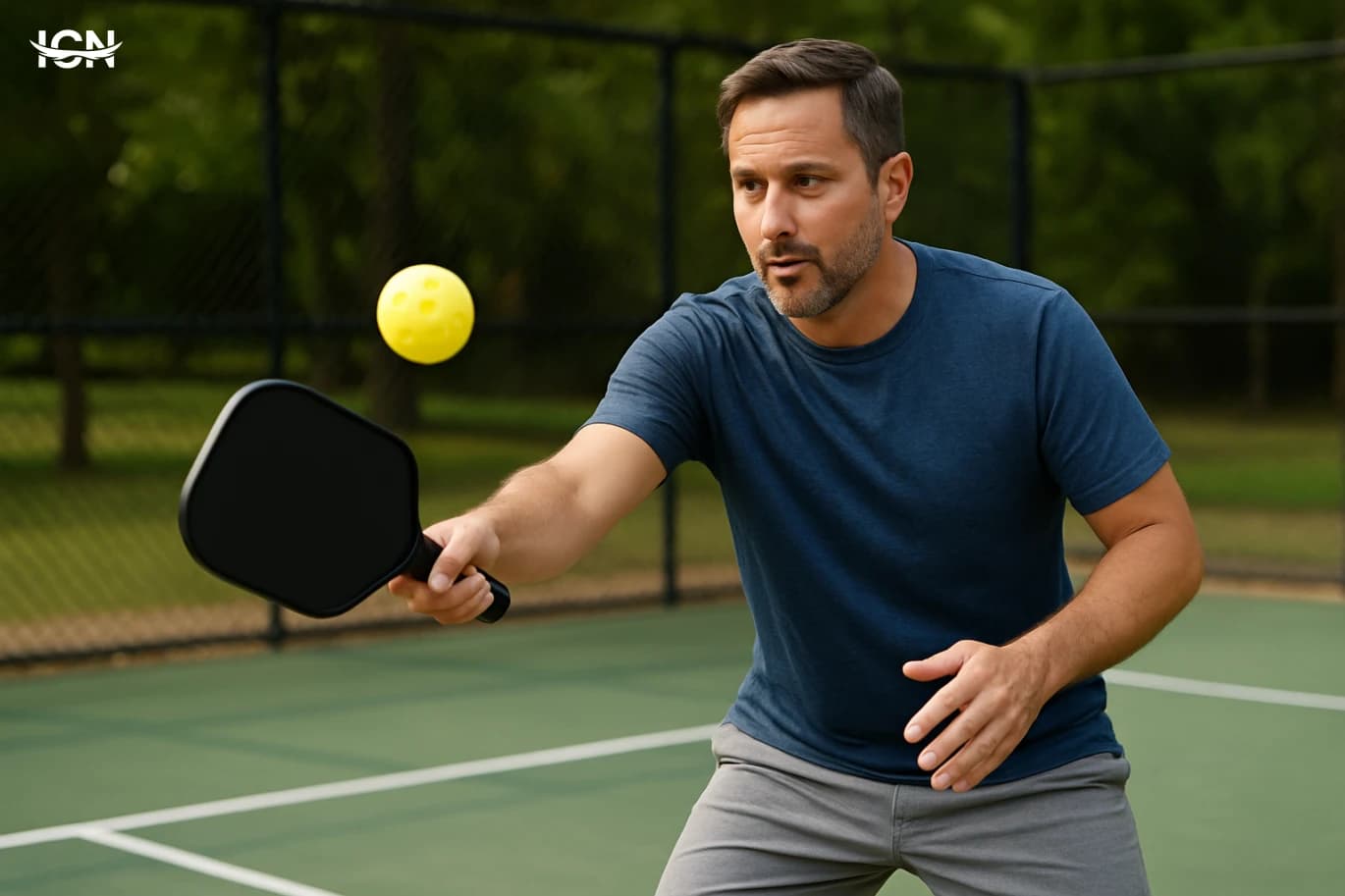
If you only practice three shots, make them the serve, the return, and the dink. A reliable serve is not about aces; it is about starting the point without errors and placing the ball deep so the opponent hits upward. Aim for a smooth underhand motion, contact the ball in front of your body, and prioritize consistency over speed. A simple target is to land 8 out of 10 serves in the correct box with moderate depth. The return of serve is equally important because it buys you time to move forward. Hit the return deep to the middle or to the opponent’s backhand side, then advance toward the non-volley zone line after the ball crosses the net. Many beginners stay back and get trapped in defensive exchanges; a deep return helps you take the net. The dink is the soft shot that lands in the opponent’s kitchen. It looks gentle, but it controls the pace and forces mistakes. Keep your paddle face slightly open, use a compact swing, and aim for a low arc that clears the net by a small margin. When you can dink cross-court with control, you will win points even against stronger hitters because they have fewer angles and less time.
Positioning and the Kitchen Line Advantage
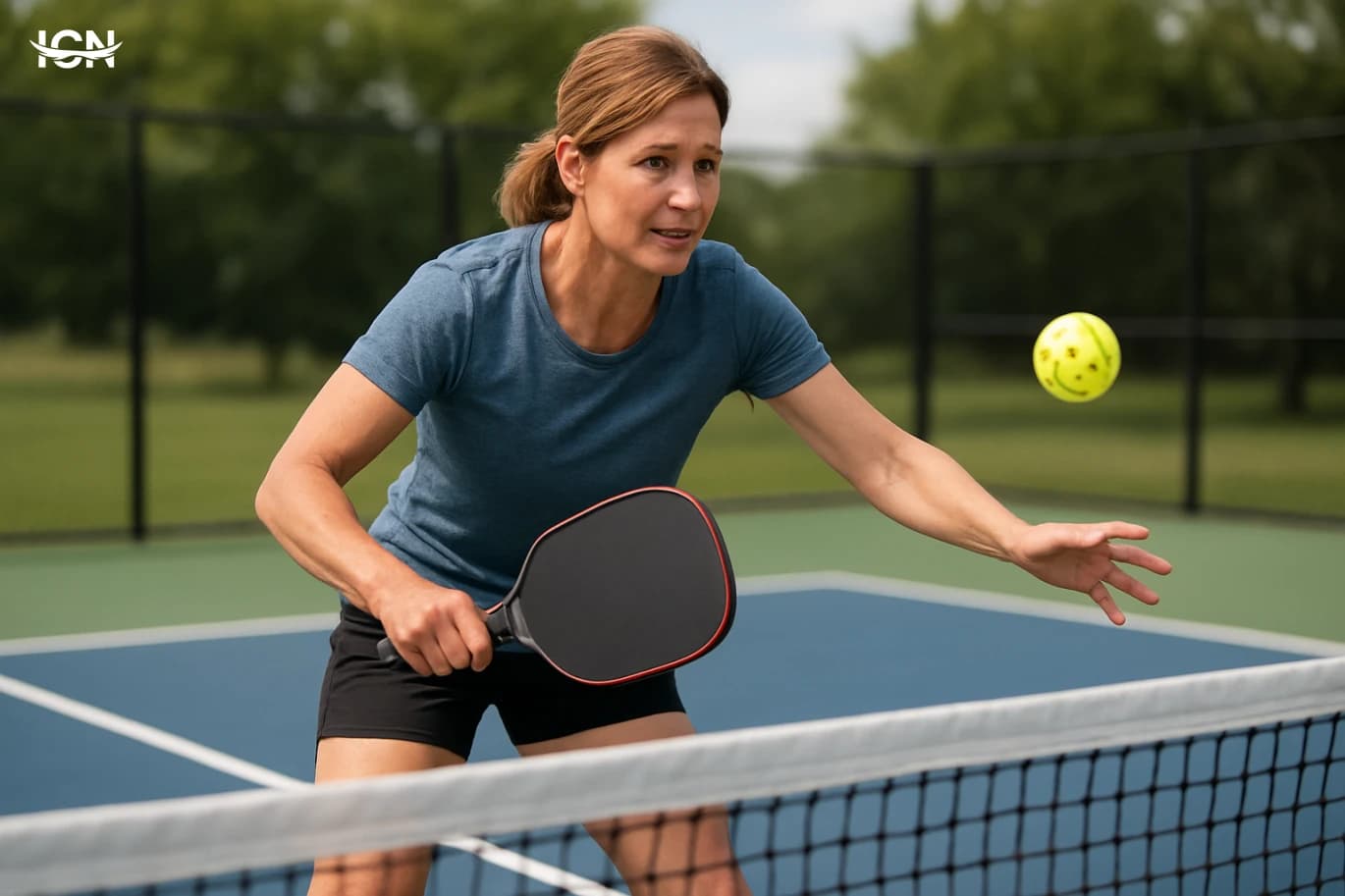
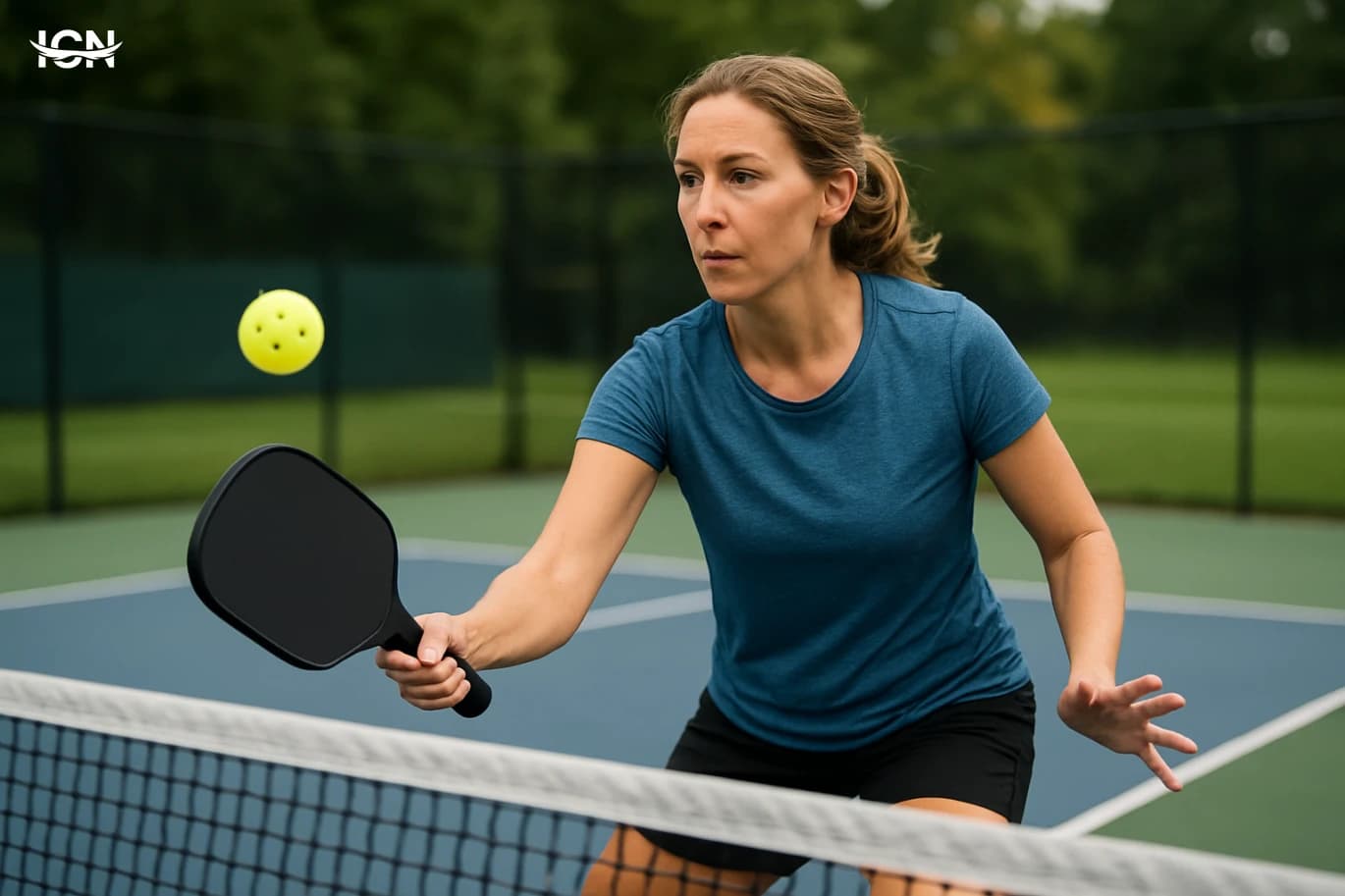
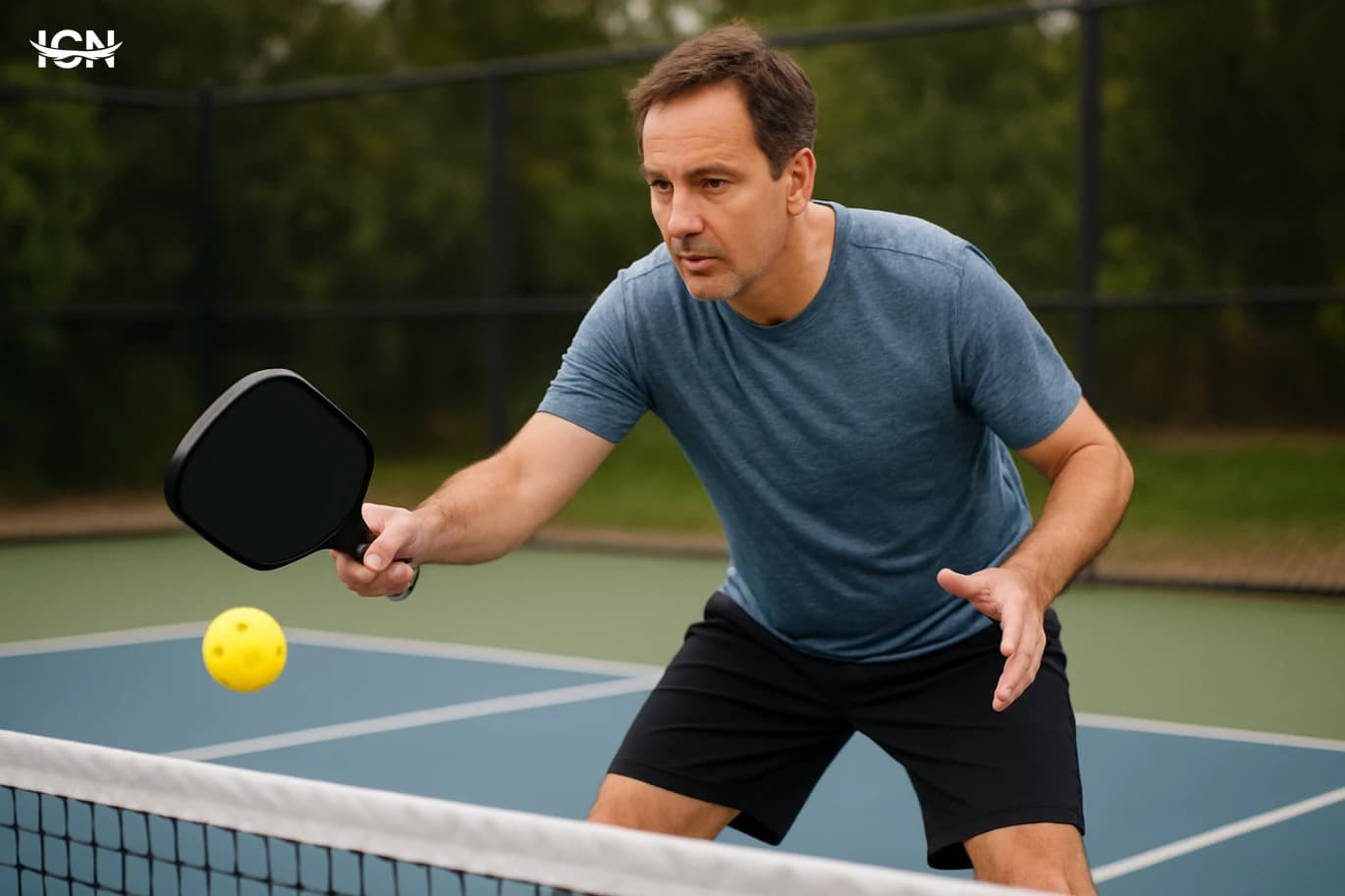
In doubles, most points are won by the team that controls the non-volley zone line. Your goal is to move up together with your partner and stay level, not one player at the net and one at the baseline. When you are both near the kitchen line, you can take balls early, reduce the opponent’s angles, and turn medium shots into simple volleys. Getting there safely is the key. After the two-bounce rule is satisfied, look for a ball you can hit softly into the kitchen or a controlled third-shot drop that lands near the opponent’s kitchen line. If you hit the third shot too hard, it sits up and invites a fast volley back at your feet. If you hit it too short, it becomes an easy put-away. A practical cue is to aim for the opponent’s feet or just over the net with enough height to clear it comfortably. Once you are at the line, keep your paddle up in front of your chest, knees slightly bent, and weight on the balls of your feet. This ready position improves reaction time and reduces rushed swings. Many beginners lose points because their paddle drops after they hit; make it a habit to reset immediately.
A 30-Minute Weekly Plan for Progress
Busy beginners improve faster with short, repeatable sessions than with occasional long days. Here is a simple 30-minute plan you can do once or twice a week on an empty court or during warm-up. Minutes 1–8: Serve practice. Hit 20 serves from the right side and 20 from the left. Track how many land in. If you miss more than 6, slow down and focus on contact point and follow-through. Minutes 9–16: Return and depth control. With a partner, alternate returns cross-court, aiming beyond the mid-court line. If you are alone, drop-hit to yourself and practice sending the ball deep with a compact swing. Minutes 17–24: Dink ladder. Stand at the kitchen line with a partner and dink cross-court for five minutes, then straight ahead for three minutes. Count how many consecutive dinks you can keep in play; try to add two each week. Minutes 25–30: Transition drill. Start at the baseline, hit a controlled third-shot drop, then move to the kitchen line. Repeat 10 times. The goal is not perfection; it is building the habit of moving forward behind a safer ball. If you can only play games, choose one focus per day, such as “deep returns” or “paddle up at the line,” and evaluate yourself after each game with a simple yes/no score.
Common Beginner Mistakes and Quick Fixes
The most common mistake is trying to win with power from the baseline. In pickleball, hard drives can work, but only when they are selective and low. Quick fix: hit fewer full swings and aim for depth and placement, then move forward. Another frequent issue is stepping into the kitchen on a volley or letting momentum carry your foot over the line. Quick fix: practice a small “stop step” after you volley, and keep your toes behind the line unless the ball has bounced. Beginners also pop the ball up during dinks because they open the paddle face too much or swing too long. Quick fix: shorten the stroke, keep the wrist firm, and aim to clear the net by a small margin. Finally, many new players forget communication in doubles. Quick fix: agree on simple calls such as “mine,” “yours,” and “switch,” and decide before the game who takes balls down the middle. Clear roles reduce hesitation, and hesitation is often the real reason for missed shots. With these adjustments, your games will feel calmer, rallies will last longer, and you will see progress even if you can only play once a week.