App Logo

Download Our App

Shop your way

logologo
Image

Buy with smart self-service

02/17/2025By: ICN
Buy with smart self-service

the introduction

What is purchase by self -service? Self -service purchase is a process that enables customers to complete purchase transactions themselves, usually online or through self -service devices. This method gives users freedom to choose products, in addition to the ability to complete payments without the need to help an employee. The importance of purchasing by self -service increases the importance of purchasing by self -service continuously, as it provides many advantages for customers such as comfort and saving in time. It also enhances the customer's experience, which increases the loyalty of the brand. Also, this system reflects companies' ability to keep pace with the technologies of the times and meet the increasing customer needs.

Benefits to customers

Saving in time and effort allows purchase by self -service customers to save in time and effort, where they can shop at any time that suits them and without the need to wait in long lines. A comfortable and independent shopping experience is a comfortable and independent self -service purchase experience, where customers can browse products and choose what suits them quite easily. This trend increases their feeling of control, which enhances their satisfaction with the purchase experience.

Benefits for stores

Increased service efficiency The stores that provide self -shopping service have a significant increase in service efficiency, as customers can complete purchases faster. This allows employees to focus on other tasks such as improving customer service or inventory management, which enhances the general operation of the store. Reducing crowding in branches helps self -service reduce crowding inside stores, as customers can use self -service points to finish their transactions without the need to gather them in long lines. This facilitates the experience and reduces the feeling of stress, which reflects positively on the reputation of the store and attracting more customers.

Technology and innovation

Using artificial intelligence in purchase by self -service. Modern stores are characterized by artificial intelligence applications in self -purchase systems, where customers can receive allocated recommendations for their interests. This technology helps accelerate the process of selecting products and improving customer satisfaction. The latest innovations in self -payment technologies show in the market new innovations such as payment through mobile phones and digital portfolios, which facilitates the payment process and reduces the time taken to finish transactions. These technologies enhance customer experience and increase purchase rates, which benefit stores.

Successful strategies for the application

Improving the user experience is one of the basic factors for the success of self -services. It is necessary that the facades be easy to use and suitable for all spectra. The responsive design methods can be applied to enhance the reaction and ensure easy access to the content. Customer data analysis to improve offers plays a decisive role in determining customer interests and preferences. By analyzing these data, companies can improve offers and discounts to stimulate purchase. In addition, this data helps to customize the experiment, which enhances customer loyalty.


* All articles published on this blog are sourced from various websites and are provided for informational purposes only. They should not be considered as confirmed studies or accurate information. Please verify the information independently before relying on it.

Similar ARTICLES

Snap Map Turns Music Into Moments
Snapchat has introduced a new way to share music with friends directly through Snap Map, turning location-based browsing into a lightweight discovery feed. Instead of posting a song only to Stories or sending it in a chat, users can now attach a track to a place on the map so friends can see what is being played around them. The feature is designed to work as a quick “now playing” signal tied to context: a café, a park, a campus hangout, or a weekend event. In practical terms, the update adds a music-sharing layer to the map experience. When a user selects a song from supported music sources inside Snapchat, they can share it so it appears as a music moment associated with their location or a chosen spot. Friends viewing Snap Map can tap these moments to hear a preview, open the track in a streaming app, or respond with a message. Snapchat is positioning this as a social utility rather than a full music platform: the goal is to make it easier to tell friends what you are listening to and where, without building a separate music profile. The launch also reflects a broader product direction for Snapchat: making Snap Map more than a navigation tool. Over the past few years, the map has evolved into a place to see friends, explore public Snaps, and find local highlights. Adding music makes the map feel more like a live bulletin board of shared tastes, where the soundtrack becomes part of the location story.
Digital Parenting Starts at Home
Digital parenting is the day-to-day guidance that helps children use phones, tablets, games, and online services safely and productively. It is not limited to blocking content or setting a time limit. It includes teaching children how to judge information, protect their privacy, manage attention, and behave respectfully in digital spaces. A child who knows how to pause before sharing a photo, ask permission before posting someone else’s image, and recognize a suspicious message is practicing digital skills that matter beyond any single app. For mothers, digital parenting also means understanding how technology shapes routines at home. Notifications can interrupt homework, short videos can replace sleep, and group chats can create social pressure. The goal is not to eliminate screens, but to make technology serve the family’s priorities. That requires clear expectations, consistent follow-up, and a home environment where children can ask questions without fear of punishment. When children hide their online life, risks increase; when they can talk openly, mothers can intervene early and calmly.
Facebook Expands Free Verification Worldwide
Facebook’s move to offer free verification to users worldwide signals a shift in how the platform wants identity and trust to work at scale. For years, verification badges were associated with public figures, brands, and accounts that Facebook considered “notable.” A broader, no-fee option changes the practical meaning of the badge from a status marker into a safety and clarity tool that can apply to everyday users. In operational terms, a free verification program typically aims to reduce impersonation, improve the reliability of search results, and help people quickly confirm they are interacting with the intended account. When verification becomes more accessible, the platform can standardize identity checks across regions rather than relying on ad hoc decisions or media-based notability. That matters in markets where local creators, small businesses, educators, and community organizers may be widely known within a city or niche but not covered by major publications. The global aspect is also important. Facebook’s user base spans countries with different documentation systems, naming conventions, and privacy expectations. A worldwide rollout suggests the company believes it can manage these differences with a consistent process, while still adapting to local requirements. For users, the headline is simple: the badge may become easier to obtain, but the real change is how it could influence account security, visibility, and the credibility of interactions on the platform.
Digital Skills Employers Actually Hire For
Digital skills are no longer limited to “knowing software.” Employers now look for people who can improve speed, accuracy, and decision-making across everyday workflows. In many roles, the strongest signal is not the number of tools you list, but whether you can connect data, automate repetitive steps, and communicate results clearly. Hiring teams increasingly evaluate candidates through practical tasks: cleaning a dataset, building a dashboard, writing a short automation script, or drafting a measurement plan for a marketing campaign. Even non-technical departments use digital assessments, because most work now touches cloud platforms, shared documents, and analytics. Another shift is that job descriptions often bundle skills. A single role may require basic data analysis, collaboration in cloud tools, and awareness of security practices. This means candidates who can demonstrate “end-to-end” capability—collect, process, analyze, and present—stand out faster than those who only know one isolated tool.
When Kids Use Video Games Wisely
Many parents ask whether video games can offer real benefits, or if they are only a distraction. The most accurate answer is that outcomes depend on the type of game, the child’s age, and how play is managed at home. Games are not a single category: a cooperative puzzle game, a creative building game, and a fast competitive shooter do not train the same skills or habits. The same child can also react differently depending on sleep, school workload, and temperament. A practical way to think about benefits is to focus on measurable areas: attention control, problem-solving, language exposure, social cooperation, and motivation. Benefits are more likely when games are age-appropriate, time-limited, and combined with offline routines like reading, sports, and family time. In other words, games can be one tool in a broader learning environment, not a replacement for it. This article focuses on potential advantages of electronic games for children, and how parents can increase the chance of positive outcomes through selection and daily rules. It also highlights warning signs that suggest a need to adjust the plan, such as sleep disruption, declining grades, or frequent conflict over screen time.
WhatsApp Usernames and Number Privacy
WhatsApp’s official rollout of usernames introduces a new way to connect without automatically exposing your phone number. Until now, the app’s identity model was tied to a number, which meant that joining a group, starting a chat from a link, or messaging someone new often revealed your digits by default. With usernames, WhatsApp adds a public-facing handle that can be shared instead of a number, making it easier to keep personal contact details private in everyday situations. The feature is designed for common scenarios: joining community groups, coordinating with customers or classmates, or responding to a message request without handing out your number. In practice, a username becomes the primary “shareable” identity, while the phone number remains the account anchor behind the scenes for registration, security, and recovery. This separation is especially useful for people who use WhatsApp widely but prefer to limit how broadly their number circulates. It is important to set expectations. A username does not turn WhatsApp into an anonymous service, and it does not remove the need for a phone number to create an account. It also does not automatically hide your number from everyone in every context. Privacy depends on how you configure visibility settings, how you start conversations, and whether the other person already has your number saved. The benefit is that you gain a practical option to share a handle first, and reveal your number only when you choose.
WhatsApp Beta Adds the Green Dot
WhatsApp’s beta channel has begun showing a small green dot in parts of the interface, signaling a new layer of status visibility inside the app. The indicator is designed to be quick to notice without interrupting the chat experience, and it appears as a compact dot rather than a banner or pop-up. In practical terms, it functions as a visual cue tied to activity or availability signals that WhatsApp already manages in the background. The green dot is not a standalone feature by itself; it is an interface element that helps users interpret what is happening at a glance. WhatsApp has long offered last seen, online status, and read receipts, but those signals are distributed across different screens and depend on privacy settings. The new dot aims to reduce the need to open a profile or wait for a text update by placing a minimal indicator where users naturally look while navigating chats. Because this is appearing in the experimental build, the exact behavior can vary between testers. Some users may see it only in specific areas such as the chat list or within a conversation header, while others may not see it at all yet. That variability is typical for beta rollouts, where features are enabled server-side in waves to measure performance and user understanding before a wider release.
UK Under-16 Social Media Ban Explained
Britain is moving toward restricting access to social media for anyone under 16, framing the measure as a child-safety and online-harms intervention rather than a general internet ban. In practical terms, the policy discussion focuses on preventing under-16s from holding accounts on mainstream social platforms and limiting the ability of platforms to recommend content, connect strangers, or deliver targeted features to minors. The details that matter are operational: which services count as “social media,” whether messaging apps are included, and how platforms must verify age. Most proposals in this space distinguish between open social networks that rely on feeds, recommendations, and public sharing, and services that are primarily private communications. The UK’s approach is expected to lean on existing online-safety obligations, using enforcement tools that already exist for platforms that fail to protect children. A key point is that the policy is not only about blocking access. It is also about shifting responsibility to companies to design safer defaults, reduce exposure to harmful content, and prove compliance. That means the ban discussion is tightly linked to age assurance, content moderation standards, and the design of recommendation systems.
WhatsApp Tightens Message Copy and Capture
WhatsApp is reinforcing privacy by limiting two everyday actions that often lead to unintended sharing: copying messages and capturing them as screenshots or screen recordings. While the app has long relied on end-to-end encryption to protect content in transit, encryption does not stop a recipient from duplicating what they can already see. The new direction targets that gap by reducing the ease of turning private chats into shareable snippets. The practical impact is most visible in sensitive conversations: personal identifiers, one-time codes, addresses, medical details, and private work discussions. In many cases, the harm does not come from hacking but from casual forwarding, copying into another app, or saving a screenshot “just in case.” By adding friction to these actions, WhatsApp is signaling that privacy is not only about secure delivery, but also about limiting downstream exposure. These changes also reflect broader user expectations. People increasingly treat messaging apps as a place for semi-formal communication—receipts, confirmations, customer support, and workplace coordination. When conversations carry higher stakes, users want clearer boundaries around what can be extracted and stored. WhatsApp’s move aligns with that shift by making it harder to convert chat content into permanent, easily redistributed files. Importantly, such restrictions are rarely absolute. They may apply to specific chat types, certain media formats, or accounts with enhanced privacy settings. Users should expect a phased rollout, with differences by device, operating system, and app version. The headline is simple—less copying and capturing—but the real story is how these controls fit into WhatsApp’s broader privacy toolkit.
Mobile Apps Worth Trying This Year
Before downloading anything, define the job you want the app to do: manage tasks, edit photos, learn a skill, or reduce screen time. Check the update history and release notes; apps that ship improvements every few weeks tend to fix bugs faster and keep up with new phone features. Read recent reviews, not only the overall rating, and look for patterns such as battery drain, login problems, or aggressive ads. Privacy and cost matter as much as features. Review permissions and avoid apps that request access unrelated to their purpose, such as a flashlight asking for contacts. Prefer services with clear data controls, export options, and two-factor authentication. For paid plans, compare what is included: cloud storage limits, collaboration features, offline access, and customer support. A good rule is to test the free tier for a week, then decide whether the subscription saves time or replaces another tool you already pay for.
Passkeys Are Replacing Passwords
Passwords are still the default gatekeeper for most apps and websites, but they are showing their age. People reuse the same password across services because remembering dozens of strong, unique strings is unrealistic. That habit turns a single data breach into a chain reaction: once one account is exposed, attackers try the same credentials elsewhere. Even when users pick unique passwords, phishing pages can capture them in seconds, and many victims cannot tell a convincing fake login screen from a real one. Organizations try to compensate with complexity rules and frequent resets, yet those measures often backfire. Forced rotations encourage predictable patterns, and complexity requirements push users toward writing passwords down or storing them insecurely. Multi-factor authentication helps, but SMS codes can be intercepted and app-based codes still rely on the user recognizing a legitimate login prompt. The result is a system that is expensive to support, frustrating to use, and still vulnerable to common attacks.
Passkeys in Practice for Everyday Security
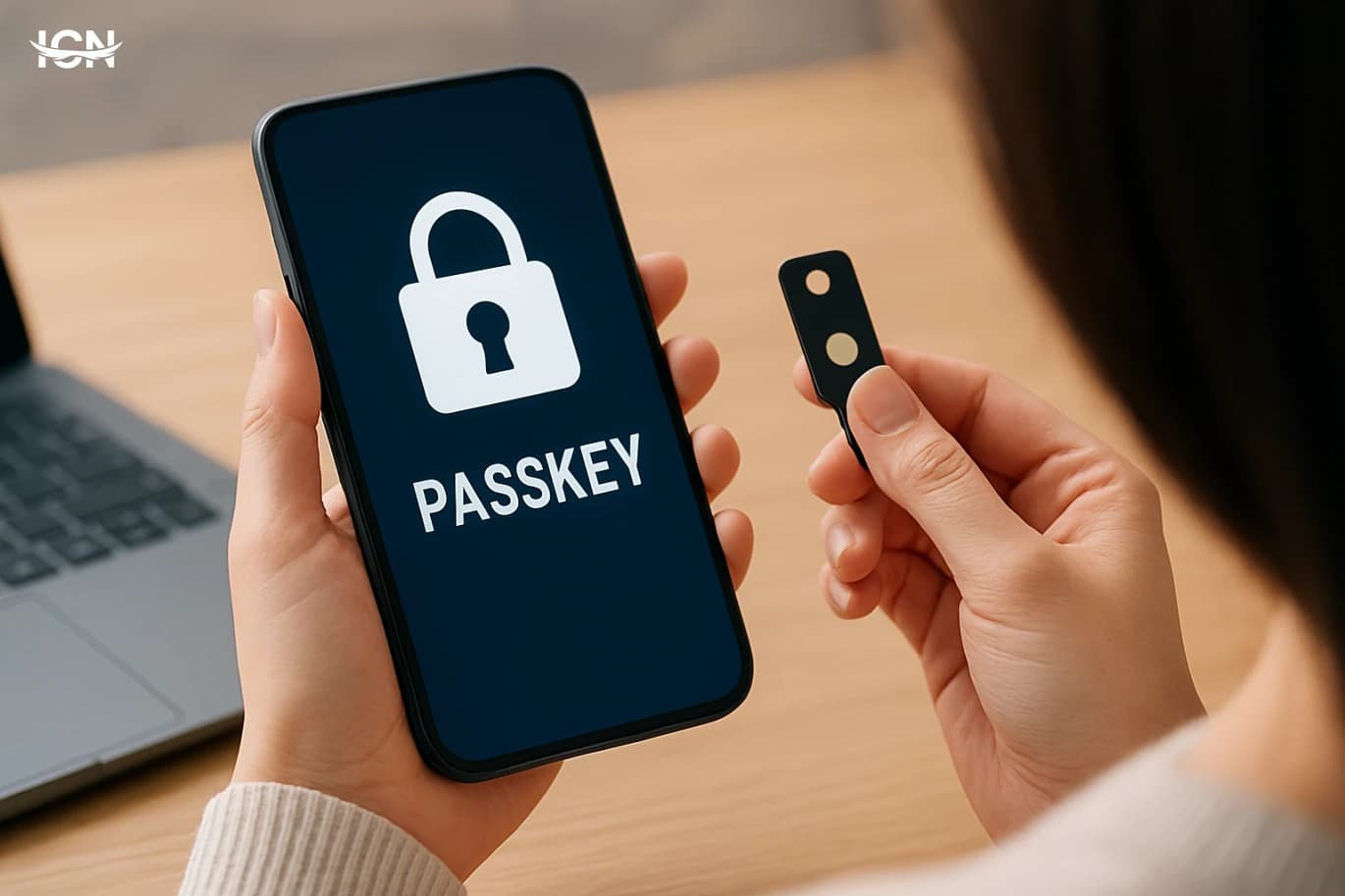
Passwords are still the default login method for most services, but they are increasingly mismatched with how people actually use the internet. Many users manage dozens of accounts across phones, laptops, smart TVs, and work devices, which pushes them toward reusing the same password or choosing short, memorable phrases. That behavior makes large-scale credential leaks more damaging, because one exposed password can unlock multiple services. Even when a password is unique, it can be captured through convincing fake login pages or intercepted on compromised devices. Two-factor authentication improved the situation, yet it also introduced friction and new points of failure. SMS codes can be delayed or blocked, authenticator apps can be lost during phone changes, and push approvals can be mis-tapped when users are distracted. Support teams spend time on account recovery, and users lose confidence when they are locked out. The result is a login system that is both insecure and inconvenient, which is exactly the combination attackers benefit from. Passkeys are emerging as a practical replacement because they remove the shared secret. Instead of typing a password that can be stolen and reused, a passkey relies on cryptographic keys stored on a device and unlocked with a local method such as fingerprint, face recognition, or a device PIN. This shift changes the economics of account takeover: there is no password to phish, and the login is tied to the legitimate website or app.
Private 5G Networks for Modern Factories
Manufacturers are adopting private 5G because it offers predictable wireless performance inside facilities where Wi‑Fi often struggles with interference, roaming gaps, and congestion. A private 5G network is built for a specific site or campus, with dedicated radio resources, controlled device access, and service levels that can be engineered for production needs. That matters for operations such as automated guided vehicles, machine vision inspection, and real-time monitoring of equipment, where a few seconds of dropouts can disrupt workflows. Another driver is the growth of connected assets. A single plant can have thousands of sensors, handheld terminals, cameras, and mobile robots. Private 5G is designed to manage large device populations with consistent authentication and policy control. It also supports mobility across wide areas, including yards and warehouses, without relying on multiple Wi‑Fi access points and complex tuning. For many factories, the goal is not to replace every existing network, but to add a wireless layer that is easier to govern and more aligned with industrial uptime expectations.
By clicking the SUBSCRIBE button, you are agreeing to our Privacy & Cookie Policy If you want to unsubsribe the marketing email, please proceed to our privacy center.
© 2005-2026 ICN. All Rights Reserved.