alkhlaya-alsrtany
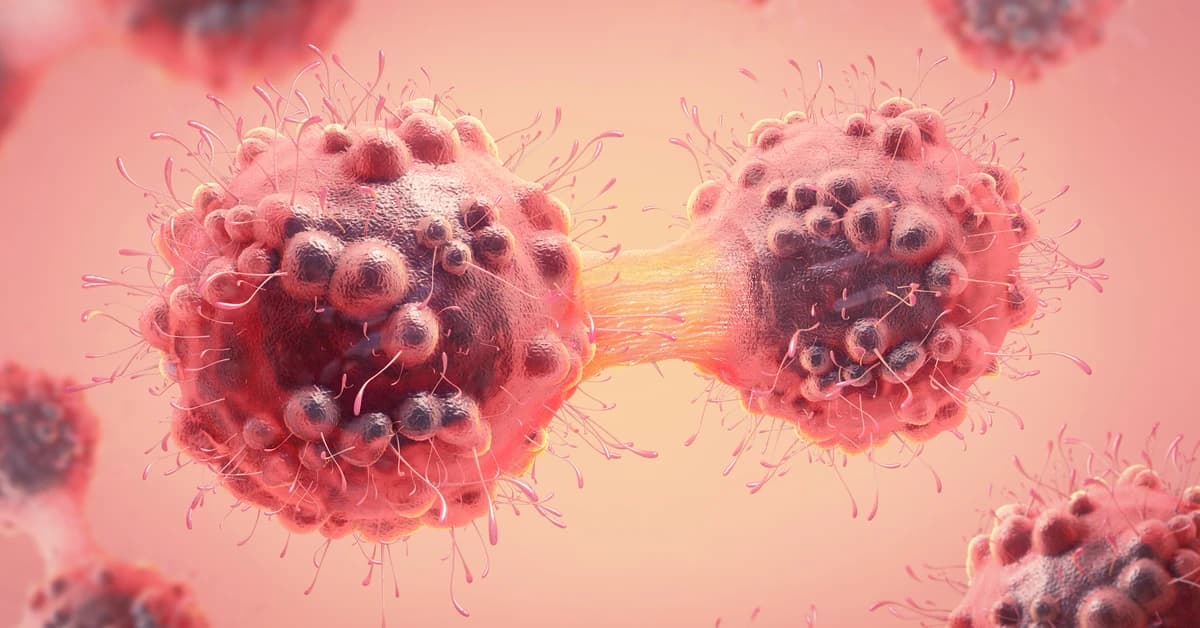
Cancer cells are cells that arise when a normal cell loses its ability to divide in a controlled manner and automatically dies (apoptosis). Instead, it begins to divide abnormally and continuously, forming tumors that may be benign or malignant (cancerous).
Cancer cells are cells that arise when a normal cell loses its ability to divide in a controlled manner and automatically dies (apoptosis). Instead, it begins to divide abnormally and continuously, forming tumors that may be benign or malignant (cancerous). Characteristics of cancer cells: Uncontrolled division: They do not stop multiplying like normal cells. Uncontrolled growth: They do not respond to signals that control growth. Evading programmed death: A normal cell dies when damaged, but a cancerous cell does. Producing new blood vessels (angiogenesis): To feed the tumor. Metastasis: They can break away and travel through the blood or lymphatic system to form tumors elsewhere. 🔹 Causes of cancerous cells: Genetic mutations (changes in DNA). Continuous exposure to radiation or carcinogenic chemicals. Smoking and alcohol. Chronic infections or certain viruses (such as HPV or hepatitis B and C). Weakened immune system. Genetic factors. 🔹 Types of tumors: Benign: Slow-growing, usually does not spread. Malignant (cancerous): Fast-growing, capable of invading tissue and spreading. 🔹 Treatment methods (varies depending on the type and location of the cancer): Surgery to remove the tumor. Chemotherapy to destroy cancer cells. Radiation therapy. Immunotherapy and hormonal therapy. Targeted and gene therapy (newer methods).