Ramadan Imsakiyah Made Practical
- What an Imsakiyah is
- How the times are calculated
- Reading the table correctly
- Using the Imsakiyah for daily planning
- Print, apps, and avoiding common mistakes
- Sharing an Imsakiyah with family and community
What an Imsakiyah is
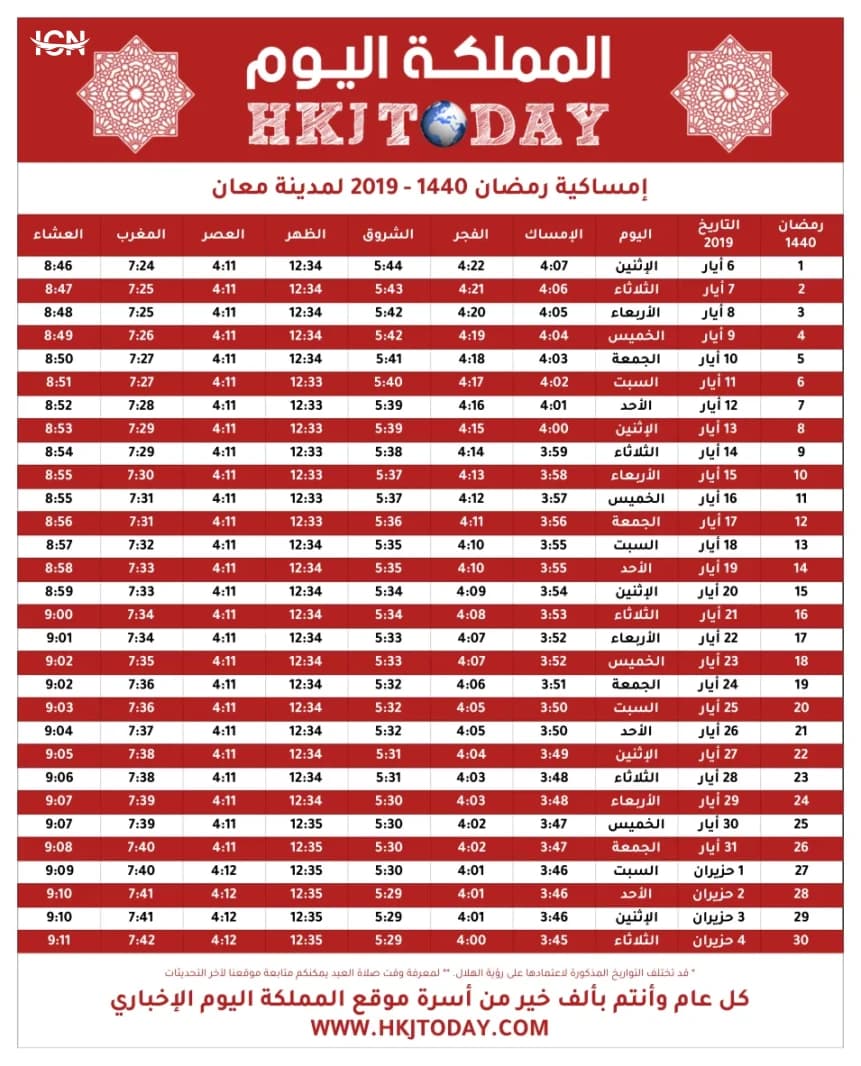
A Ramadan Imsakiyah is a daily timetable that lists key prayer times and fasting-related moments for each day of the month. In most versions, you will see Fajr (dawn prayer), sunrise, Dhuhr, Asr, Maghrib (sunset), and Isha, along with a specific “imsak” time that appears shortly before Fajr. People use it to plan suhoor, stop eating and drinking before the fast begins, and organize work, school, and family routines around prayer and iftar. Imsakiyahs are usually produced for a specific city because prayer times depend on geographic location. Even nearby towns can differ by a few minutes, and that difference matters when you are timing suhoor and Maghrib. Many mosques, Islamic centers, and local community groups distribute printed copies, while apps and websites provide digital versions that can be updated automatically. The most useful Imsakiyah is the one that matches your exact location and the calculation method used by your local community.
How the times are calculated
Prayer times in an Imsakiyah are based on the sun’s position, not a fixed clock schedule. Fajr begins when the dawn light appears, while Maghrib begins at sunset. The challenge is that “dawn” can be defined using different astronomical angles below the horizon, and this is where calculation methods vary. Common methods include those used by the Muslim World League, Umm al-Qura (Makkah), the Egyptian General Authority of Survey, and others. Each method can shift Fajr and Isha by several minutes. An Imsakiyah may also include a fixed offset for “imsak,” such as 10 or 15 minutes before Fajr. Some communities treat imsak as a cautionary buffer, while others focus on the Fajr start time as the legal beginning of fasting. Because practices differ, it is sensible to follow the timetable used by your local mosque or official religious authority. If you are traveling, check the local method rather than relying on a schedule from your home city.
Reading the table correctly
Most Imsakiyahs are laid out as a calendar with rows for dates and columns for times. Start by confirming the city name, the time zone, and whether the schedule assumes daylight saving time. A common mistake is using a timetable that was printed before a clock change, which can shift every prayer time by an hour. Next, look at the labels. Some tables list “Fajr” and “Imsak” separately, while others list only Fajr and expect you to stop eating at that time. Sunrise is included for those who pray Fajr early and want to know when the time ends, and it is also useful for planning sleep. Maghrib is the practical anchor for iftar; if you are hosting guests, it helps to plan food and serving time around the exact minute. Finally, pay attention to small daily changes. In many regions, Fajr becomes earlier as Ramadan progresses, while Maghrib becomes later, or vice versa depending on the season and hemisphere. That gradual shift affects suhoor duration and family routines, so reviewing the next few days in advance can prevent last-minute confusion.
Using the Imsakiyah for daily planning
An Imsakiyah is more than a fasting reminder; it can be a planning tool. For suhoor, many families set a wake-up time that leaves room for eating, hydration, and a calm transition to Fajr. If your schedule is tight, use the table to identify the earliest Fajr in the month and build your routine around that, so you are not forced to adjust every few days. For work and school, knowing Dhuhr and Asr times helps you plan short breaks for prayer, especially in workplaces with limited flexibility. If you commute, check whether Maghrib will fall during travel and plan iftar options accordingly, such as carrying water and dates. For those managing health conditions, the timetable helps coordinate medication timing with suhoor and iftar, but medical advice should come from a clinician. Community life also benefits. Mosques use the Imsakiyah to coordinate iqamah times, taraweeh schedules, and iftar programs. If you volunteer or donate meals, the exact Maghrib time matters for delivery and serving. A shared, locally consistent timetable reduces confusion and keeps communal activities running smoothly.
Print, apps, and avoiding common mistakes
Printed Imsakiyahs are convenient for kitchens and family spaces, and they work without batteries or internet. However, they can become outdated if there is a last-minute announcement about the start of Ramadan, a correction in the timetable, or a daylight saving change. If you rely on a printed sheet, verify it against a trusted local source at the beginning of the month. Apps and websites offer automatic location detection, notifications, and the ability to switch calculation methods. The downside is that incorrect location settings can produce wrong times, especially if the phone is set to a nearby city or if GPS is disabled. Another common issue is mixing timetables: using one source for Fajr and another for Maghrib can create inconsistent practice within a household. A practical approach is to pick one primary source that aligns with your local mosque, then use a second source only as a cross-check. If you notice a difference of several minutes, confirm the calculation method and the city before assuming an error. Consistency is often more important than chasing minor variations from day to day.
Sharing an Imsakiyah with family and community
Sharing the Imsakiyah early helps households avoid daily uncertainty. Many families place a copy on the refrigerator and agree on a single reference for suhoor and iftar. If you have children, the timetable can be used to explain the rhythm of the month, such as why bedtime shifts and why Maghrib becomes the key moment in the evening. For community groups, a clear Imsakiyah supports coordination. Event organizers can publish a weekly snapshot with Maghrib and Isha times for iftar gatherings, lectures, and taraweeh. If your community includes people from different countries, it is useful to clarify that the schedule is city-specific and that times may differ from what they remember from home. When distributing an Imsakiyah, include the essentials: city name, year, calculation method, and whether daylight saving time is assumed. Those details prevent confusion and make the timetable reliable for everyone using it throughout Ramadan.