Drawing and Its Basics
- What is Drawing?
- The Importance of Learning Drawing
- Basic Drawing Tools
- Drawing Basics for Beginners
- Main Types of Drawing
- Tips to Improve Your Drawing Skills
- Conclusion
What is Drawing?
Drawing is a representational art form that uses lines, dots, and shapes to create a visual representation on a surface, such as paper, canvas, or even walls. It can be realistic, reflecting nature and reality with precision, or abstract, focusing on symbolism and free expression.
The Importance of Learning Drawing
1. Enhances Creativity: Drawing stimulates the imagination and sparks new ideas. 2. Expressing Emotions: It is an effective way to express inner feelings without words. 3. Improves Focus and Patience: Drawing requires attention to detail, which strengthens concentration. 4. Therapeutic Benefits: Studies show that drawing helps reduce stress and promotes relaxation.
Basic Drawing Tools
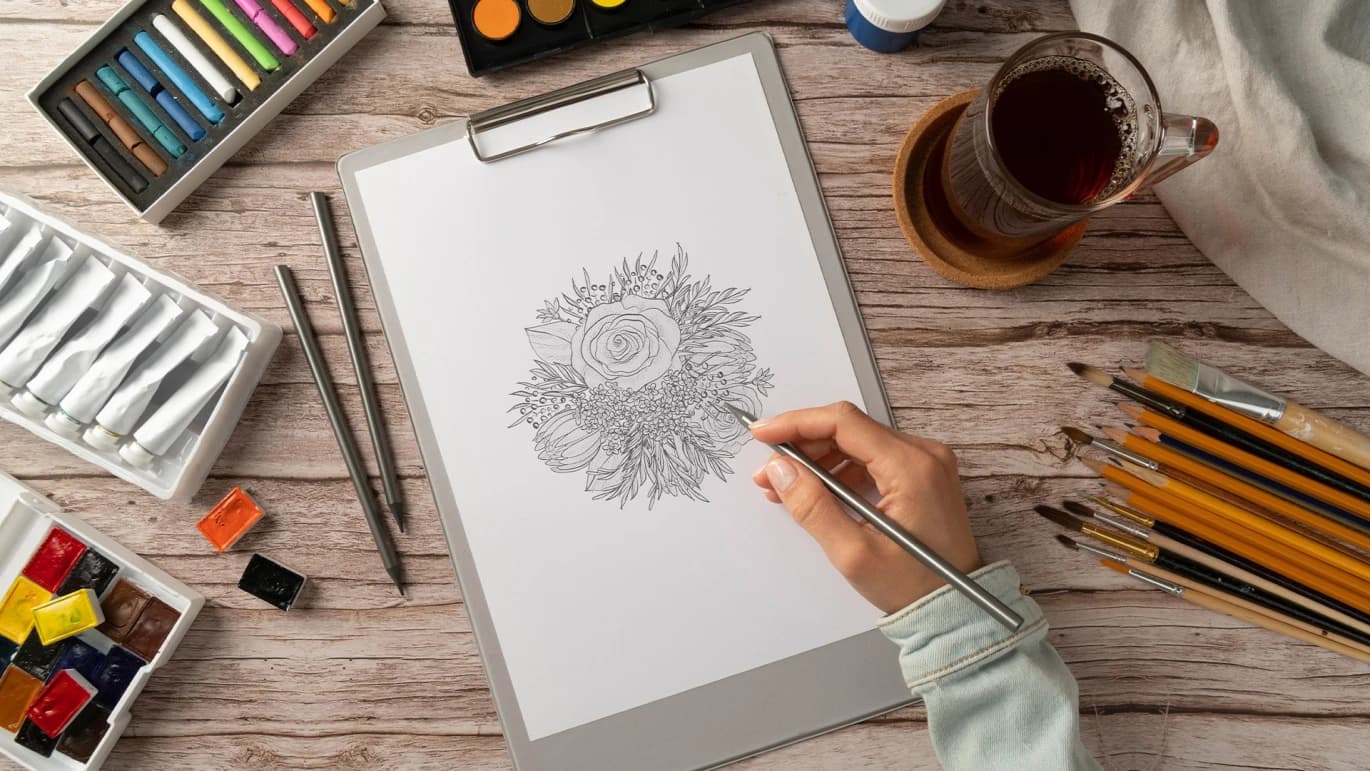
1. Pencils • HB: For general use and medium lines. • B, 2B, 6B: For dark and soft shading. • H, 2H: For light lines and initial sketches. 2. Paper • Rough-textured paper: Suitable for shading and detailed work. • Smooth paper: Ideal for clear lines and pencil drawings. 3. Erasers • Regular Eraser: For removing clear mistakes. • Kneaded Eraser: For lifting shading softly without leaving marks. 4. Additional Tools • Charcoal or pastel pencils for strong shading. • A soft brush for blending. • Fixative spray to protect finished drawings.
Drawing Basics for Beginners
1. Practice Basic Lines Start with straight, curved, and circular lines, as they are the foundation for more complex shapes. 2. Understand Basic Geometric Shapes Most objects can be simplified into basic shapes: cubes, spheres, cylinders, and cones. Mastering these will help you draw realistic objects. 3. Proportions and Measurements Understanding proportions (like facial or body ratios) is essential to making drawings look natural. 4. Shading Techniques Shading adds depth and realism. Learn to identify light and shadow directions and apply varying pencil pressure to achieve different effects. 5. Consistent Practice Drawing improves with daily practice. Dedicate at least 15 minutes a day to sketching.
Main Types of Drawing
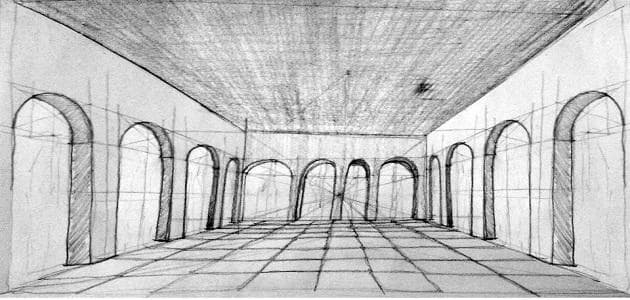
1. Realistic Drawing: Captures details exactly as they appear in reality. 2. Abstract Drawing: Focuses on expressing ideas through lines and colors rather than realistic forms. 3. Portrait Drawing: Focuses on capturing facial features and expressions. 4. Cartoon and Manga Drawing: A simplified and stylized approach used in animation and comics. 5. Architectural Drawing: Used to represent buildings and structures with technical accuracy.
Tips to Improve Your Drawing Skills
• Draw from Life: Sketch real-life objects instead of only copying photos. • Learn from Other Artists: Study famous artists’ works and their techniques. • Use Learning Resources: Take advantage of online tutorials and drawing courses. • Be Patient: Don’t expect perfection immediately—art is a long journey.
Conclusion
Drawing is not just a skill but a universal language that combines beauty, imagination, and creativity. Learning its basics is the key to entering this passionate world. With consistent practice, you will soon transform simple ideas into impressive artworks that reflect your unique artistic personality.