Chinese New Year
- What is the Chinese New Year and its significance?
- When does the celebration of the Chinese New Year (Spring Festival) begin?
- Legendary Origins: The Jade Emperor's Race and the Zodiac System
- Chinese Zodiac: The 12-Year Cycle
- Pre-Spring Festival Rituals: Preparing for the Lunar New Year
- Chinese New Year's Eve: Peak of the Spring Festival (Chuxi)
- Symbols and Chinese Zodiac in New Year and Their Connection to the Lunar Calendar
- The Global Spread of Lunar New Year: The Strength of Chinese Communities
- Lantern Festival: Conclusion of Celebrations
- Comparison between the Chinese calendar systems: lunar and solar
- Summary and learned lessons
- Frequently Asked Questions about Chinese New Year
What is the Chinese New Year and its significance?
It is a time dedicated to honoring ancestors and deities, offering sacrifices to ensure a coming year filled with peace and prosperity. These traditions are an essential part of Chinese culture and continue for several days filled with joy and large family gatherings.
When does the celebration of the Chinese New Year (Spring Festival) begin?
For this reason, the start date of the Spring Festival is not fixed but changes annually. The celebration always falls between late January and mid-February each year. The Chinese calendar: Determining the exact date is based on a lunisolar calendar system, meaning it combines the cycles of the sun and moon, unlike Western calendars that rely solely on the sun. The exact date for the beginning of the festivities is determined by the appearance of the second new moon following the winter solstice. This makes the date movable and not fixed but always ensures that the celebration takes place in the first lunar month of the Chinese year. The cycle of Chinese zodiac signs and the duration of the celebration: The festivities usually begin on Chinese New Year's Eve (Chuxi) and continue for a full 15 days. These celebrations reach their peak and officially end on the fifteenth day with the Lantern Festival. For instance, the year 4719 in the Chinese calendar corresponded to February 12, 2021, which marked the beginning of the Year of the Ox, one of the twelve animals in the Chinese zodiac cycle. This astrological cycle and grand celebrations are not limited to mainland China but extend to millions of Chinese diaspora in Singapore, Malaysia, Thailand, and even in global cities like Chinatown in London.
Legendary Origins: The Jade Emperor's Race and the Zodiac System
The mouse won the race with its cleverness, secretly riding on the back of the ox and jumping off at the last moment at the finish line, thus coming first. For this reason, the cycle of the Chinese zodiac begins with the animal mouse, followed by the ox (as in the year 2021), then the tiger, rabbit, dragon, and so on. This legend is the foundation of the Chinese calendar and explains the deep symbolism of each year in Chinese culture, making the Chinese New Year a celebration that connects the present with a mythical past.
Chinese Zodiac: The 12-Year Cycle
The Chinese zodiac consists of 12 animals forming a complete cycle of 12 years, following a complex lunar calendar system. When the new lunar year begins, a new animal cycle starts. In Chinese culture, it is believed that the governing zodiac of the year imparts its traits and characteristics to those born within it. For instance, individuals born in the Year of the Dragon are known for their strength, courage, and dignity, while those born in the Year of the Rabbit are noted for calmness and gentleness. This symbolism is an integral part of Chinese culture and is used to predict luck and compatibility among people. Here is a look at some zodiacs and their traditional traits, starting with the Rat, who won the Jade Emperor’s race with its intelligence: Chinese Zodiac (Animal) Recent Years (Examples) Main Personal Traits Rat 1996, 2008, 2020 Intelligence, charm, ambition Ox 1997, 2009, 2021 Diligence, stubbornness, reliability (which is the year 4719 that corresponded to February 12, 2021) Tiger 1998, 2010, 2022 Courage, competitiveness, adventure Rabbit 1999, 2011, 2023 Calmness, gentleness, caution Dragon 2000, 2012, 2024 Power, dignity, luck
Pre-Spring Festival Rituals: Preparing for the Lunar New Year
Dust removal: The ritual of purifying homes is the first and most important tradition in the New Year customs, involving the comprehensive cleaning of homes to remove dust. This ancient ritual aims not only for cleanliness but also to get rid of the 'bad luck' accumulated from the past year. Your home should be ready to welcome the positive energy and financial prosperity brought by the Lunar New Year. This step is essential in Chinese culture to ensure a clean start for the new cycle of the Chinese zodiac. Offerings to the Kitchen God and the Jade Emperor In addition to physical purification, there is a highly important spiritual ritual of offering sacrifices to the Kitchen God, also known as the God of Tsao. These offerings are specifically made on the 23rd day of the last lunar month to ensure that the Kitchen God presents a positive report about the family's behavior to the Jade Emperor in heaven before the Spring Festival begins. These rituals are a basic part of the sacrifices for ancestors and deities, forming the roots of Chinese New Year celebrations. Buying holiday goods and preparing fireworks Finally, families start buying holiday goods in large quantities in preparation for the days of the festival and great celebrations. These goods include dried fruits, sweets, new clothes, and of course, fireworks used to ward off evil spirits. Red decorations are also prepared, as the protective use of the red color symbolizes prosperity and protection during the Lunar New Year celebrations.
Chinese New Year's Eve: Peak of the Spring Festival (Chuxi)
The color red is not limited to cash envelopes, but is an essential part of the 'protective use of red' tradition in Chinese culture during the Lunar New Year celebrations. This tradition dates back to mythological origins, where red is believed to protect against mythical creatures, especially the beast 'Nian' that attacks villages at the start of the new year. For this reason, you find red covering everything, from lanterns hanging in major cities like Chinatown in London to papers with blessings placed on doors. This tradition is strongly upheld not only in China but in all Chinese communities around the world, including countries like Thailand, Cambodia, and the Philippines. Surrounding yourself with red on the night of Chuxi is a guarantee for a coming year filled with good luck and avoidance of misfortune.
Symbols and Chinese Zodiac in New Year and Their Connection to the Lunar Calendar
To deepen your understanding, you should know that the origins of this course go back to the legend of the 'Great Jade Emperor's Race.' The Jade Emperor invited animals to cross the river, and the arrangement of the zodiac signs was determined by who arrived first. This race is the reason the rat comes first, followed by the ox, then the tiger, and the rabbit, and the dragon. The character of the annual animal influences the traits of those born in that year, and it is part of inherited traditions in Chinese culture. The zodiacs determine the annual celebration date, which always falls between late January and mid-February. For example, the year 2021 was called the Year of the Ox, one of the zodiacs that represents strength and perseverance. Zodiacs and decorations in the Spring Festival During the Spring Festival, you find drawings of the new year's animal adorning every corner. These drawings are used as essential decorations in decorating neighborhoods with lanterns, which is an important ritual extending until the fifteenth day of the first lunar month, which is the date of the Lantern Festival. This symbolism is not limited to China alone, but is spread in the celebrations of the Chinese diaspora around the world, from Singapore and Malaysia to London and the streets of Chinatown, where the zodiacs are an integral part of the celebrations of the Chinese New Year.
The Global Spread of Lunar New Year: The Strength of Chinese Communities
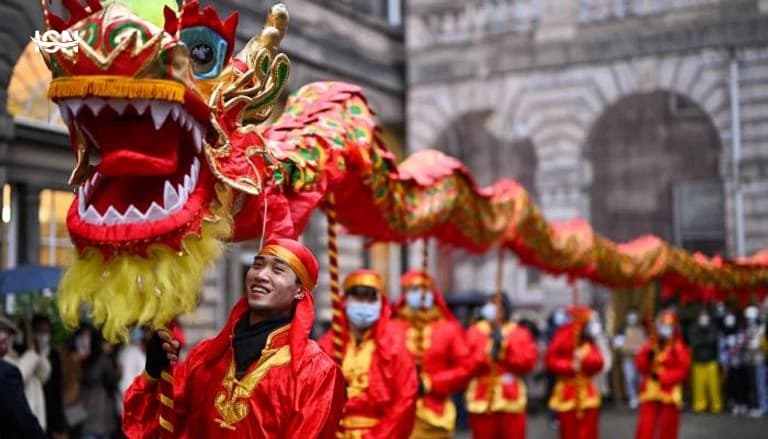
In these countries, Spring Festival is a massive national occasion, with preparations beginning in late January until mid-February, according to the lunar calendar. Highlights of global celebrations: Singapore and Chinatown in London. Singapore is one of the major global centers for celebrating the Chinese New Year. Its streets, especially Chinatown, witness spectacular dragon and lion dances and huge food festivals following New Year traditions. In the West, London, particularly Chinatown in the city center, hosts the largest outdoor Spring Festival celebration outside of Asia. There, you can see massive parades and dragon and lion dances that attract tourists from all over, reflecting the Chinese communities' adherence to New Year's traditions. These global celebrations confirm the depth of Chinese culture and its ability to endure and renew across continents, transforming the lunar calendar into a celebration awaited by millions around the world. These global gatherings show that the Chinese New Year, with its lunar festival and symbolic Chinese zodiac signs, is a celebration that transcends geographical borders.
Lantern Festival: Conclusion of Celebrations
Although lanterns in the past served to guide people at night, today they symbolize liberation from the past and welcoming a new year full of light and prosperity. These rituals make the Lantern Festival a stunning visual conclusion to the Lunar New Year celebrations. The Lantern Festival is incomplete without eating sticky rice balls known as tangyuan. These round balls symbolize reunion and complete family unity. With this sweet dish, the Spring Festival celebrations officially conclude, and a new life cycle begins according to the Chinese calendar.
Comparison between the Chinese calendar systems: lunar and solar
This overlap is why the Chinese New Year is also called the Lunar New Year and Spring Festival. Property Lunar Calendar (Chinese New Year) Solar Calendar (Agricultural Spring Festival) Common Name Chinese New Year / Spring Festival (Lunar New Year) Lichun (Beginning of Spring) Start Date First new moon day (usually between late January and mid-February) Fixed day approximately (around February 4) Symbolism Family celebrations, Chinese zodiac, warding off evil Beginning of agricultural season and growth Duration 15 days (until Lantern Festival) One day Although we focus on Chinese New Year as a lunar event following the first lunar month, the seasonal nature and spring manifestations play a significant role in the naming. This period represents a real transition from the cold winter to warmth and growth, inviting optimism and the beginning of a new life cycle in Chinese culture. This timing links old legends, like the story of the emperor who united the zodiacs, with the practical need for farmers in China to begin the planting season.
Summary and learned lessons
Focus is placed on hope for a prosperous new year filled with good luck, under the protection of warm red and family warmth, traditions long established. These celebrations are embodied in a series of extended rituals starting on New Year's Eve (Chuxi) and continuing for fifteen days. This auspicious period officially concludes with the Lantern Festival, during which glowing lanterns are released, symbolizing the end of the celebrations and the beginning of a new lunar cycle, highlighting the importance of the lunar calendar in determining dates. The Chinese New Year is a celebration of time and history, family and community. It is a constant reminder that traditions are the bridge connecting us to our past and lighting the way toward the future.
Frequently Asked Questions about Chinese New Year
This date is determined based on the Chinese lunar calendar, so it always falls between late January and mid-February. This day marks the beginning of a new cycle of the Chinese zodiac. What are the most important traditions on Chinese New Year's Eve? The main celebrations are centered on Chinese New Year's Eve, known as "Chuxi." The most important of these traditions are: Family Reunion Dinner (Chuxi): It is the most important meal of the year, where all generations of the family gather. Red Envelopes: The exchange of red envelopes (Hongbao), which symbolize good luck and money, is distributed to children and the elderly. Fireworks: Loud fireworks are extensively set off to ward off evil spirits and bring good luck for the new year. How many animals are in the Chinese zodiac? The Chinese zodiac consists of a complete cycle of 12 years, with each year representing a different animal. This cycle is inspired by the myth of the "Heavenly Emperor's Race." The twelve animals include (in order): Rat, Ox, Tiger, Rabbit, Dragon, Snake, Horse, Goat, Monkey, Rooster, Dog, and Pig. The year 2026, for example, is the Year of the Horse. What is the Lantern Festival? The Lantern Festival officially concludes the Spring Festival celebrations. It is held on the fifteenth day of the first lunar month. This day is marked by the display of illuminated lanterns, solving riddles written on them, and eating sticky rice balls "Tangyuan" which symbolize family unity and perfection. Is the Spring Festival celebrated in countries other than China? Yes, the Lunar New Year is widely celebrated around the world, especially in regions with large Chinese communities. The Asian countries that primarily celebrate it include Singapore, Malaysia, Indonesia, Thailand, and Cambodia. Western cities such as London also witness massive celebrations in Chinatown areas.