ancient Egyptian language
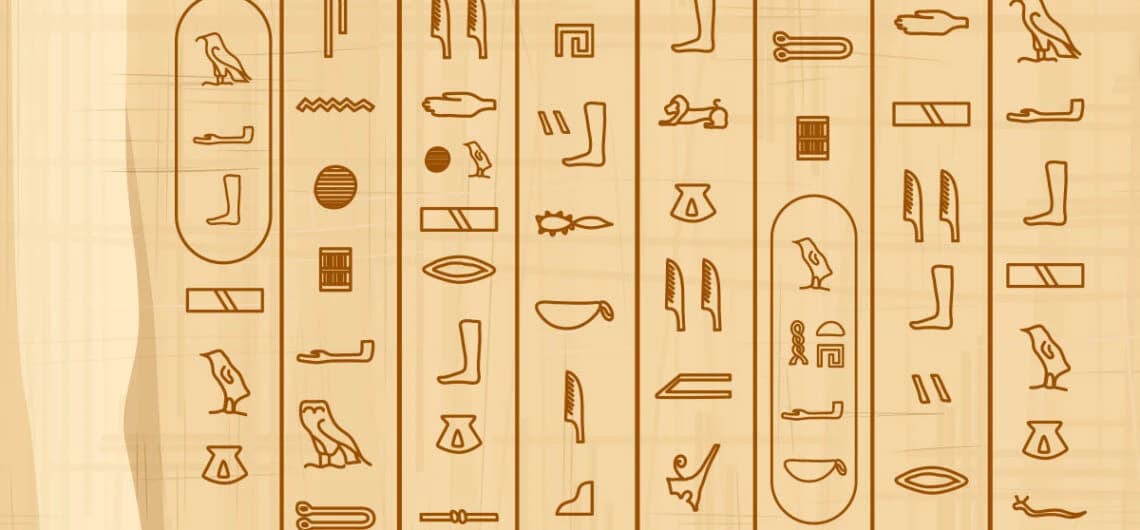
Stages of development of the ancient Egyptian language
Ancient Egyptian is one of the oldest written languages in the world, dating back to the late 4th millennium BC. This language belongs to the Afro-Asiatic language family and developed through multiple stages over more than 4,000 years, making it the longest documented language in history. Stages of the Development of Ancient Egyptian Old Egyptian (c. 3300–2100 BC): It appeared in the late Predynastic period and was written using hieroglyphs, which used pictographic symbols to record language. Middle Egyptian (c. 2100–1600 BC): Considered the "classical language" of ancient Egyptian literature, it was used in religious and literary texts during the Middle Kingdom. Modern Egyptian (c. 1600–700 BC): This language saw developments in grammar and vocabulary, and was used in daily life and administrative documents. Demotic (c. 650 BC–5th century AD): A simplified script developed from hieratic, used in legal and literary documents, and written from right to left. Coptic (from the 3rd century AD): The final stage of the Egyptian language's development, it was written using Greek letters with some demotic symbols and is still used as the liturgical language of the Coptic Church. Writing Systems The ancient Egyptians used several writing systems to record their language: Hieroglyphics: The formal script used for religious inscriptions and monuments. Hieratic: A simplified version of hieroglyphs, used for everyday writing and literary texts. Demotic: A more simplified script used for administrative and legal documents. Coptic: Greek letters with some demotic symbols were used and written from left to right. Deciphering the Language The ancient Egyptian language remained incomprehensible until the discovery of the Rosetta Stone in 1799, which contained texts in three languages: hieroglyphs, demotic, and Greek. In 1822, the French scholar Jean-François Champollion was able to decipher hieroglyphs using his knowledge of the Coptic language, opening the door to a deeper understanding of ancient Egyptian civilization. How were they pronounced? Since no sounds are recorded in hieroglyphic writing, knowledge of the precise pronunciation of ancient Egyptian relies on comparative studies with Coptic and some other Semitic languages. These studies are used to reconstruct the approximate pronunciation of words.