App Logo

Download Our App

Shop your way

logologo
Image

Clear Writing for Busy Global Teams

06/19/2026By: ICN Writer
Clear Writing for Busy Global Teams

Why clarity beats cleverness

In global teams, writing is often the main channel for decisions, updates, and handoffs. When messages try to sound impressive, they usually become longer, less direct, and easier to misread—especially for colleagues working in a second language. Clarity is not about simplifying ideas; it is about removing avoidable friction. A clear message lets readers understand what happened, what matters, and what to do next without guessing. Clarity also reduces hidden costs. A vague status update can trigger multiple follow-up questions, extra meetings, and duplicated work. A confusing request can lead to the wrong deliverable, missed deadlines, or inconsistent quality. In distributed settings, these issues compound because people are in different time zones and cannot quickly clarify in real time. Clear writing is a productivity tool: it shortens cycles, improves accountability, and creates a reliable record of decisions. A practical mindset is to write for the busiest reader. Assume the reader will scan on a phone between calls, may not share your context, and may interpret words differently due to language background. If the message still works under those conditions, it will work in most situations. That is the standard global teams should aim for.

Structure messages for scanning

Busy teams do not read; they scan. A scan-friendly structure makes the key information visible in seconds. Start with the outcome or purpose in the first line: “Decision needed: approve vendor A by Thursday” or “Update: API latency improved to 180ms.” This immediately tells the reader how to prioritize the message. Use a predictable layout. For updates, a simple template works across functions: Context (one sentence), Current status (one sentence), Risks or blockers (bullets), Next steps (bullets with owners and dates). For requests, state the ask, the deadline, and the constraints. For decisions, list options, trade-offs, and your recommendation. Consistency matters because it reduces cognitive load; readers learn where to look for what. Formatting is part of communication, not decoration. Short paragraphs, informative headings, and bullet points help non-native readers. Avoid long chains of clauses and avoid burying the action in the middle of a paragraph. If you must include detail, separate it under “Details” or “Background” so the main thread stays clean. A good test is whether someone can summarize your message after a 20-second scan. If they cannot, restructure it.

Choose words that travel well

Some words do not travel well across cultures and proficiency levels. Idioms, sarcasm, and local references can confuse readers who interpret language literally. Phrases like “let’s touch base,” “ballpark,” or “this is a no-brainer” may be common in one office and meaningless in another. Replace them with direct alternatives: “let’s meet for 15 minutes,” “rough estimate,” or “this is straightforward because…”. Prefer concrete nouns and verbs over abstract wording. “We need alignment” is vague; “we need agreement on the launch date and the rollback plan” is specific. Avoid stacked synonyms and filler such as “basically,” “kind of,” or “in terms of.” These add length without adding meaning. When you must use a technical term, define it once in plain language and then use it consistently. Be careful with tone markers. In some cultures, direct requests are normal; in others, they can feel abrupt. You can keep clarity while staying respectful by using simple courtesy: “Please,” “Could you,” and “Thank you,” combined with a clear deadline. Also avoid all-caps, excessive exclamation points, or ambiguous humor. The goal is a message that cannot be misread as dismissive or unclear. Finally, standardize key terms for your team. If “release,” “deploy,” and “launch” mean different things, document the definitions. Shared vocabulary is one of the fastest ways to reduce confusion in multilingual environments.

Make action and ownership explicit

Many misunderstandings are not about language proficiency; they are about unclear ownership. A message can be grammatically perfect and still fail if it does not specify who does what by when. Global teams need explicit action lines. Instead of “Can we review this soon?” write “Sara: please review the draft by Wednesday 16:00 UTC and comment in the document.” Use a simple action format: Owner + task + deadline + location. The “location” can be a link, a ticket number, or a folder path. This reduces back-and-forth and prevents tasks from disappearing in long threads. If multiple people are involved, separate responsibilities: “Ahmed approves budget,” “Lina updates the slide deck,” “Team leads confirm staffing.” Also clarify what “done” means. For example, “Finalize the FAQ” can mean proofreading, legal review, or publishing. Define completion criteria: “FAQ is done when it includes 10 customer questions, has product approval, and is published on the help center.” This is especially important when teams have different quality standards or different assumptions about process. When you cannot assign a single owner, state the decision rule: “If no objections by Friday 12:00 UTC, we proceed with option B.” This creates a clear path forward and respects time zones by giving a predictable window for feedback.

bookmark

A useful team habit is to maintain a shared “writing bookmark” that captures the standards everyone agrees to follow. This is not a long style guide; it is a one-page reference that people can check before sending important messages. It typically includes the team’s preferred templates, examples of good requests, and a short list of words to avoid because they cause confusion. Include a section on time zones and dates. Global teams frequently misread “next Friday” or numeric dates like 03/04. The bookmark should require ISO-style dates (2026-06-18) or writing the month in words, plus a time zone label (UTC, GMT+3, etc.). It should also recommend stating the time window for responses when decisions are time-sensitive. Add a checklist for high-impact communication: purpose in the first line, one clear ask, owner and deadline, links to source material, and a summary of risks. If the message is long, the checklist should require a two-line summary at the top. Over time, this bookmark becomes part of onboarding and reduces inconsistency when new members join. The key is enforcement through culture, not policing. Encourage colleagues to reply with a friendly prompt like “Can you add owner and deadline?” or “Which time zone is this?” When the team treats clarity as a shared standard, writing quality improves quickly without extra meetings.

Measure and improve over time

Clear writing can be improved like any operational process. Start by identifying where confusion shows up: repeated questions in threads, frequent rework, or decisions that get revisited because the rationale was not recorded. These are signals that messages lack structure, context, or explicit ownership. Introduce lightweight metrics that do not create bureaucracy. For example: average number of clarification replies on requests, time from request to first actionable response, or percentage of tasks that include owner and deadline in the first message. Review a small sample of messages monthly and note patterns. The goal is not to grade individuals; it is to improve team habits. Training does not need to be formal. A 30-minute internal session can cover templates, examples, and common pitfalls. Pair this with a shared library of “good messages” that new members can copy. Encourage editing before sending: read once for meaning, once for action, and once for tone. If your tools support it, use writing aids for spelling and grammar, but do not rely on them to fix unclear thinking. Over time, the payoff is measurable: fewer meetings to clarify, faster execution, and more consistent outcomes across regions. In global teams, clear writing is not a soft skill; it is infrastructure for reliable collaboration.
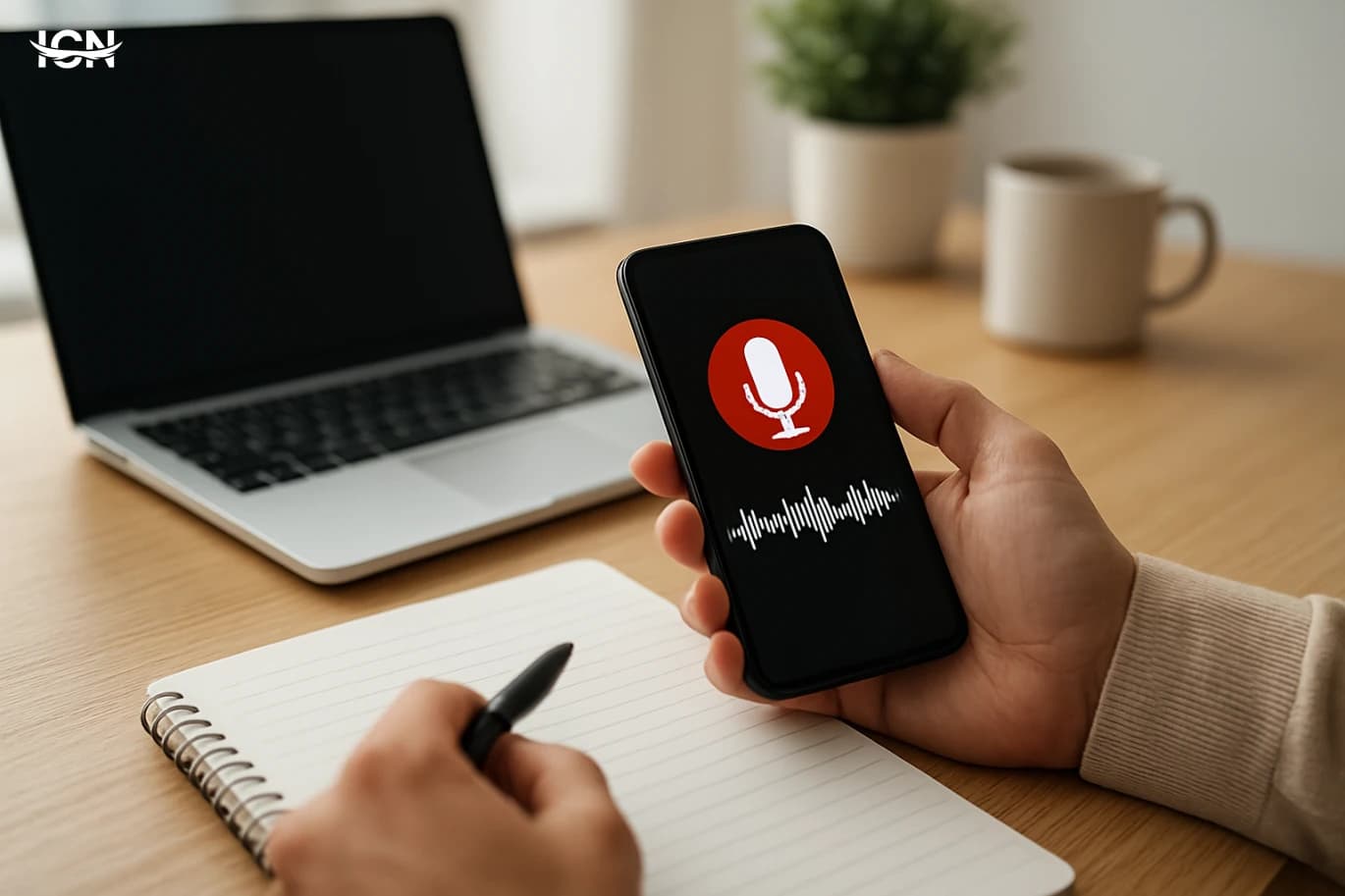

* All articles published on this blog are sourced from various websites and are provided for informational purposes only. They should not be considered as confirmed studies or accurate information. Please verify the information independently before relying on it.

Similar ARTICLES

Writing Clear Voice Notes That Get Results
Voice notes are popular because they feel quick, but in group chats and fast-moving work threads they often create friction. The listener has to stop what they are doing, find a quiet moment, and replay parts to catch details. Unlike text, audio is hard to scan, search, or quote, so a single unclear message can trigger multiple follow-up questions and slow a decision. Common failure points are predictable: the speaker starts without context, uses vague references like “that thing” or “the file,” and mixes several topics in one recording. Another issue is timing. A 90-second note sent during a meeting or commute can be effectively unreadable for hours, even if it was “faster” to send. Clear voice notes are not about sounding polished; they are about packaging information so it can be understood on the first listen.
Clear Writing for Busy Workplace Messages
Most workplace communication now happens in short written bursts: chat threads, quick emails, ticket comments, and meeting notes. These channels are fast, but they also remove tone of voice and immediate context. A message that feels “obvious” to the sender can be unclear to a reader who is juggling multiple projects, time zones, and priorities. The result is not only confusion, but extra follow-up questions, duplicated work, and missed deadlines. Common failure points are predictable. People mix several requests in one paragraph, assume shared knowledge that is not actually shared, or bury the decision in the middle of a long explanation. Another frequent issue is vague timing: “soon,” “end of day,” or “ASAP” mean different things to different teams. Even small wording choices matter; a sentence like “Can you look at this?” does not specify whether the reader should review, approve, edit, or simply acknowledge. Clear writing is not about sounding formal. It is about making the next action easy to understand and easy to complete. When messages are structured for speed and clarity, teams spend less time decoding and more time delivering work.
Clear Writing for Busy Workplace Messages
Workplace communication now happens in short bursts: chat threads, quick emails, task comments, and meeting follow-ups. The pressure to reply fast often produces vague notes that create extra questions, duplicated work, and missed deadlines. Clarity is not about writing longer messages; it is about making the next action obvious. A clear message answers three basics: what happened or what is needed, who owns the next step, and when it should be done. When any of these are missing, the recipient must guess, and guessing is where delays begin. Clarity also protects tone. Short messages can sound abrupt even when the sender is neutral. Adding one line that states intent, such as “Sharing this so we can finalize today,” reduces misinterpretation. In distributed teams, clarity matters even more because people read messages at different times and cannot immediately ask for context. A well-structured message becomes a mini-record that others can rely on later. This topic focuses on practical writing habits for everyday workplace messages. The goal is to reduce back-and-forth, speed up decisions, and keep communication professional without sounding stiff. The techniques apply to internal chats, email, and project tools, and they work across roles from individual contributors to managers.
Clear Writing for Busy Teams
In most workplaces, writing is the main way decisions move forward: emails, tickets, chat threads, briefs, and meeting notes. The problem is that many messages are written as if the reader has unlimited time and full context. Clarity is not about sounding simple; it is about reducing the effort required to understand, respond, and act. When a message is unclear, the cost shows up as follow-up questions, duplicated work, and delayed approvals. A clear message typically answers four questions early: What is this about, what do you need from me, when do you need it, and where is the supporting information. This structure is especially important in cross-functional teams where people use different terminology. A product manager may say “scope,” a designer may say “flows,” and an engineer may say “requirements,” but the reader still needs a concrete request. Clarity also protects tone. Short, direct writing can feel harsh when it lacks context, while long writing can feel defensive when it repeats itself. The most reliable approach is to be specific: name the task, the owner, the deadline, and the expected output. That is the difference between “Can you take a look?” and “Please review the attached one-page brief and reply with approval or edits by 3 pm Thursday.”
Clear Writing for Busy Teams
In fast-moving workplaces, writing is often treated as a quick add-on: a message in a chat tool, a short email, a comment in a document. Yet these small texts drive decisions, schedules, and customer outcomes. Clarity matters because it reduces the time others spend interpreting what you meant, and it lowers the risk of people acting on different interpretations. A “clever” line that sounds smart but leaves room for doubt is expensive when it triggers follow-up questions, rework, or missed deadlines. Clear writing is not about sounding formal. It is about making the reader’s next step obvious. That means stating the purpose early, naming the owner of the action, and giving a concrete deadline or condition. When teams are busy, they do not have spare attention to infer context. A clear message is one that can be understood quickly by someone who was not in the meeting, joined the project late, or is reading on a phone between tasks. This topic is especially relevant for cross-functional teams where people bring different vocabularies. Engineers, designers, sales staff, and operations teams often use the same words differently. Clarity creates a shared surface: what is being asked, what “done” looks like, and what will happen next. The goal is not perfect grammar; it is predictable understanding.
Clear Writing for Busy Global Teams
In multilingual workplaces, the biggest communication failures rarely come from grammar mistakes. They come from messages that assume shared context, use vague verbs, or bury the decision in a long paragraph. Clear writing is not “simpler English”; it is decision-friendly writing that helps readers act quickly. When teams span time zones, a message often replaces a meeting, so the text must carry the full load: what happened, what is needed, who owns it, and by when. Clarity also reduces rework. If a project update does not specify the scope, the audience may interpret it differently and proceed in parallel with conflicting assumptions. That can create duplicate work, inconsistent customer responses, or mismatched deliverables. A clear note makes fewer promises, uses measurable terms, and states constraints. It is not about sounding formal; it is about being unambiguous and easy to scan on a phone.
Clear Writing for Busy Workplace Messages
In most workplaces, messages are read between meetings, on phones, and under time pressure. That context rewards clarity, not clever wording. A clear message reduces follow-up questions, prevents duplicated work, and helps decisions move forward. It also protects relationships at work because misunderstandings often sound like disagreement when they are simply missing information. Clarity starts with a realistic goal: the reader should understand what you need, why it matters, and what happens next in under one minute. That does not mean writing less; it means writing only what the reader needs to act. When you write with the reader’s constraints in mind, you naturally choose simpler words, shorter sentences, and a structure that makes scanning easy.
Clear Writing for Busy Teams
In fast-moving workplaces, most writing is read between meetings, on phones, and under time pressure. That reality changes what “good writing” means. A clever phrase or a long build-up can hide the point and force readers to re-read. Clear writing, by contrast, reduces follow-up questions, speeds decisions, and prevents small misunderstandings from turning into delays. It also makes collaboration easier across roles: a designer, analyst, and manager can all act on the same message when the intent is explicit. Clarity is not about sounding simple; it is about being unambiguous. A clear message states what is happening, what is needed, and by when, using concrete nouns and verbs. It avoids vague qualifiers like “soon,” “a bit,” or “asap,” and replaces them with measurable details such as dates, owners, and next steps. When teams adopt clarity as a default, they spend less time interpreting tone and more time executing work.
Clear Writing for Global Teams
Global teams rarely struggle because people lack expertise; they struggle because messages arrive with missing context. A short note like “Can you handle this today?” can sound like a polite request in one workplace and an urgent demand in another. Time zones add pressure, but the bigger issue is that readers interpret tone, urgency, and ownership differently when they cannot hear your voice. Clarity fails most often in three places: implied priorities, undefined terms, and hidden assumptions. “ASAP” might mean within an hour to a customer-support lead and within a day to an engineering manager. Words such as “review,” “approve,” and “sign off” can describe different steps in different organizations. Even simple references like “the report” can be unclear when multiple reports exist. The cost is measurable. Teams lose hours in follow-up questions, duplicate work, and delayed decisions. Misunderstandings also reduce trust: people start to read neutral messages as criticism or avoidance. Clear writing is not a style preference; it is an operational skill that reduces rework and keeps projects moving.
Clearer Meetings for Multilingual Teams
Multilingual meetings often fail for reasons that have little to do with expertise and a lot to do with how information travels. The first issue is speed: fluent speakers fill silence quickly, while others translate internally before they respond, so the discussion appears to “agree” before everyone has processed the point. A second issue is vocabulary mismatch. Teams may share English as a working language, yet use different industry terms, regional phrases, or acronyms that sound familiar but carry different meanings. A third issue is structure. When agendas are vague, participants rely on improvisation, which increases the burden on non-native speakers who need predictable turns and clear context. Finally, many teams confuse “understanding the words” with “understanding the decision.” People may follow the conversation but miss the exact action, owner, deadline, or success criteria. These problems compound over time, creating rework, duplicated tasks, and quiet disengagement. The good news is that small, repeatable communication habits can reduce these failures without slowing the team down.
Clear Writing for Busy Teams
In fast-moving workplaces, writing is often treated as a quick afterthought: a message sent between meetings, a document drafted late at night, or a comment added to a ticket. The result is predictable—people interpret the same sentence in different ways, tasks get duplicated, and decisions have to be re-litigated in yet another call. Clear writing reduces this friction because it makes intent, scope, and next steps visible without requiring extra context. Clarity is not about sounding formal or using complex vocabulary. It is about making the reader’s job easy: they should understand what you want, why it matters, and what to do next in one pass. Teams that prioritize clarity tend to move faster because they spend less time decoding messages and more time executing. They also build trust, since clear writing signals that the sender respects the reader’s time and is willing to be accountable for specifics.
Clear Writing for Multilingual Teams
Multilingual teams rarely struggle with vocabulary alone; they struggle with hidden assumptions. A short message like “Please review this soon” can sound polite in one culture and vague or urgent in another. Ambiguous timing words (soon, ASAP, end of day) and softeners (maybe, kind of, just) create different interpretations depending on the reader’s language habits. Even sentence structure matters: some readers expect the main point first, while others look for context before the request. Clarity also breaks down when writers rely on local idioms, sports references, or workplace slang. Phrases such as “let’s circle back” or “this is a quick win” may be familiar to native speakers but confusing to others, especially when translated. Another common issue is dense paragraphs that mix decisions, background, and action items. When readers must decode meaning in a second language, they need a message that separates facts from opinions and tasks from commentary. This topic focuses on practical writing choices that reduce misinterpretation without making communication cold. The goal is not to simplify ideas, but to make intent, timing, and responsibility unmistakable for readers with different language strengths.
Clear Writing for Busy Teams
In fast-moving workplaces, writing is often the main way decisions travel: emails, chat threads, tickets, and short documents. When messages are vague or overly clever, teams spend time guessing intent, repeating questions, and redoing work. Clarity is not about sounding formal; it is about reducing the number of interpretations a reader can reasonably make. A clear message states the purpose early, uses familiar words, and makes the next step obvious. Clarity also protects attention. Most readers scan before they commit. If the first lines do not answer “What is this about?” and “What do you need from me?”, the message gets postponed or misunderstood. Good writing respects the reader’s limited time by front-loading the point, separating facts from opinions, and avoiding unnecessary background. This is especially important in cross-functional teams where people do not share the same vocabulary. Finally, clear writing improves accountability. When responsibilities, deadlines, and decision owners are written down in plain language, it is easier to track progress and resolve disagreements. The goal is not perfection; it is a shared understanding that survives busy schedules, time zones, and handoffs.
By clicking the SUBSCRIBE button, you are agreeing to our Privacy & Cookie Policy If you want to unsubsribe the marketing email, please proceed to our privacy center.
© 2005-2026 ICN. All Rights Reserved.