Sumerian language
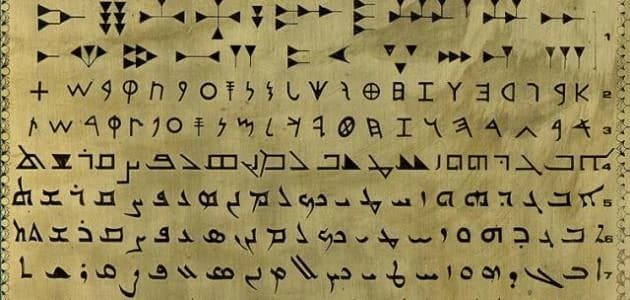
An overview of the Sumerian language
An Overview of the Sumerian Language The oldest known written language: Sumerian was the first language to appear in written circles, first appearing in southern Mesopotamia (present-day southern Iraq) around 3100 BC. Language Isolate: It is not related to any known language family, making it completely unique among ancient languages. Historical Periods of Development: Archaic Sumerian: from about 3100 to 2500 BC Classical: from about 2500 to 2300 BC New Sumerian: after the fall of Sumer to about 2000 BC Post-Sumerian: continued as a literary and ceremonial language until about the first century AD Writing System: Cuneiform Origin of Writing: Writing originated as pictograms and then evolved into a cuneiform system using symbols on clay with a reed stylus. Components of the writing system: Logograms: Represent whole words. Phonograms: Represent phonemes. Determinatives: Indicate the type of word, such as a human or plant entity. Number of symbols: Initially, it contained about 1,000 symbols, then decreased to about 400–600 in later periods. Writing features: Polyphony: The same symbol can be read with different phonemes (such as DU, which is read as "du," "ra₂," or "ša₄"). World History Encyclopedia Possibility of accent or missing final sound: Some researchers suggest that the system represented accents or differences between words with a final sound that was not written. Usage and linguistic structures Syntax: Follows a subject–object–verb (SOV) system. Agglutinative language, where prefixes and suffixes are attached to a fixed root to form new words. Practical importance: It was used in administrative, legal, religious, and economic writing. There are over 100,000 Sumerian manuscripts dating back to the third millennium BC alone. The Language After Its Extinction After about 2000 BC, Akkadian replaced Sumerian as the spoken language, but it continued as a sacred, literary, and scientific language for centuries. In the seventh century BC, the Assyrian king Ashurbanipal was able to read Sumerian fluently, and in the Hellenistic period, Sumerian texts sometimes appeared in Greek letters! A Great Literary and Cultural Heritage The Oldest Written Literature: Sumerian literary works include the earliest immortal texts in history, such as the Epic of Gilgamesh (later in its Sumerian and Akkadian versions), mythological texts, hymns, proverbs, and religious texts. These texts have received great academic interest, having been used as teaching materials in the schools of ancient Sumer and Babylon. In conclusion, the Sumerian language is not just an ancient extinct language; it is a unique window into the birth of writing, civilization, and human culture. Most of its secrets are still being discovered and interpreted through the clay tablets carved over thousands of years.