
Download Our App
Shop your way




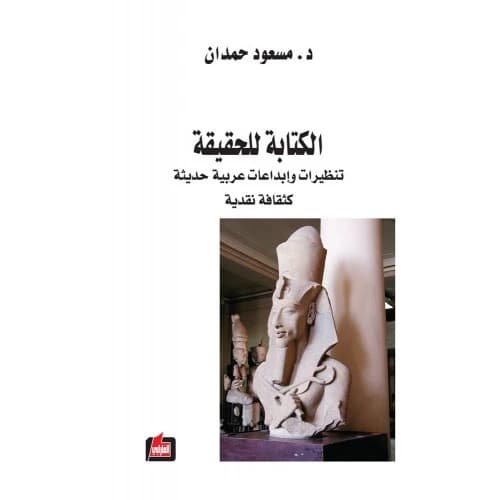
Writing for the Truth by Masoud Hamdan
JOD

Get it by 5 Aug | Order in 3 Hours 35 Minutes
- Return Policy
- Warranty Policy
- Shipping Policy
- Non contact delivery
- Personal Receipt
- Return Policy
- Warranty Policy
- Shipping Policy
- Non contact delivery
- Personal Receipt
The quest for truth is not merely a guise for the will to power, but rather a vigorous removing of masks, an uncovered revelation, and a bold act of delegitimizing the essence of hypocrisy. Wasn't this the crowning jewel in Nietzsche's unique and unmatched project? According to him, wasn't it the will to truth—not the will to power—that fueled his comprehensive uncovering of deeply rooted phenomena in human action? Nietzsche shook the edifice of hypocrisy from Socrates to Kant. Yet, he laid down dangerous foundations that legitimize an unruly force, unchecked except by adorning itself with the mask of truth, which Nietzsche himself relentlessly sought to tear apart. Since the will to power is, in his view, the core essence of existence, why do its proponents throughout history persist in masking it with its opposite? Doesn't this serve as undeniable evidence that people swept up in the currents of will to power understand that the will to truth serves as a compass for both the drowning and those fearful of drowning? This book forms another facet of the coin of cultural critique, influenced by one of its prominent practitioners in the Arab world, Abdullah Al-Ghadhami. Cultural critique cannot be limited to exposing old hidden patterns; it must seek out new frameworks that oppose the old accepted norms. The creative cultural discourse can fulfill an extremely significant function by contrasting sharply with the prevailing political or social discourse. The arts, unmistakably, play a role in shattering old concepts, forms, and assumptions. Poetry, prose, television drama, caricatures, theater, and cinema all serve as creative spaces that question and reshape individual and collective identities anew. I aimed to embody this truth in this book by analyzing the works of Arab creators from the Levant (Syria, Lebanon, Palestine), as it is a cultural unit with generally similar features, even if political divisions old and new have succeeded in distancing the idea of this cultural unity from minds. The various artistic genres presented here form creative dialogues that challenge prevailing ideological, political, historical, and literary discourses by reconstructing notions of self, others, and the world. With every budding bloom, the opportunity for renewal and rejuvenation remains open, creating a fragrance rising above the feet of oppression. This fragrance hides behind words, expressions, and claims, sometimes urging the passionate ambition to present it upfront and showcase its aroma to the public. As usual, it retreats behind those forms once more. This book is a mere intellectual experiment through which I sought to express what I believe to be the meanings of this scent, sometimes appearing as subtle hints and at other times as clear statements.
Publishing house: Dar Al-Farabi Publishing and Distribution
Number of Pages: 376
Year of publication: 2017







