
Download Our App
Shop your way




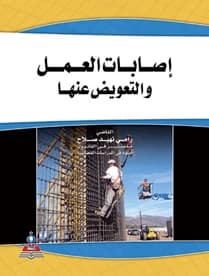
Work Injuries and Compensation: Judge Rami Nahid Salah
JOD

Get it by 5 Aug | Order in 3 Hours 49 Minutes
- Return Policy
- Warranty Policy
- Shipping Policy
- Non contact delivery
- Personal Receipt
- Return Policy
- Warranty Policy
- Shipping Policy
- Non contact delivery
- Personal Receipt
Industrial developments play a significant role in the evolution of modern nations. However, this progress has increased the risks workers face due to the inherent dangers of industry, including machinery, chemicals, and other hazardous materials. Although human intervention has decreased with the presence of machines, the risks to workers have grown, exposing them to dangers that cannot be attributed to the fault of a specific person, whether the worker, the employer, or their subordinates. A worker may suffer an injury at the time and place of work, or the injury may occur away from the workplace or outside of work hours but still be work-related. Therefore, it became necessary to provide protection for workers from the danger of these injuries.
Throughout history, the objective of legal rules has been to protect the weaker party. In the contractual relationship with an employer, the worker has consistently been the weaker party. The worker is bound to the employer by a contract, with their relationship governed by its terms and conditions according to the principle that 'the contract is the law of the parties.' However, legislators have intervened in this relationship by establishing minimum rights for workers, which constitute the employer's minimum obligations. Among these labor rights is the compensation a worker is entitled to in the event of a work injury.
The legal basis for compensation for work injuries has passed through various stages. Initially, compensation was based on the employer's tortious liability for personal fault. This later evolved into objective liability, which established the principle that the employer bears the responsibility for the risks created by the work. However, the compensation due under this principle has conditions and characteristics that differ from those for compensation for wrongful acts, although they share similarities in many aspects.
- ISBN: 9789957163655
- Weight: 0.600 kg
- Dimensions: 17×24 cm
- Paper Type: White
- Pages: 240
- Year of Publication: 2010
- Binding: Hardcover







