
Download Our App
Shop your way




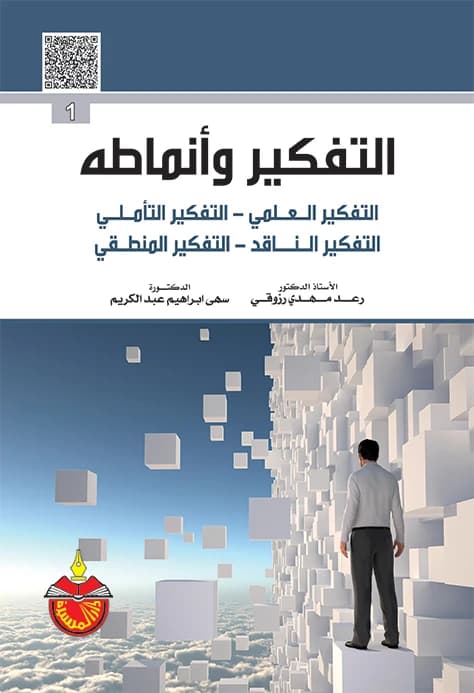
Thinking and Its Patterns - Raad Mahdi Rzouki - 2015
JOD

Get it by 5 Aug | Order in 5 Hours 20 Minutes
- Return Policy
- Warranty Policy
- Shipping Policy
- Non contact delivery
- Personal Receipt
- Return Policy
- Warranty Policy
- Shipping Policy
- Non contact delivery
- Personal Receipt
Most people agree that education for thinking or teaching thinking skills is an important goal of education. Schools should do everything they can to provide thinking opportunities for their students, and teachers want their students to progress and succeed. Many of them consider the task of developing each student's ability to think a primary educational goal. When formulating their educational objectives, they express their hopes and expectations in developing their students' readiness to effectively deal with the complex problems of life, both present and future.
However, the difference between what we say we want to achieve in our education and the actual outcomes of this education, as reflected in our students' experiences at various academic stages, is very large. Data and facts indicate that we graduate huge numbers of students whose experiences are primarily manifested in remembering and recalling information, while they noticeably lack the ability to use that information to arrive at informed choices, alternatives, or decisions.
Rigidity in opinion, even if the opinion is wrong or weak and not based on argument or logic, the insistence on giving easy answers to complex questions, the pursuit of certainty and a definitive answer, and the inability to deal with new problems, are in fact the products of an educational system that does not provide sufficient experience in thinking.
The competition between nations and peoples in the present and future is governed by the knowledge and technologies they produce in the various fields of human life. Some experts even believe that the world of the absurd we live in is shaped and defined by thinking and creative societies and minds. It is certain that these societies and minds place at the top of their priorities the development of the intellectual and creative elements of their children to the maximum possible extent by teaching different types of thinking with all necessary means.
- Number of Pages: 902
- Year of Publication: 2015
- Binding Type: Hardcover
- Edition Number: 1
- Printing Color: Black
- Dimensions (cm): 17x24
- Weight (kg): 1.600
- Barcode: 9789957970291







