
Download Our App
Shop your way




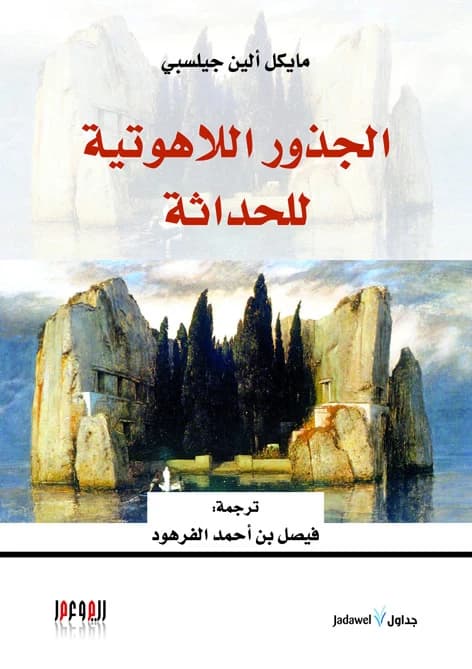
The Theological Roots of Modernity • Author: Michael Allen Gillespie • 2019
JOD

Get it by 5 Aug | Order in 3 Hours 13 Minutes
- Return Policy
- Warranty Policy
- Shipping Policy
- Non contact delivery
- Personal Receipt
- Return Policy
- Warranty Policy
- Shipping Policy
- Non contact delivery
- Personal Receipt
What if the last five centuries of religious wars and the tragedies left by the ambitions of secular states are a long story about the emergence of modernity? The first chapter began after a Sunday Mass in 'Avignon' that brought together William of Ockham, Francesco Petrarch, and Meister Eckhart. The three emerged with an alternative metaphysical view to 'scholastic realism,' laying the first brick of modernity through 'nominalism'.
What comes to mind when one hears the name 'modernity' is a worldly vision that neutralizes religion in the world, free from theology and uprooted from its religious origins. However, Michael Gillespie, by tracing the origins and history of modernity, sees the complete opposite. He believes that modernity has reached its current state due to its ability to include theology in its philosophical structure rather than neutralizing and separating it. He traces its origin from the nominalist revolution that stripped concepts of their concrete existence, through its battles with 'scholastic' currents and the era of human-centrism with Petrarch and William of Ockham, then the theology of fear with Hobbes, up to the secularism of the post-9/11 era.
This historical tracking of theology within the structure of modernity allows us to create a philosophical dialogue whose substance and result is that modernity is a series of religious interpretations that attempted to create a new, coherent metaphysics and theology to explain the world—far from religious text and nature, and closer to matter, the individual, and the human.
What we are living now, and have lived throughout the growth and maturation of modernity in past centuries, is a modernity less secular than we imagine, less free from religion and the religious absolute. It is, undoubtedly... a theological modernity par excellence.
- Author: Michael Allen Gillespie
- Translator: Faisal bin Ahmed Al-Farhoud
- Publisher: Jadawel for Publishing, Translation and Distribution - Beirut
- Year of Publication: 2019
- Number of Pages: 385
- Binding: Paperback
- ISBN: 786144183908







