
Download Our App
Shop your way




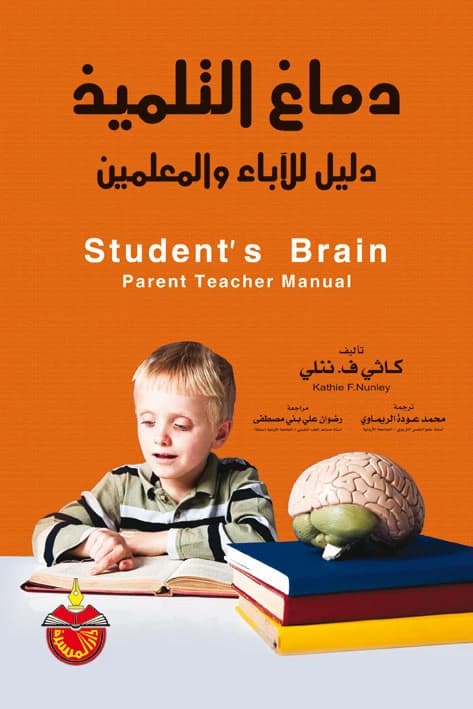
The Student's Brain: A Guide for Parents and Teachers - Mohammed Odeh Al-Rimawi
JOD

Get it by 5 Aug | Order in 5 Hours 12 Minutes
- Return Policy
- Warranty Policy
- Shipping Policy
- Non contact delivery
- Personal Receipt
- Return Policy
- Warranty Policy
- Shipping Policy
- Non contact delivery
- Personal Receipt
Presidential Proclamation 6158, announced by George H. W. Bush on July 17, 1990, stated: "The human brain, a three-pound mass of interwoven nerve cells that controls our activity, is one of the most magnificent and mysterious wonders of creation. It is the seat of human intelligence, the interpreter of our senses, and the controller of our movements. This miraculous organ continues to challenge scientists and the public alike."
A new era of discovery is dawning through brain research. Neuroscientists have mapped the brain's chemical network, bringing hope to those suffering from genetic neurological diseases and brain dysfunction disorders. This research may aid in the war on drugs and contribute to our growing understanding of Acquired Immunodeficiency Syndrome (AIDS).
Based on the results of brain research, the theory of brain-based learning emerged, which asserts that everyone learns, and emphasizes the need to create a learning environment that immerses the learner in the educational experience, frees them from fear, and allows for active processing. Knowing how the brain works strongly influences the quality of the most effective educational activities. People have suddenly become obsessed with the brain. Calls from many educational and cognitive psychologists have been made for neuroscience research to lead the teaching/learning process.
To increase public awareness of the benefits that can result from brain research, Congress declared the decade beginning on January 1, 1990, as the Decade of the Brain.
This book can be said to be part of the context of disseminating scientific culture about the brain. It serves as a guide for parents and teachers, providing them in simple language with what they need to know about their children's or students' brains. This book joins a series of impressive titles such as: The Amazing Brain (Ornstein), Inside the Brain (Kotulak), Teaching with the Brain in Mind (Jensen), How the Brain Learns (Sousa), and A Celebration of Neurons (Sylwester).
This book is distinguished by simplifying complex information and knowledge about the brain to make it accessible to the ordinary reader and by presenting clear, real-life applications.
Chapter One presents the basic structure of the brain and the function of the neuron. The author discusses the neuron at rest and in action, how it activates, and how information is transmitted electrically and chemically. It also covers caffeine addiction, hyperactivity, and attention deficit.
Chapter Two covers the lower brain as part of the central nervous system, the main neurotransmitters and their functions, and the spinal cord with its basic functions. It also presents the hindbrain, consisting of the medulla oblongata and pons, and the reticular activating system.
Chapter Three discusses the limbic system or reptilian brain. The author highlights the role of this system's components in education and learning, especially the roles of the thalamus, hypothalamus, amygdala, and hippocampus. It also points to the characteristics of the female brain and the adolescent brain.
To further understand the brain, Chapter Six is dedicated to the cerebral cortex and its four lobes: the occipital lobe responsible for visual images, the temporal lobe for hearing and spoken language production, the parietal lobe for bodily sensations, and finally the frontal lobe, which is unique to humans among animals, responsible for our decision-making, speech, problem-solving, and some memories.
Chapter Seven is devoted to reviewing the development of cerebral cortex cells, focusing particularly on neural pathways and single-cell dendrites, as well as cell decay or damage, and cell development and maintenance.
Chapter Eight discusses the growth of dendrites, how and when it occurs, highlighting the role of the sleep cycle in their development.
Synaptic pruning and rewiring throughout childhood and even adulthood is referred to as brain plasticity, reflecting how the brain constantly changes throughout our lives, shaped by our environment, thoughts, and emotions.
Chapter Nine deals with windows of opportunity, especially for language. For instance, the human brain needs to learn certain language patterns before the tenth or eleventh year of life, or it will not learn language afterward. Another window is for calculation and logical thinking, as the cerebral cortex tends to focus on the development of that region between birth and the age of four. Similarly, there are windows of opportunity for the development of large muscle movements and vocabulary.
Chapter Ten is dedicated to memory systems: short-term memory and long-term memory, as well as the retrieval process and types of memory: procedural memory, episodic memory, and semantic memory. It also presents problems with memory retrieval and their solutions, such as stress.
The author also discusses applications of brain research findings, such as classroom management, its methods, and the strategies of reward and punishment, concluding that punishment teaches fear, aggression, and avoidance. This is all covered in Chapter Four.
The second application is dedicated to the effect of substance use and misuse on the lower and reptilian (mid) brains. This includes topics like dopamine injection into the amygdala, the effect of alcohol on the brain and body, dopamine receptor sites, communication between cells, reuptake mechanisms, and pharmaceutical companies' manufacturing of neurotransmitters. This is all detailed in Chapter Five.
Chapter Eleven is devoted to answering questions the author believes are important to parents and teachers, such as: Is there really a difference between men's and women's brains? Do violent TV shows make children more prone to violence? Do they change their brains? Where is love located in the brain? Can IQ be raised? What are the reasons for the increasing number of patients with Asperger's syndrome and autism? What is dyslexia? How do we apply brain research findings in the classroom? The focus is on four issues: attention in the classroom, how to encourage students to use the higher brain regions, benefiting from our understanding of the reptilian brain's power, and finally, what to do about the development and plasticity of the cerebral cortex and how to help students develop neural dendrites. The author also presents the four pillars of the layered curriculum she advocates for, which is detailed in Appendix A.
- Number of Pages: 176
- Year of Publication: 2010
- Binding Type: Paperback
- Edition Number: 2
- Printing Color: Black
- Dimensions (cm): 17x24
- Weight (kg): 0.500
- Barcode: 9788957062811







