
Download Our App
Shop your way




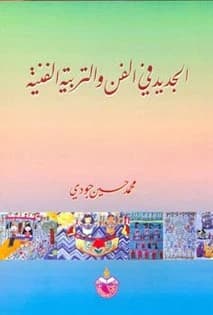
The New in Art and Art Education - Mohammed Hussein Joudi - 1999
JOD

Get it by 5 Aug | Order in 3 Hours 12 Minutes
- Return Policy
- Warranty Policy
- Shipping Policy
- Non contact delivery
- Personal Receipt
- Return Policy
- Warranty Policy
- Shipping Policy
- Non contact delivery
- Personal Receipt
Artistic talents and aptitudes emerge in an individual from a young age, growing and expanding as they mature and specialize. Some artistic talents are based on innate forces within a living being's nature, renewing with it in a multi-dimensional development, some of which is inherited. However, these talents often disappear due to adult intervention and other external influences that compel the individual to imitate and mimic, which then dominate their interests and freedom of expression, preventing them from properly and naturally investing in these God-given gifts. Sometimes, however, threads of these talents remain in some individuals, and a discerning teacher can discover them by deeply contemplating and studying children's drawings. Emphasizing talent is a unique aspect of an individual's personality, and the potential to develop and crystallize this talent begins at an early stage in childhood, the first phase of a child's growth in the talent of drawing. This talent develops spontaneously as the individual passes through various stages of growth, undergoing advanced mental processes. Modern psychology has proven that each individual has different ideas in drawing, and if we do not attend to the nature of these ideas and their transformations, we will inevitably fail to achieve the goals of art education. From this, it is apparent that learning art does not follow a fixed, unchangeable thought process, nor is it subject to a specific method, such as the visual-objective approach currently practiced in our schools at all levels. This method cannot preserve and nurture individuals' talents for innovation. The aim of this research is to form the individual's original artistic personality at an early stage, creating a new sense and conscience linked to their heritage and the culture of their Arab environment, thereby bestowing upon them a national identity and specificity so they feel their humanity. It would be highly beneficial for those concerned with art education and fine arts to combine their efforts to bring about change and find a new vision where the function of art in education shifts from a traditional role of representing nature to a creative, innovative one. This is the only hope that brings the individual closer to innovation and the best path to break free from the framework of traditional, realistic art, liberate oneself from its constraints, and emerge from the loss of personality that results from its mazes.
- Number of Pages: 120
- Year of Publication: 1999
- Binding Type: Paperback
- Edition Number: 2
- Printing Color: Black
- Size (cm): 17x24
- Weight (kg): 0.200
- Barcode: 9999999923852







