
Download Our App
Shop your way




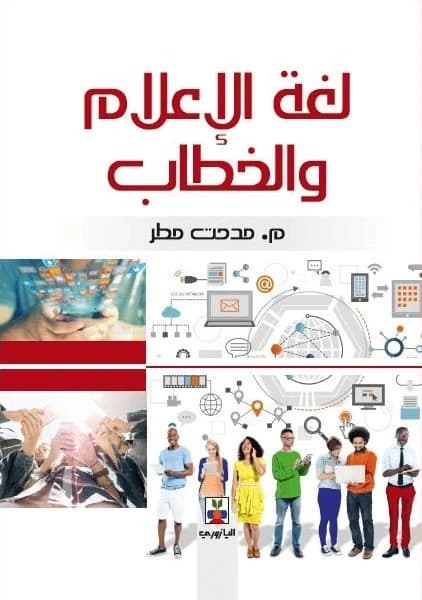
The Language of Media and Discourse - M. Medhat Matar
JOD

Get it by 5 Aug | Order in 3 Hours 49 Minutes
- Return Policy
- Warranty Policy
- Shipping Policy
- Non contact delivery
- Personal Receipt
- Return Policy
- Warranty Policy
- Shipping Policy
- Non contact delivery
- Personal Receipt
The topic of communication, in its broad and comprehensive sense, is the main starting point for a better understanding of the media's function in any society. Hence, discussing the relationship between macro-communication and micro-communication (media) is a necessary introduction to media studies. This can establish practical and methodological media applications that help new students find the optimal method for better media work.
The Concept of Communication: Communication is one of the oldest human activities. If any person is asked about their daily activities, their answer, regardless of their status, health, or financial conditions, will always revolve around receiving or sending communication through speech, sight, listening, reading, writing, or gestures. These are all communication activities between two parties: between the individual and others around them, between the individual and themselves, or between them and audio, visual, and print media. Media researcher George Lundberg says: 'The word communication is used to refer to interaction by means of signs and symbols. The symbols are usually movements, pictures, language, or anything that stimulates behavior.' The Egyptian researcher Mahmoud Ouda defines communication as 'the process or method by which ideas and information are transmitted among people in a social system, whether small or large.' Thus, communication represents the main process that carries within it sub-processes and various activities. It is an interaction with verbal and non-verbal, personal and impersonal symbols between two parties: a sender and a receiver, resulting in interaction and feedback, whether positive or negative.
Introduction: The communication process begins with the sender and ends with the receiver. Between the sender and the receiver, there is a message containing the sender's content or statement, which is transmitted through a medium that can reach the receiver. The media are numerous and varied, including verbal and non-verbal, personal and impersonal, direct and indirect. In all cases, the four basic elements of communication are the sender, the receiver, and between them, the message and the medium.
Theoretical Framework: Communication scholars divide the elements of communication into two models: the one-way model, such as Aristotle's model, which identifies three elements of communication: the sender, the message, and the receiver. David Berlo says there are four: the sender, the message, the medium, and the recipient. Harold Lasswell expands this to five elements, which answer five questions: Who? (Sender) - Says what? (Message) - In which channel? (Medium) - To whom? (Receiver) - With what effect? (Feedback or result). Shannon and Weaver, also communication scholars, add the measurement of the outcome against the intended goal of the communication process, determining the success of the communication by the extent to which it has achieved its set objectives for the individual or for any legal entity with its specific and monitored goals, whether small or large.
In two-way interactive models, which have become very important in the age of globalization, the internet, electronic journalism, widespread democracy, and the unipolar world order, feedback is monitored instantly. Communication plans are evaluated and adjusted, positively or negatively, based on measuring the feedback of the communication plan. This is especially important in mass media communication (radio, electronic and print press, and television). Here, the components of communication appear to have skill-based metrics for the sender, related to the social and cultural system within which the audience of receivers exists. It also relates to the effectiveness of these media in delivering the message and studying the reasons for shortcomings and failures to adjust the message's path and change the medium used to achieve the desired goals of the sender, whether an individual, a group, a party, a government, a state, or a system. This can be clarified when delving into the types of communication, which we will address in our study of the historical development of communication.
- Weight: 0.55 kg
- Dimensions: 17 × 24 cm
- ISBN: 978-9957-12-773-2







