
Download Our App
Shop your way




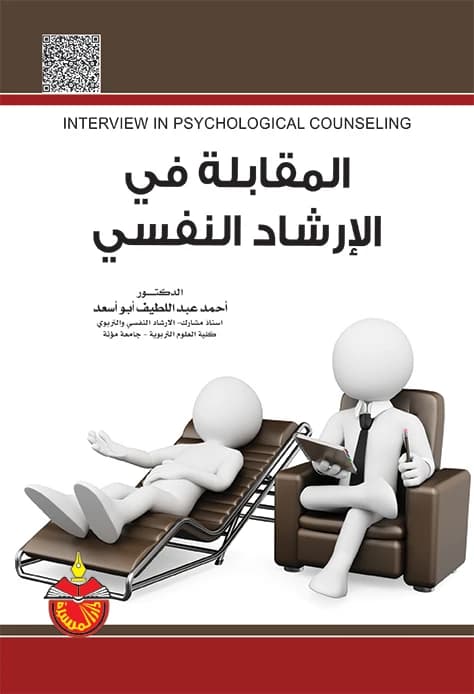
The Interview in Psychological Counseling - Ahmed Abdul Latif Abu Assad (2015)
JOD

Get it by 5 Aug | Order in 3 Hours 14 Minutes
- Return Policy
- Warranty Policy
- Shipping Policy
- Non contact delivery
- Personal Receipt
- Return Policy
- Warranty Policy
- Shipping Policy
- Non contact delivery
- Personal Receipt
Counseling continues to be a modern science experiencing increasing demand from society. Students are keen to study it, and the community has shown a greater willingness to seek out counselors. Their role is growing, their work is evolving, and their importance is becoming more apparent. Many officials are now convinced of the value of counseling and society's need for it, not as an additional service, but as an essential one for any institution, whether it be a school, college, university, hospital, bank, prison, factory, or even a home for the elderly. A counselor is not only qualified for school settings but can work in various fields.
The tasks of a counselor are numerous and diverse. They include conducting case studies, group counseling, and implementing procedural studies and research. However, it is widely agreed that the most crucial skill a counselor possesses is the ability to conduct an effective counseling interview. It is the key to a counselor's success; no counselor, however accomplished, can succeed without mastering this skill.
Through my supervisory visits to many schools and observing their individual and group interviews, I noticed a clear lack of these skills. In fact, some interviews seemed to worsen the situation. While teaching courses on counseling and mental health, I found that the counseling interview was one of the most difficult skills for students to learn. This led to the idea for this book, which is one of the few available on the subject, enriching the Arabic library with an essential resource on one of the counselor's most important tasks.
This book contains seventeen chapters, carefully selected to cover the most important aspects and skills of the counseling interview. The chapters are arranged sequentially to help the reader connect concepts and apply their learning. The book includes numerous diverse examples addressing various problems, both within and outside the school environment, to help readers better master the skills.
I believe the best way to benefit from this book is to apply these skills progressively in real life. Memorization or understanding alone is not enough; without practical application, mastering the art of the counseling interview will be difficult. I have also included practical models that can be used during counseling interviews.
- Number of Pages: 376
- Year of Publication: 2015
- Binding Type: Cardboard
- Edition Number: 1
- Printing Color: Black
- Dimensions (cm): 17x24
- Weight (kg): 0.700
- Barcode: 9789957970017







