
Download Our App
Shop your way




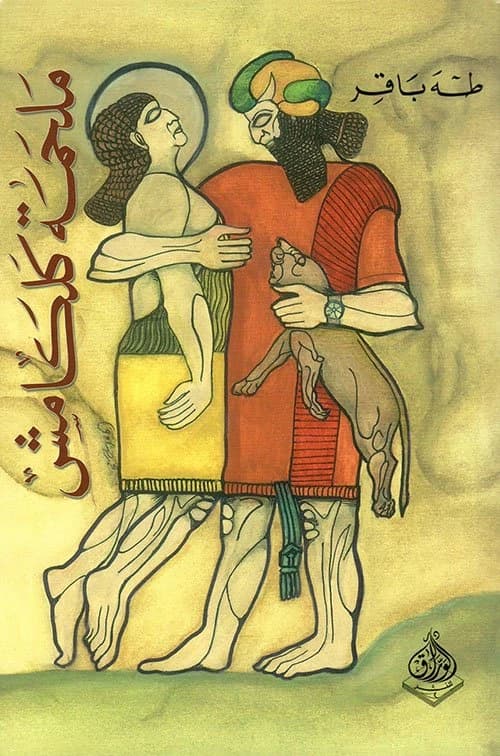
The Epic of Gilgamesh • Author: Taha Baqir • 2018
JOD

Get it by 5 Aug | Order in 5 Hours 11 Minutes
- Return Policy
- Warranty Policy
- Shipping Policy
- Non contact delivery
- Personal Receipt
- Return Policy
- Warranty Policy
- Shipping Policy
- Non contact delivery
- Personal Receipt
Researchers and historians agree that the oldest civilizations discovered by archaeology are those of Mesopotamia and the Nile Valley. They emerged and evolved from primitive stages in prehistoric times, reaching maturity by the late fourth millennium BCE. For this reason, some scholars refer to them as "original" or "authentic" civilizations.
Archaeological investigations into the remains of these two civilizations were accompanied by the deciphering of their writing systems: hieroglyphics in the Nile Valley and cuneiform in Mesopotamia. This enabled specialists to read the texts, which covered various branches of knowledge and aspects of life, including their sciences, knowledge, and literature. It was a source of great astonishment for researchers to find that these fields had reached an advanced level. They agree that the foundations of science, knowledge, and the principles of human literature were laid in these two civilizations more than five thousand years ago.
Hence the importance of the Epic of Gilgamesh. In it, as well as in other literary texts and themes from Mesopotamian civilization, researchers found astonishing things in the advanced level reached by its literature and the universal human themes it addressed. This will become clearer to the reader upon reading this epic.
The literary output of Mesopotamian civilization is of particular significance in the history of human literature, as it represents one of humanity's first attempts to express life and its value through imagination and art. Although these were the earliest attempts in the history of human literary development, the most wonderful and amazing thing an examiner of Mesopotamian literature finds is that, despite its great antiquity and its precedence over all world literature, it possesses the basic characteristics that distinguish mature world literature—whether in terms of styles and methods of expression, subject matter, or imagination and artistic imagery. The Epic of Gilgamesh is a prime example of this.
Therefore, despite nearly eighteen years having passed since its first edition, this epic continues to capture the interest of readers, young and old, due to its engaging narrative material and plot points. This has led to a renewed interest in printing it again, using a simplified and palatable Arabic style without neglecting the integrity of expression.
The author of this work discovered that parts of it were missing, especially a significant part of the first tablet which forms the epic's prologue. He has included fifty lines or verses of poetry that were omitted in previous editions, as well as other important parts from the sixth, seventh, and eighth tablets. This new material has been included as appendices in this edition. An important addition worth noting is the inclusion of the most famous stories and myths related to Gilgamesh, most of which were written in Sumerian. And because the flood story forms part of the epic (the eleventh tablet), the stories and myths related to the flood from the literary texts of Mesopotamian civilization have also been added.
- Author: Taha Baqir
- Publisher: Dar Al-Warraq Publishing - Beirut
- Edition Number: 5
- Year of Publication: 2018
- Number of Pages: 303
- Binding Type: Paperback
- ISBN: 9781900700429







