
Download Our App
Shop your way




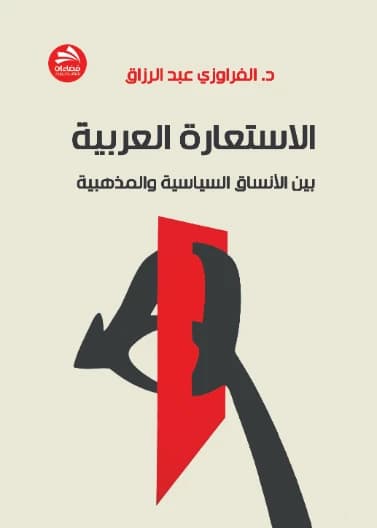
The Arabic Metaphor Between Political and Sectarian Systems - Abd al-Razzaq al-Farawzi
JOD

Get it by 5 Aug | Order in 3 Hours 9 Minutes
- Return Policy
- Warranty Policy
- Shipping Policy
- Non contact delivery
- Personal Receipt
- Return Policy
- Warranty Policy
- Shipping Policy
- Non contact delivery
- Personal Receipt
- Subject: Arabic Language and Literature
- Author: Abd al-Razzaq al-Farawzi
- Publisher: Fadaat Publishing
- Year of Publication: 2024
- Edition: First
- Number of Pages: 228
Despite the significant value that researchers, both past and present, have attributed to metaphor, it has not achieved unanimous agreement on its high status and symbolic importance. Anyone tracing the evolution of its concept will clearly notice its entanglement with logical premises, philosophical digressions, classifications, and extensive debates over verbal disputes. These were largely tied to the doctrinal and ideological conflicts that defined a historical era in the development of rhetorical studies, creating a wide chasm between differing factions.
This necessitates that today, in the process of building a new understanding, we move beyond these conflicts and disputes—or at least not allow them to direct our inquiry. They are the product of a historical period shaped by political and social conditions that no longer have a place in the contemporary intellectual landscape. We must instead view metaphor through the lens of its centrality in producing, reading, and understanding discourse. We should also re-examine the nature of its function, which most classical Arab rhetoricians confined to aesthetics and exaggeration, and incorporate other functions established by modern contexts, particularly cognitive theory, which treats metaphor as a conceptual structure. This approach helps to clarify its principles, resolve its issues, and re-establish its concept on foundations connected to cognitive and pragmatic dimensions.







