
Download Our App
Shop your way




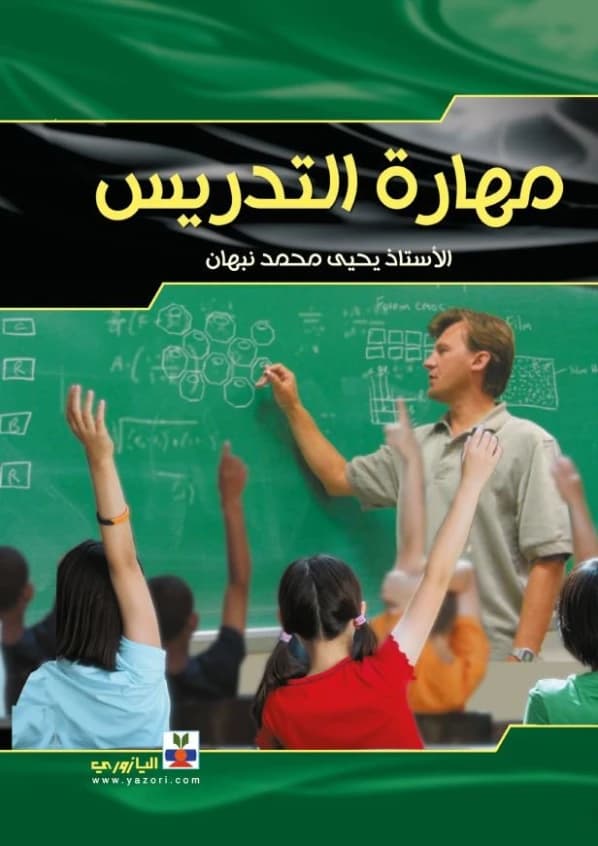
Teaching Skill - Dr. Yahya Mohammed Nabhan
JOD

Get it by 5 Aug | Order in 5 Hours 10 Minutes
- Return Policy
- Warranty Policy
- Shipping Policy
- Non contact delivery
- Personal Receipt
- Return Policy
- Warranty Policy
- Shipping Policy
- Non contact delivery
- Personal Receipt
In the last quarter of the twentieth century, higher education witnessed a radical transformation in teaching methods, education patterns, and fields. This development came in response to a range of challenges facing higher education, including the evolution of educational technologies, increased demand, the massive knowledge explosion, the emergence of economic blocs, globalization, and the growth of new industries. These factors have directed investment towards knowledge and scientific research, in addition to basing global economic competition on the productive capacity of human knowledge. Consequently, higher education is now required more than ever to invest in human potential to the fullest extent possible. This is achieved by developing human skills, creating new specializations that align with the demands of the era, and ensuring the graduation of human cadres equipped with the necessary skills to handle all the developments and changes of the modern age.
The end of the Cold War, the emergence of a new international order, and the focus of educators on research and development have led to linking education to the needs and interests of individuals to achieve growth and development. This has prompted educational institutions worldwide at all levels to reconsider the structure, curricula, and objectives of education. Higher education institutions, in particular, have taken the initiative to seriously review the functions of universities to produce outcomes that are consistent with the demands of the labor market and the desired economic, social, and political development.
One of the most prominent challenges of this era is the quality of higher education, which has become a significant issue for officials in these institutions. Many educational conferences at the global and regional levels have raised this topic to draw the serious attention of those in charge of education. The UNESCO World Conference on Higher Education in the Twenty-First Century emphasized what governments and educational institutions should do in this regard: pursue quality in everything, especially amidst the prevalence of quantity due to the enormous demand for higher education, while stressing the continuous need to develop the skills of higher education faculty both academically and professionally. (Abd al-Dayim, 2000, 223).
Since university education cannot face its challenges in isolation from faculty members, it has become necessary to work towards developing their skills in a way that enables them to perform their roles in line with the requirements of the era. This also involves enhancing their active role in achieving educational quality. Although the focus on preparing faculty members is not new, it has progressed very slowly and was initially confined mainly to American and British universities.
Interest in the university professor began in the nineteenth century, driven by developments in scientific, educational, and psychological fields, which led to the emergence of the need for academic preparation. (Klieber) pointed out that the primary factor for the low level of teaching in American universities is that the majority of faculty members were not specially prepared to undertake teaching tasks in universities. The interest in developing the skills of faculty members has gained significant attention in universities in America, Britain, Canada, France, and the Arab world, especially in the universities of the Gulf states, Egypt, Jordan, Algeria, and Iraq. (Morsi 2002, 48).
Therefore, the focus shifted towards developing the skills of individuals, as they are directly responsible for achieving quality in higher education. Edward Sallis says, "Investing in people is built on the experience of successful institutions, where it has been confirmed that a motivated and skilled workforce is crucial to their success. Investors in people provide a methodology for developing employees in ways that help achieve the institution's goals" (Sallis, 1999, 276).
From his perspective, the core elements that a university must achieve to become an investor in people are:
- A strong commitment to developing all employees to achieve the institution's objectives.
- A strategic plan that defines the institution's objectives and available resources, which should be well-assigned to employees to work towards achieving.
- Conducting periodic reviews of employee training and development on an ongoing basis.
- Evaluating the investment in training and development to review the effectiveness of the employee training and development process. (Ibid., 276)
Hence, this study aims to shed light on the importance of developing the competencies of faculty members and its impact on achieving quality in higher education. It also highlights the most important means and strategies that can be followed in this field, emphasizing the renewed and modern-era-compatible roles of faculty members, which should ultimately be reflected in the educational outcomes that determine the level of educational quality.
And success comes from God.
Weight: 0.65 kg
Dimensions: 17 x 24 cm
ISBN: 978-9957-12-099-3







