
Download Our App
Shop your way




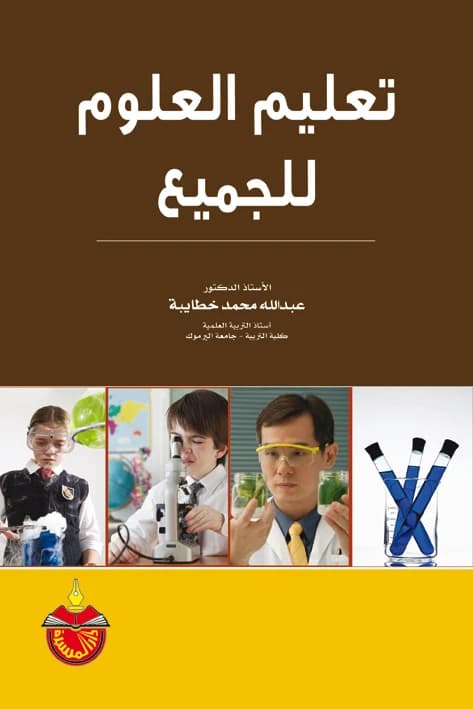
Teaching Science for All - Abdullah Mohammed Khataybeh - 2011
JOD

Get it by 5 Aug | Order in 3 Hours 58 Minutes
- Return Policy
- Warranty Policy
- Shipping Policy
- Non contact delivery
- Personal Receipt
- Return Policy
- Warranty Policy
- Shipping Policy
- Non contact delivery
- Personal Receipt
The learner has begun to use scientific knowledge and processes in everyday conversation and in discussions about topics related to science and technology. The importance of scientific literacy is growing in all aspects of daily life, as most professions now require advanced skills and individuals capable of creative thinking, decision-making, and problem-solving. The processes of science are a vital method for acquiring these skills. Most nations invest vast sums to prepare a scientifically and culturally literate workforce, and the competition among developed countries is now directly linked to creating a workforce that is proficient in science and technology. The primary goal of science education at all levels is to produce a scientifically literate citizen with a high degree of competence and performance. This is only achievable if science is viewed as an active process, and learning science is something students do, not something done to them. Although hands-on activities are important, they are not sufficient; students must also have appropriate mental experiences. Both teacher and learner must see science as more than just a 'process' of observation, inference, and practice; scientific inquiry must be the core of science education.
Science education is not an individual effort by the teacher; it requires the combined efforts of everyone in the education field—teachers, administrators, curriculum developers, university faculty, parents, and other stakeholders—to create effective science programs that guide students toward their goals. This ensures a continuous dialogue among all involved in science teaching to build an ideal society and prepare a good citizen capable of living securely and stably in the third millennium, and to prepare this learner for the Day of Resurrection, the Day of Judgment, and the day they meet their Lord.
The great progress humanity has made in civilization is the fruit of science. Every aspect of life, large or small, has its roots in science, whether in its discovery or in its refinement to serve a purpose or provide a benefit. Progress in these areas is a result of progress in science, and at the same time, confirms it.
This book, 'Teaching Science for All,' is presented to our colleagues, faculty members, and students in Arab universities and colleges. It is also for teachers of various scientific subjects, and for graduate and undergraduate students being prepared for leadership roles in education, or to become educational supervisors or teachers.
In preparing this book, care has been taken to include numerous practical and applied examples and model classroom sessions linked to science teaching strategies and methods.
The book is guided by the objectives of science teaching in the Arab world, which include:
- Acquiring basic concepts related to science teaching and science education.
- Clarifying the role of Arab and Muslim scientists in the modern scientific renaissance.
- Equipping students with science process skills.
- Developing scientific attitudes and mental and sensory skills.
- Fostering an appreciation for scientific research and conducting fieldwork.
- Appreciating scientists and their distinguished contributions to humanity.
- Understanding the importance of science in contemporary societies and the need to develop its resources to meet human needs.
- Creating a scientifically literate citizen capable of making sound decisions and solving problems.
- Developing a sense of national and patriotic identity in learners.
- Understanding the interrelationship between science, technology, and society.
- Recognizing the importance of environmental conservation.
This book covers many fundamental concepts related to science curricula and teaching methods and is divided into 18 chapters:
- Chapter One: The nature of science, scientific knowledge, scientific attitudes, and the processes of science.
- Chapter Two: Educational objectives.
- Chapter Three: Scientific literacy.
- Chapter Four: Constructivism in science teaching.
- Chapter Five: Global projects in science teaching.
- Chapter Six: Analysis and use of science textbooks.
- Chapter Seven: Teaching science to gifted students and those with special needs.
- Chapter Eight: The lecture method in science teaching.
- Chapter Nine: Discussion method and classroom questioning in science teaching.
- Chapter Ten: The Vee diagram (V-shape) in science teaching.
- Chapter Eleven: Concept maps in science teaching.
- Chapter Twelve: The learning cycle.
- Chapter Thirteen: Cooperative learning in science teaching.
- Chapter Fourteen: Inquiry-based teaching strategies.
- Chapter Fifteen: Learning through play in science teaching.
- Chapter Sixteen: The use of computers in science teaching.
- Chapter Seventeen: Laboratory work and safety rules in science teaching.
- Chapter Eighteen: Authentic assessment in science.
Each chapter includes a set of real-world examples, strategies, and appropriate lesson plans.
- Number of pages: 526
- Year of publication: 2011
- Binding: Hardcover
- Edition: 3
- Printing color: Black
- Dimensions (cm): 17x24
- Weight (kg): 0.950
- Barcode: 9789957062514







