
Download Our App
Shop your way




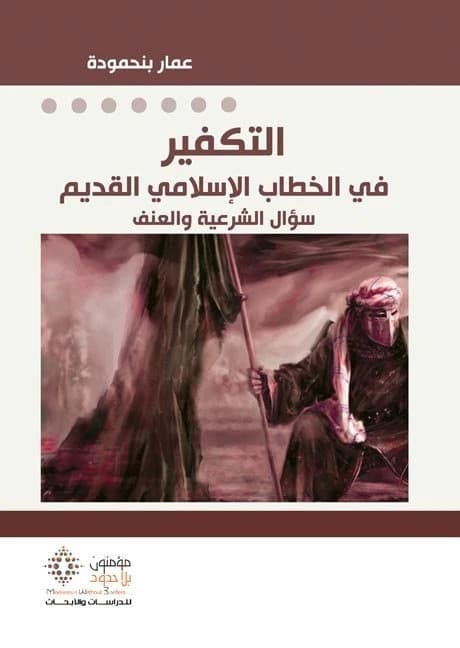
Takfir in Ancient Islamic Discourse • Author: Ammar Binhmouda • 2019
JOD

Get it by 5 Aug | Order in 3 Hours 31 Minutes
- Return Policy
- Warranty Policy
- Shipping Policy
- Non contact delivery
- Personal Receipt
- Return Policy
- Warranty Policy
- Shipping Policy
- Non contact delivery
- Personal Receipt
This work is an attempt to deal with heritage using modern methodological tools. Its author has demonstrated scientific boldness in approaching an issue shrouded in sanctity, subjecting it to objective study. The importance of the issue lies in the fact that Takfir (excommunication) has penetrated all fields as a weapon used by systems and institutions that possess religious and political authority.
Since understanding Takfir as a living and current phenomenon requires knowledge of its historical development, its mechanisms, backgrounds, and stakes in ancient Islamic thought, the ancient temporal domain was the framework for research, beginning with the start of the prophetic era and ending in the mid-sixth century AH. This was a foundational period in which the most important works on Takfir emerged, and its key concepts and mechanisms were established. However, the researcher chose to use modern tools for analysis, deconstruction, and critique.
The importance of the book lies in its approach to Takfir through two fundamental dimensions linked to it: legitimacy on one hand, and violence on the other. Among the foundations of this book is the diversity of its sources and references, and its refusal to be confined to the sources of a single school of thought in understanding Takfir, because Islam can only be understood objectively in its multiple and diverse facets. Takfir remains a requirement for institutionalization and the preservation of power, but it also becomes a danger to thought and civilization because it eliminates diversity, assassinates criticism, and demolishes all edifices of thought and reason.
Takfir is a historical concept created by humans; although it originated within the religious text, it evolved in interaction with reality and has not remained static throughout the ages.
- Author: Ammar Binhmouda
- Publisher: Mominoun Without Borders for Studies and Research - Beirut
- Year of Publication: 2019
- Number of Pages: 528
- Binding: Paperback
- ISBN: 9789953640419







