
Download Our App
Shop your way




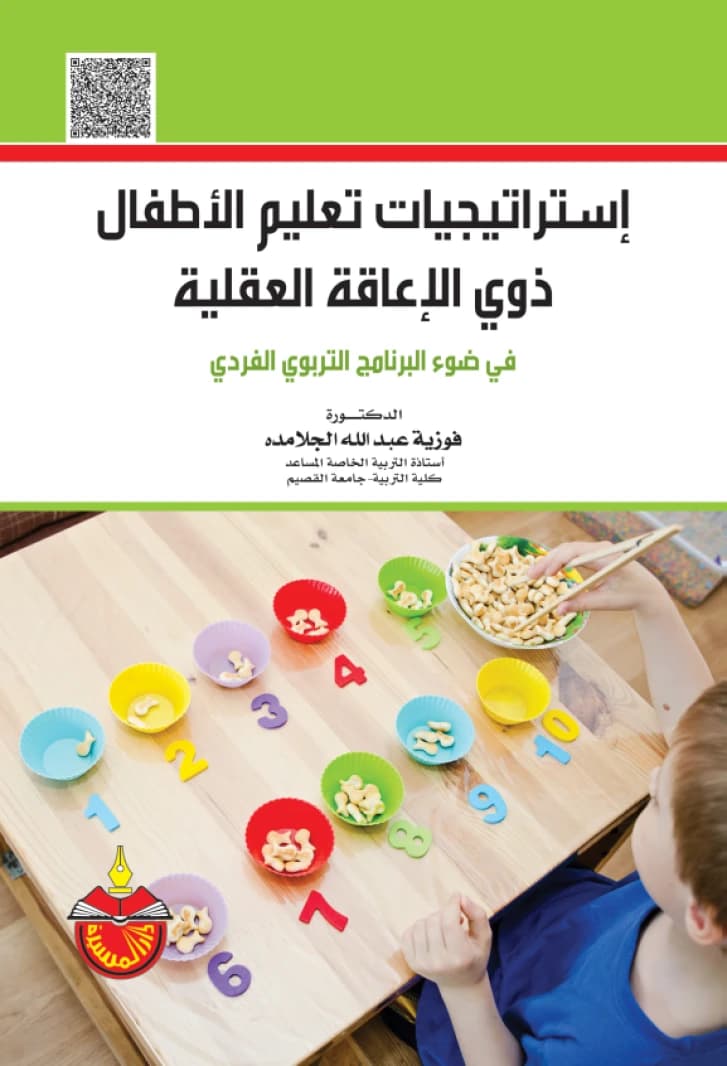
Strategies for Teaching Children with Intellectual Disabilities - Dr. Fawzia Abdullah Al-Jalamdeh
JOD

Get it by 5 Aug | Order in 3 Hours 5 Minutes
- Return Policy
- Warranty Policy
- Shipping Policy
- Non contact delivery
- Personal Receipt
- Return Policy
- Warranty Policy
- Shipping Policy
- Non contact delivery
- Personal Receipt
The world today is witnessing clear development in the field of child education, development, and the building of their minds and thoughts. The primary focus of educators has become the child, from preschool to post-school years. Accordingly, many organized educational plans have been developed for teaching ordinary children in general and children with special needs in particular.
Educators have singled out the modification of curricula for ordinary children to align with the abilities of children with disabilities, enabling them to master the material and allowing education to perform its function towards them, just as it does for non-disabled children. Here, we must define the function of education to ensure it performs its role effectively.
Given the characteristics and features of children with intellectual disabilities, there is no specific curriculum or teaching plan for their education and behavior modification. This highlights the need to apply basic educational and behavioral principles specific to each student, based on individual needs and learning characteristics. This means developing a special curriculum for each intellectually disabled student, known as the Individualized Educational Program (IEP). The student's success is the indicator that we are on the right path. If a student experiences weakness or no success, then we know we need to reconsider the IEP curriculum and change our methods and approaches to meet the needs of children with intellectual disabilities, applying the basic educational and behavioral principles for them.
Based on the foregoing, I am pleased to present this book to those working in the field of educating children with intellectual disabilities and to special education students specializing in intellectual disabilities, to be a help to them. This book is characterized by its simplicity of presentation in a scientific style, free from complexity and far from theorizing. It offers proven scientific experiences in organized and comprehensive scientific steps.
At the end of the book, I decided to provide it with two separate lists of most of the vocabulary and terms mentioned in the text, in both Arabic and English, with the aim of enriching the linguistic repertoire of students and professionals in the field of teaching children with intellectual disabilities.
- Number of Pages: 520
- Year of Publication: 2017
- Binding Type: Hardcover
- Edition Number: 2
- Printing Color: Black
- Dimensions (cm): 17x24
- Weight (kg): 1.000
- Barcode: 9789957970888







