
Download Our App
Shop your way




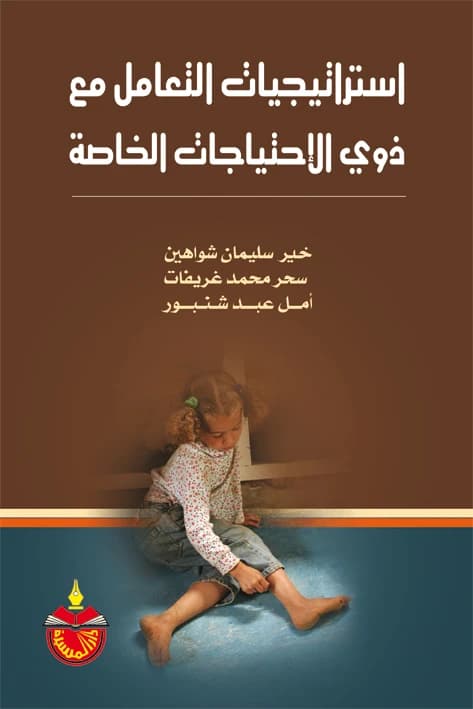
Strategies for Dealing with People with Special Needs by Amal Abd Shanbour
JOD

Get it by 5 Aug | Order in 5 Hours 12 Minutes
- Return Policy
- Warranty Policy
- Shipping Policy
- Non contact delivery
- Personal Receipt
- Return Policy
- Warranty Policy
- Shipping Policy
- Non contact delivery
- Personal Receipt
The progress of nations and peoples is measured by the extent of their respect for their disabled individuals, providing them with all care, and giving them opportunities to showcase their creativity and the abilities God has granted them, rather than treating them with pity, which saddens and angers anyone with such a challenge.
Most people with disabilities suffer from numerous problems and forms of harassment, especially in our countries. This is because many people in our societies do not adhere to the ethics of Islam, which urge respect for this group, giving them adequate opportunities, and treating them as equals. Nor have they embraced modern civilization, which also respects this group. Consequently, these individuals suffer greatly, perhaps far more from societal treatment than from their disabilities themselves.
The types of harassment and problems faced by people with disabilities are many, including:
- Sarcasm, contempt, winking, and insinuation: This is a major issue that hurts the feelings of these individuals, who are often among the most sensitive. Anyone suffering from illness or disability tends to be tender-hearted and emotionally delicate.
- Looks of real or feigned pity: This is one of the most difficult things a person with a disability endures. They are content with what God has destined for them, but then an ignorant, trivial person may show pity, which is often feigned, and this angers them. We say to them: suppress your anger and forgive, for they are ignorant and not worth your time or effort, and God will compensate you with better.
- Family marginalization: Some siblings, instead of supporting their disabled brother, work to marginalize him and make him feel incompetent to seize his wealth, especially his inheritance. This becomes even more difficult if he is an orphan. They might deny him education, work, marriage, and children for a small amount of money. To them, we say be patient, and God will reward you, but the punishment for your actions will be severe.
- Lack of opportunities: Another problem is not being given a chance to show their abilities, whether within the family (to prevent competition for worldly possessions) or in the workplace. Some malicious colleagues may find ways to prevent them from being their equals or excelling, and some even refuse to have a disabled person as their manager.
- Unequal treatment in the family: Some families spend lavishly on the able-bodied sibling as the hope of the family, while being stingy with the disabled one in terms of food, clothing, or education, believing that spending on them is a wasted investment.
- Misconceptions about lifespan: It is a common misconception that a person with a certain illness or disability will die at age 10 or 15. When a child hears these words, it shatters their psyche and discourages them. This is nonsense, especially with medical advancements, and lifespans are in God's hands.
- Barriers to marriage: Many families will not marry their daughter to someone who has all the desired qualifications but suffers from a minor disability. Similarly, families may refuse to let their son marry a girl whose father or brother is disabled for fear of inheriting the disability. This brother or sister then blames their disabled sibling, even though many disabilities are not hereditary.
- Disability as divine punishment: One of the worst forms of mistreatment is when someone claims a disability is a punishment from God. This is incorrect. Why would God punish a child from birth who has committed no sin? In fact, a healthy body, wealth, and children might be a test from God that leads to severe punishment in this life and the hereafter.
Praise be to God who helped us complete this book, which we hope will be a touch of tenderness for our brothers and sisters with special needs. We hope that each of them reads it to find support in facing detractors, and that every arrogant person reads it to perhaps lessen their pride before they face the consequences of their actions.
- Number of Pages: 256
- Year of Publication: 2010
- Binding Type: Hardcover
- Edition Number: 1
- Print Color: Black
- Dimensions (cm): 17x24
- Weight (kg): 0.550
- Barcode: 9789957066086







