
Download Our App
Shop your way












Strategic Management: Concepts, Processes, and Case Studies
JOD

Get it by 5 Aug | Order in 3 Hours 40 Minutes
- Return Policy
- Warranty Policy
- Shipping Policy
- Non contact delivery
- Personal Receipt
- Return Policy
- Warranty Policy
- Shipping Policy
- Non contact delivery
- Personal Receipt
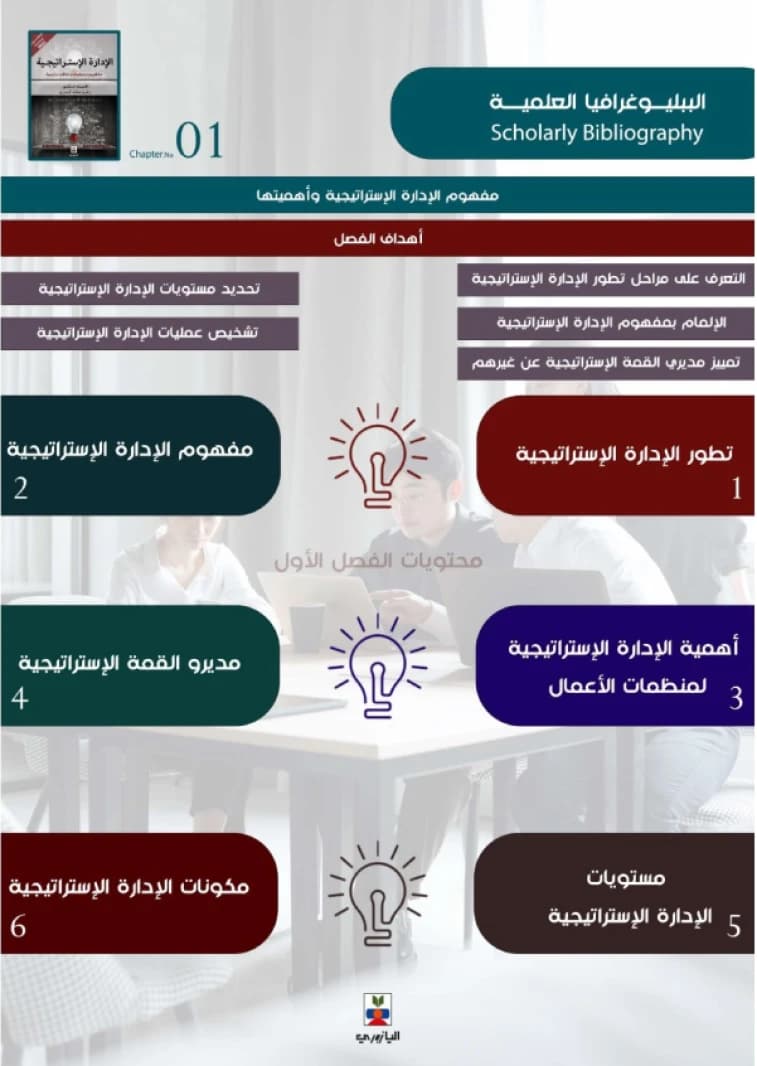
The initial seed for the development of strategic management was in a field called Business Policies, which began at Harvard Business School. This subject was taught to students using case studies to address problems related to various policies (production, marketing, human resources, and finance). Due to its importance, this field was taught in most management colleges in developed countries by the late 1960s, and by the late 1970s, it began to be taught in developing countries, especially in the Arab world. The goal was to provide students with knowledge about the real problems of business organizations and to propose hypothetical solutions in light of the rapid developments in the external environment (political, economic, social, technical, legal, etc.). Knowledge and familiarity with these problems and potential solutions enable students to formulate appropriate strategies.
Based on this, as organizations expanded their study and analysis of the macro-environment, industry environment, and internal environment, they were better able to formulate strategies capable of facing challenges and achieving their goals. The field came to be known as Strategic Management, with a focus on the organization as a whole. This prompted universities and management colleges to teach students about the environment, its types, and its effects on business organizations' decision-making and the formulation of their mission and objectives. The interest of pioneers and researchers in the impact of environmental factors led to the replacement of the term 'Business Policy' with 'Strategic Management' due to its comprehensiveness and its ability to enable organizations to achieve their goals effectively and efficiently.
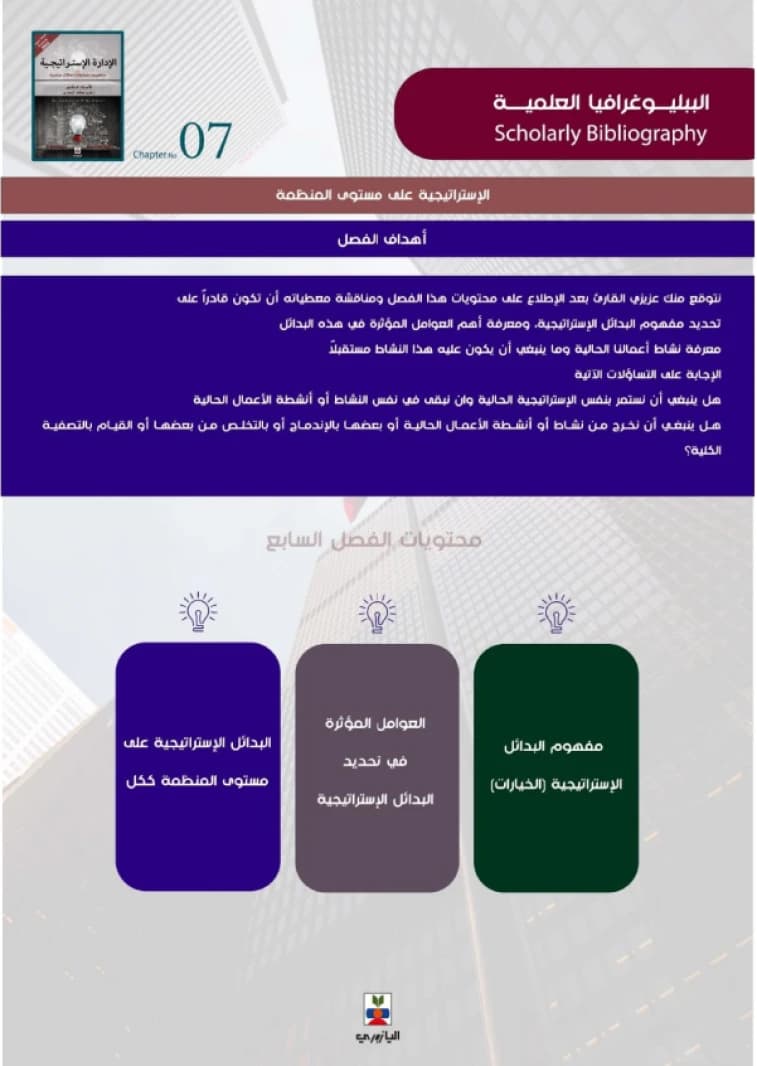
The need to crystallize the concept of strategic management emerged with the shift from a stable business environment to a rapidly changing one, characterized by high competition and uncertainty. This necessitated analyzing opportunities and threats, allocating resources to set primary goals, seizing opportunities, and minimizing threats. Subsequently, resources are allocated, detailed policies are defined, and the implementation of the strategic choice is monitored and evaluated.
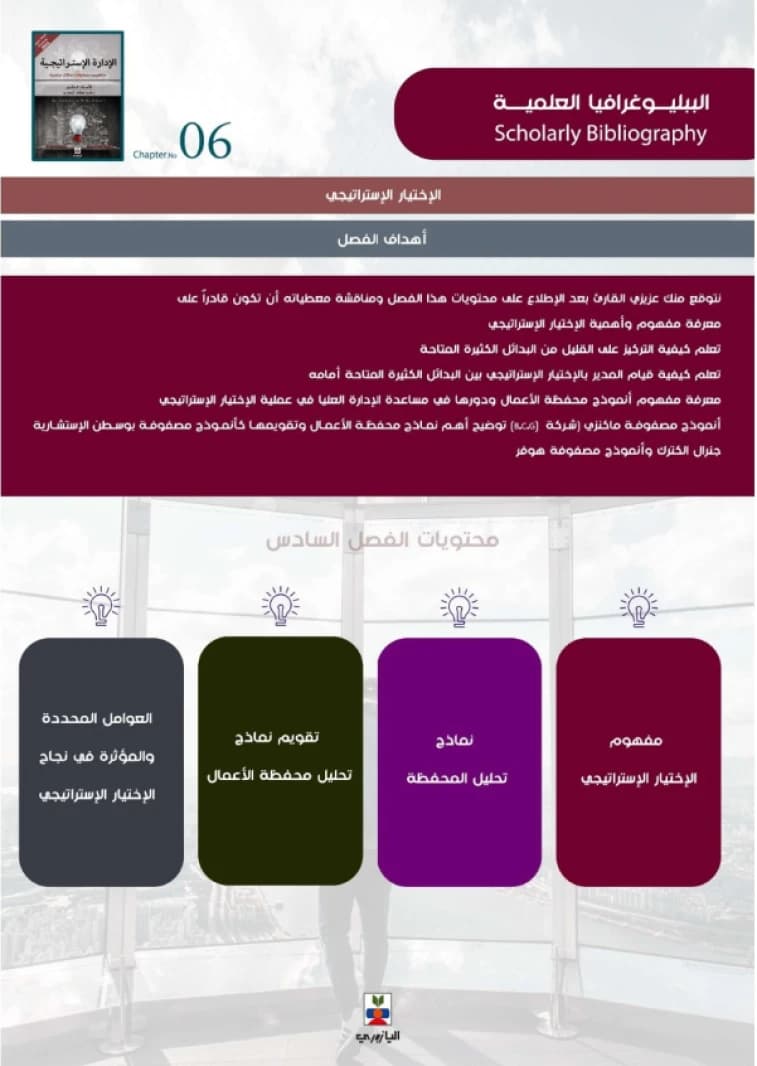
These contributions led to the emergence of the field of strategic management. Efforts continued to define the relationship between strategic management at the organizational level and functional strategies, as well as the role of leadership style in resource utilization. This helps in setting criteria for evaluating and controlling the strategy to identify problems and develop solutions. In the 1970s, the use of SWOT analysis, business portfolio models like the BCG and GE matrices, and the McKinsey model helped shape the development of strategic management. These were followed by Porter's distinguished model of industry structure, which included factors that determine profit rates and define competitive advantage for business strategies.
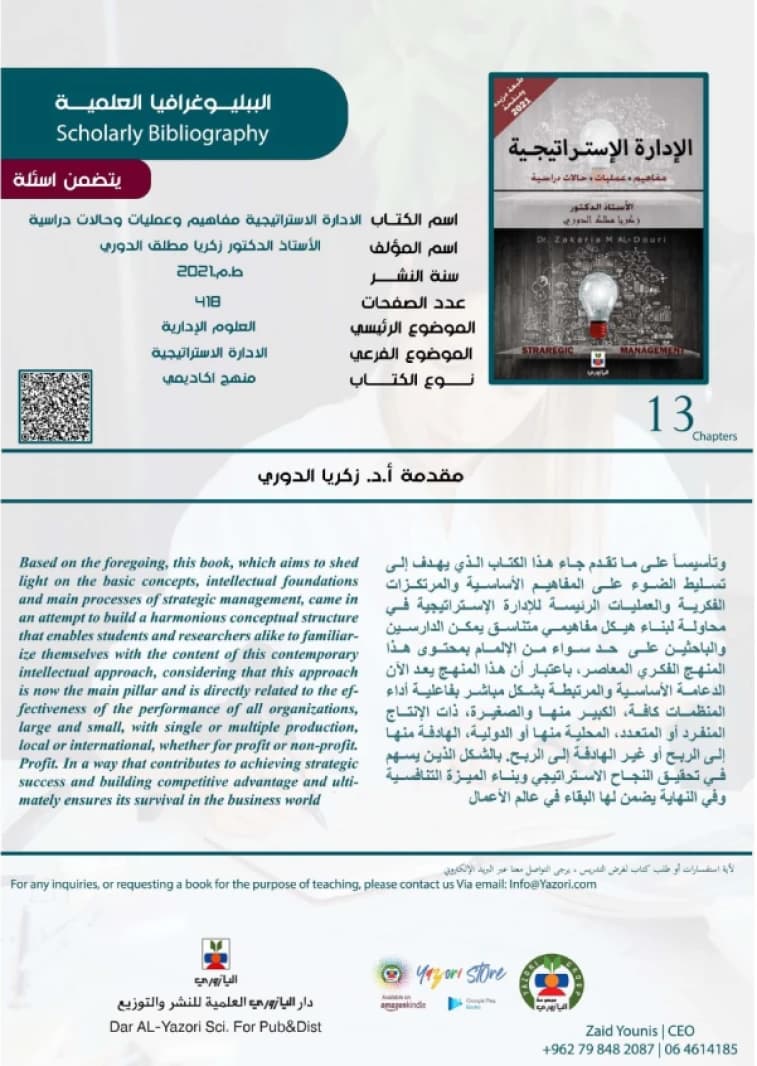
- Weight: 0.76 kg
- Dimensions: 17 × 24 cm
- Author: Prof. Dr. Zakaria Al-Douri
- Cover Type: Paperback
- Interior Print: Black
- Publication Year: 2021
- Publisher: Dar Al-Yazouri for Scientific Publishing
- ISBN: 978-9957-12-989-7







