
Download Our App
Shop your way




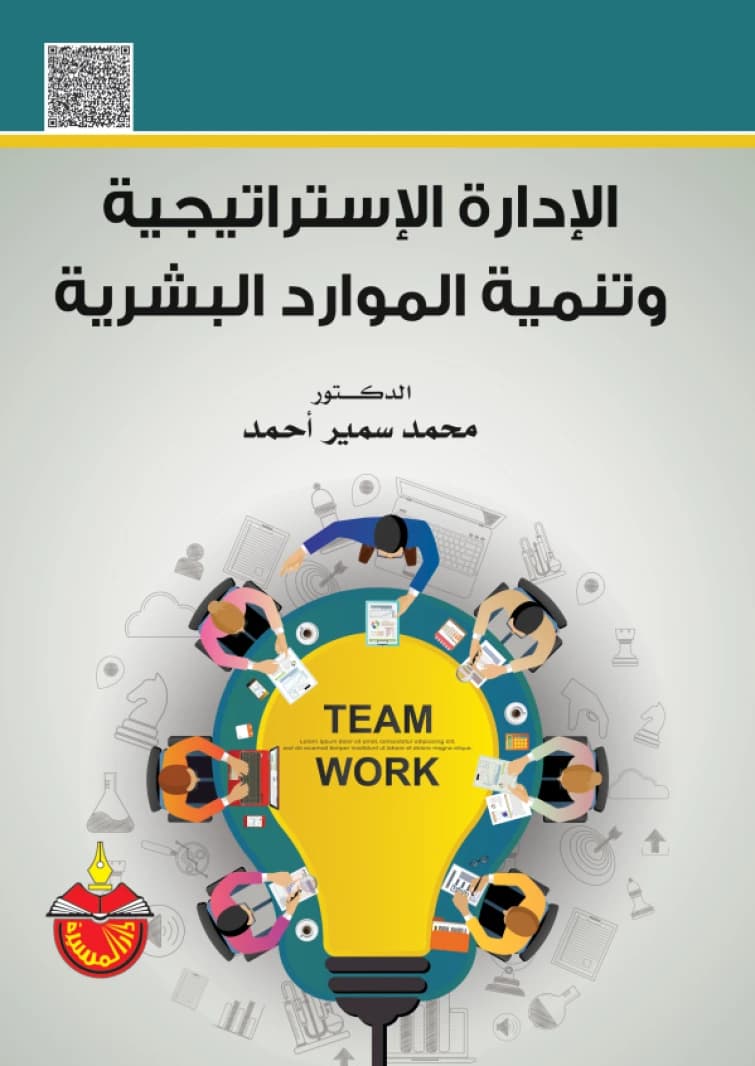
Strategic Management and Human Resource Development - Dr. Mohammed Samir Ahmed
JOD

Get it by 5 Aug | Order in 3 Hours 31 Minutes
- Return Policy
- Warranty Policy
- Shipping Policy
- Non contact delivery
- Personal Receipt
- Return Policy
- Warranty Policy
- Shipping Policy
- Non contact delivery
- Personal Receipt
Governments today are focused on increasing production and raising productivity rates, as these are crucial means to drive economic activity, improve individual living standards, and achieve a higher quality of life. Since the early 1990s, there has been a growing interest in human resources within various organizations, recognizing them as one of the most vital assets for achieving desired goals. The importance of human resources has grown, now occupying a central place of interest globally as the most critical element of development. Nations worldwide are collaborating to create comprehensive human development programs. Consequently, it is essential for any organization to formulate its general objectives, which are closely linked to strategic planning and serve as a key input for long-term planning—a cornerstone of organizational success.
All organizations are affected by the changes occurring around them, as they are open systems that influence and are influenced by their environment. Several forces make change inevitable in different organizations, whether they are for-profit or non-profit, commercial, industrial, or service-oriented, public or private. To survive and grow, business organizations must focus on planned change processes, leverage their competitive advantages, and adopt a comprehensive and integrated management philosophy with advanced methods, which can be termed "Strategic Management." This is considered the management of competitive advantages that can provide the organization with the following:
- A clear and specific vision for the future, through a focus on defining and sensing a clear direction for the organization.
- Initiative and generation of ideas stemming from consumer needs and desires through continuous and successful attempts to connect with customers, understand their behavior, market trends, and available marketing opportunities.
- A clear strategy to achieve high performance rates that meet the organization's goals and objectives.
- Focus on achieving predetermined results, as high-performing organizations concentrate on outcomes.
- Precise implementation and control of the strategy.
In the last decade, organizations have increasingly adopted strategic management as a fundamental approach for continuity and to ensure their survival and excellence. The interest in strategic management stems from the increasing complexity of the business environment. In relatively stable conditions, managers could operate safely assuming the future would not differ much from the past and present. Today, however, conditions are vastly different, characterized by significant and rapid change. To cope, organizations must diligently collect and analyze information to identify environmental opportunities and how to capitalize on them efficiently. Furthermore, effective formulation and implementation of strategy lead to improved organizational performance levels.
Human resources are a fundamental and crucial element of an organization—if not the most important. This necessitates viewing them as a vital Strategic Asset that must be managed with extreme care and integrated as a core component of the organization's overall strategic management. It is therefore paramount to develop a human resources strategy with clear objectives, priorities, and policies to primarily enhance the efficiency of the human element and positively impact other organizational components, including technological systems, structural systems with their various arrangements like organizational structure, regulations, work rules, and procedures. This also includes increasing the level of interaction between different elements within the organization, thereby positively influencing organizational effectiveness and improving overall organizational performance.
Since business organizations, much like humans, go through different stages in their life cycle—from the Formation Phase to the Decline Phase—it is necessary to study the characteristics of each stage and identify the key management practices to be applied during each one.
- Number of Pages: 344
- Year of Publication: 2025
- Binding Type: Hardcover
- Edition Number: 2
- Print Color: Black
- Dimensions (cm): 17x24
- Weight (kg): 0.700
- Barcode: 9789957064846







